
As a buyer or practitioner in industries such as construction, automotive, electronics, and wind energy, you may often encounter glass fiber yarn in product selection and procurement. It is a lightweight, high-strength, corrosion-resistant, and insulation-friendly material that has become an indispensable core raw material in many fields. However, there are various types of glass fiber yarn on the market, and different types have significant differences in performance, characteristics, and application scenarios. Choosing the right type directly affects the quality, cost, and service life of the final product. Today, we will take your perspective to sort out the common types of glass fiber yarn, interpret their characteristics in detail, and match them with practical application scenarios, helping you quickly select the most suitable product for your needs.
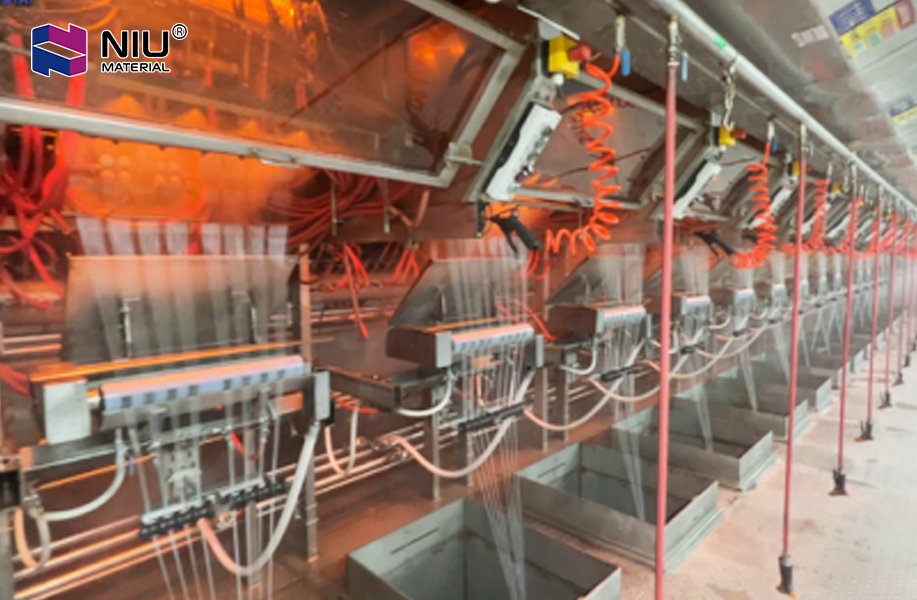
Before diving into the types and uses, let’s first clarify what glass fiber yarn is—this will help you better understand its characteristics and application logic. Glass fiber yarn is made of natural quartz sand, feldspar, limestone, and other raw materials, which are melted at high temperatures (above 1500℃), drawn into thin glass fibers, and then twisted or plied into yarn. It inherits the advantages of glass: high strength (higher than steel wire of the same weight), good insulation, corrosion resistance (not easy to react with acid, alkali, and other substances), high temperature resistance, and low density. At the same time, it overcomes the brittleness of glass, becoming flexible and easy to process, which can be further made into fabrics, composites, and other products to meet the needs of different industries.
For you, whether you are purchasing raw materials for product production, or selecting materials for project construction, understanding the types of glass fiber yarn is the first step to ensure product quality. Next, we will focus on the most common types of glass fiber yarn in the market, from the perspective of your actual needs, and explain their characteristics and applicable scenarios one by one.
Glass fiber yarn is classified according to different standards, such as raw material composition, production process, and performance. From the perspective of your procurement and application, we mainly classify it into the following categories, which are the most practical and commonly used types in the market. Each type has its own unique advantages, and we will match them with specific industry scenarios to help you make accurate selections.
E-glass fiber yarn is the most common and widely used type in the market, accounting for more than 80% of the global glass fiber yarn output. It is named “E” because of its excellent electrical insulation performance (Electrical). For you, if you are engaged in the electronics, electrical, or construction industries, E-glass fiber yarn is likely to be your first choice, as it has the advantages of low cost, stable performance, and wide applicability.
Key Characteristics:
• Excellent electrical insulation: It does not conduct electricity, has low dielectric loss, and can effectively isolate current, which is suitable for electrical and electronic products.
• Good corrosion resistance: It is resistant to most acids, alkalis, and organic solvents, and is not easy to rust or degrade, ensuring long-term use in harsh environments.
• Moderate strength and flexibility: It has good tensile strength, is not easy to break, and is easy to process into fabrics, rovings, and other forms, adapting to various processing needs.
• Low cost: The raw materials are easy to obtain, the production process is mature, and the price is relatively low, which is suitable for large-scale procurement and mass production.
Applicable Scenarios:
If you are in the electrical and electronic industry: E-glass fiber yarn can be used to make printed circuit boards (PCB), electrical insulation materials (such as insulation paper, insulation sleeves), and electronic component casings. Its excellent insulation performance can ensure the safety and stability of electrical products and avoid short circuits and other problems.
If you are in the construction industry: It can be used to produce glass fiber reinforced concrete (GRC), glass fiber mesh cloth, and building insulation materials. Adding E-glass fiber yarn to concrete can improve the tensile strength and crack resistance of concrete, making buildings more durable; the mesh cloth made of it can prevent wall cracks and enhance the firmness of the wall.
If you are engaged in general industrial production: It can be used to make ordinary industrial fabrics, filter materials, and packaging materials. For example, filter cloth made of E-glass fiber yarn has good air permeability and corrosion resistance, which is suitable for filtering industrial waste gas and wastewater.
S-glass fiber yarn is a high-performance glass fiber yarn, named “S” for its high Strength. Compared with E-glass fiber yarn, its tensile strength is 30%-50% higher, and it also has better high temperature resistance and fatigue resistance. For you, if your products have high requirements for strength and durability (such as aerospace, wind energy, and high-end automotive industries), S-glass fiber yarn is a more suitable choice, although its price is higher than E-glass fiber yarn.
Key Characteristics:
• Ultra-high tensile strength: It is one of the highest strength glass fiber yarns currently, with a tensile strength of more than 4000 MPa, which is far higher than E-glass fiber yarn and even steel wire of the same weight.
• Good high temperature resistance: It can withstand high temperatures up to 1000℃, and its performance will not be significantly degraded in high-temperature environments, which is suitable for high-temperature working scenarios.
• Excellent fatigue resistance: It can withstand repeated stretching and bending without easy breakage, and has a long service life, which is suitable for products that need long-term use under dynamic loads.
• Good compatibility: It can be well combined with resins (such as epoxy resin, polyester resin) to form high-strength composites, further improving the performance of products.
Applicable Scenarios:
If you are in the wind energy industry: S-glass fiber yarn is the core raw material for wind turbine blades. Wind turbine blades need to withstand strong wind loads for a long time, and the ultra-high strength and fatigue resistance of S-glass fiber yarn can ensure the stability and service life of the blades, reducing maintenance costs. Many large wind power enterprises choose S-glass fiber yarn to make blade composites.
If you are in the aerospace industry: It can be used to make aircraft components (such as wing panels, fuselage parts) and spacecraft insulation materials. Its lightweight and high-strength characteristics can reduce the weight of the aircraft, save fuel consumption, and at the same time ensure the structural strength and safety of the aircraft.
If you are engaged in the high-end automotive industry: It can be used to make automotive lightweight components (such as body frames, door panels). The lightweight and high-strength properties of S-glass fiber yarn can reduce the weight of the vehicle, improve fuel efficiency, and enhance the collision resistance of the vehicle.
In addition, it can also be used in high-end sports equipment (such as golf clubs, fishing rods) and military equipment, which is suitable for you who pursue high performance and high quality.
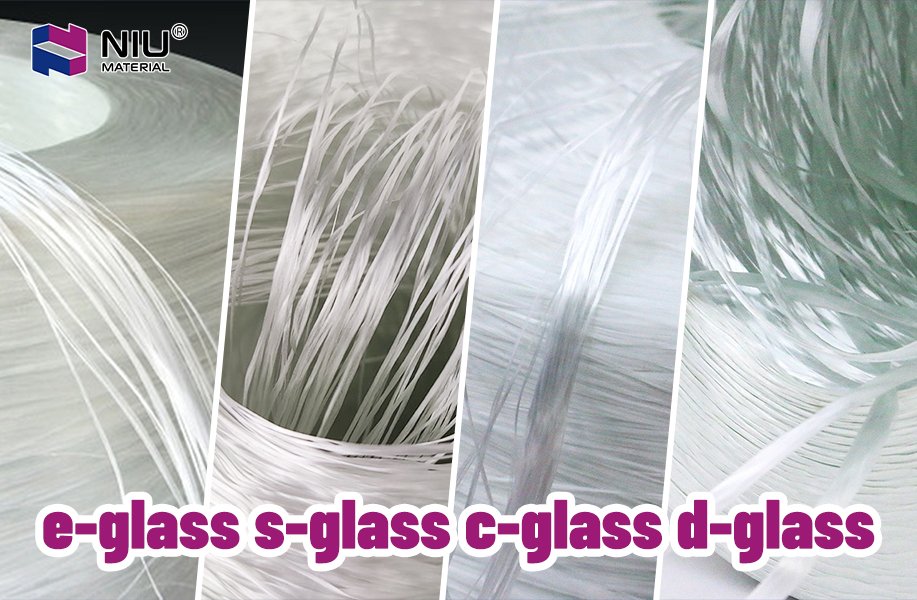
C-glass fiber yarn is named “C” for its excellent Corrosion resistance. Compared with E and S glass fiber yarns, its biggest advantage is strong corrosion resistance, especially resistance to acid and alkali corrosion. For you, if your products need to be used in harsh corrosive environments (such as chemical industry, marine engineering), C-glass fiber yarn is the most reliable choice, as it can maintain stable performance in acid, alkali, and saltwater environments.
Key Characteristics:
• Strong corrosion resistance: It has excellent resistance to acid, alkali, salt, and other corrosive substances, and is not easy to be corroded and degraded in harsh environments, with a long service life.
• Good chemical stability: It does not react with most chemical substances, and can maintain stable performance in chemical media such as acids, alkalis, and organic solvents.
• Moderate strength: Its tensile strength is slightly lower than E and S glass fiber yarns, but it can meet the use requirements of most corrosive environment products.
• Good processability: It is flexible and easy to process into fabrics, filter materials, and composites, adapting to various processing methods.
Applicable Scenarios:
If you are in the chemical industry: C-glass fiber yarn can be used to make chemical corrosion-resistant equipment (such as chemical reaction tanks, pipelines), chemical filter materials, and corrosion-resistant coatings. Its strong corrosion resistance can prevent equipment from being corroded by chemical media, ensuring the safe operation of chemical production.
If you are in the marine engineering industry: It can be used to make marine anti-corrosion materials (such as ship hull coatings, marine cables), offshore platform components, and marine filter materials. It can resist the corrosion of seawater and marine atmospheric environment, avoiding the damage of marine equipment and extending its service life.
If you are engaged in the environmental protection industry: It can be used to make high-temperature and corrosion-resistant filter materials, which are suitable for filtering corrosive waste gas and wastewater (such as industrial acid-containing waste gas, alkaline wastewater), and have good filtering effect and long service life.
D-glass fiber yarn is a special glass fiber yarn with low Dielectric constant, named “D”. Its biggest feature is low dielectric constant and low dielectric loss, which is especially suitable for high-frequency and high-speed electronic communication scenarios. For you, if you are engaged in the electronic communication, 5G, and AI industries, D-glass fiber yarn is an indispensable raw material, as it can ensure the stability and speed of signal transmission.
Key Characteristics:
• Low dielectric constant: The dielectric constant is lower than 3.8 (E-glass fiber yarn is about 6.0), which can reduce signal loss and ensure the stability and speed of high-frequency signal transmission.
• Low dielectric loss: It has extremely low dielectric loss in high-frequency environments, which can avoid signal distortion and improve the efficiency of signal transmission.
• Good insulation performance: It has excellent electrical insulation performance, which can avoid signal interference and ensure the normal operation of electronic equipment.
• Good compatibility with resins: It can be combined with high-performance resins to form low-dielectric composites, which are suitable for the production of high-frequency electronic components.
Applicable Scenarios:
If you are in the 5G communication industry: D-glass fiber yarn can be used to make 5G base station antennas, high-frequency circuit boards, and communication cables. Its low dielectric constant and low dielectric loss can ensure the high-speed and stable transmission of 5G signals, avoiding signal attenuation and interference.
If you are in the AI and semiconductor industry: It can be used to make high-frequency printed circuit boards (PCB) for AI servers, semiconductor packaging materials, and electronic components. With the rapid development of AI and semiconductors, the demand for high-speed signal transmission is increasing, and D-glass fiber yarn can perfectly meet this demand.
If you are engaged in the aerospace communication industry: It can be used to make aerospace communication equipment components (such as satellite communication antennas), which can ensure the stability of signal transmission in the space environment and improve the communication quality of aerospace equipment.
After understanding the characteristics and uses of different types of glass fiber yarn, you may still have doubts: how to choose the most suitable one for your own needs? Here, we summarize 3 key selection principles from your perspective, helping you avoid detours and reduce procurement risks:
1.Prioritize according to application scenarios: First, clarify the use environment of your product (such as whether it is corrosive, high-temperature, or high-frequency), and the performance requirements (such as strength, insulation, dielectric properties). For example, if you are in the chemical industry, prioritize C-glass fiber yarn; if you are in the 5G industry, prioritize D-glass fiber yarn.
2.Balance performance and cost: High-performance glass fiber yarn (such as S and D types) has better performance but higher price; ordinary glass fiber yarn (such as E type) has moderate performance but lower cost. You can choose according to your product positioning and budget. For example, if you produce ordinary electrical products, E-glass fiber yarn can meet the needs; if you produce high-end wind power blades, S-glass fiber yarn is necessary.
3.Pay attention to compatibility with subsequent processing: When selecting, you should also consider the subsequent processing technology of the product (such as whether it needs to be compounded with resin, woven into fabric). For example, if you need to make composites, you should choose glass fiber yarn with good compatibility with resin (such as S and D types); if you need to weave into cloth, you should choose glass fiber yarn with good flexibility (such as E and C types).
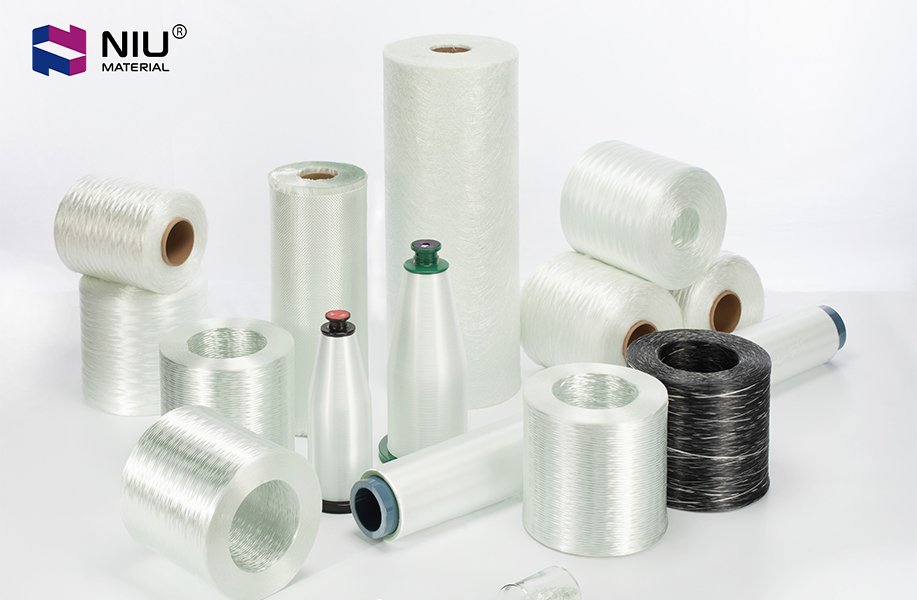
Glass fiber yarn, as a versatile raw material, has different types to adapt to the needs of different industries. For you, whether you are a procurement personnel, a product designer, or an industry practitioner, understanding the characteristics and uses of different types of glass fiber yarn is the key to selecting high-quality, cost-effective products. E-glass fiber yarn is suitable for ordinary scenarios with low cost and wide applicability; S-glass fiber yarn is suitable for high-strength demand scenarios; C-glass fiber yarn is suitable for corrosive environment scenarios; D-glass fiber yarn is suitable for high-frequency communication scenarios.
We hope this article can help you better understand different types of glass fiber yarn, clarify your selection needs, and select the most suitable product for your own industry and product. If you have more questions about glass fiber yarn selection, you can leave a message or contact us, and we will provide you with professional advice based on your specific needs.

If you have any questions
Please contact us for free consultation and product quotation
You can leave your needs and contact information~and We can provide you with usage suggestions + product suitability analysis + free sample delivery!
Leave us your interest and contact information, and we’ll send you detailed information for your reference!
You can leave the specifications and contact information you need~ Our technicians will immediately organize the exclusive information for you and send it to your email!
You can leave your contact information here, and we will send you detailed specifications and application cases to make your purchase clearer~