Peru's Agricultural Expansion Ends Up in Equipment in the Field
Peru’s agricultural structure has shifted markedly over the past two decades. Irrigated farming along the arid coastal strip has continued to expand, with grapes, blueberries, avocados and asparagus becoming the main export crops. As planted area and yields rose together, field management moved from manual labour to mechanised operation, and the number of tractors, boom sprayers, fertilizer spreaders and drip-irrigation systems grew with it.
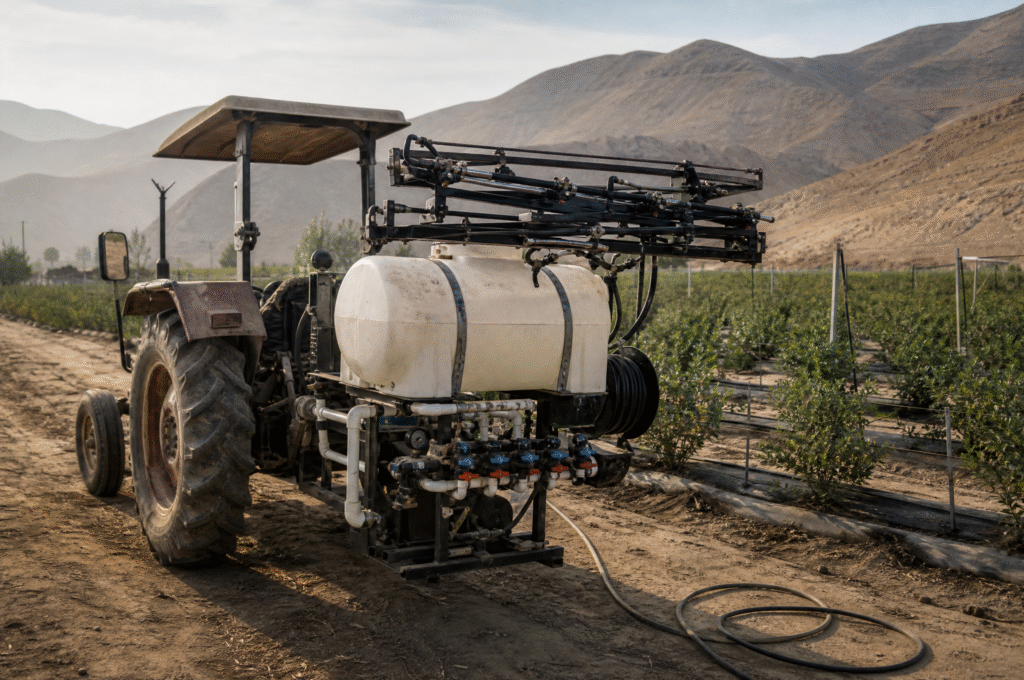
Almost all of this equipment carries a tank: sprayer tanks, fertilizer tanks, field water storage tanks, drip-irrigation buffer tanks. Inside is fertilizer solution, pesticide and irrigation water; outside is the coastal UV and salt spray; in between, during transport and field work, is sustained vibration. FRP has become the primary tank material here because it resists corrosion, weighs little, and can be repaired.
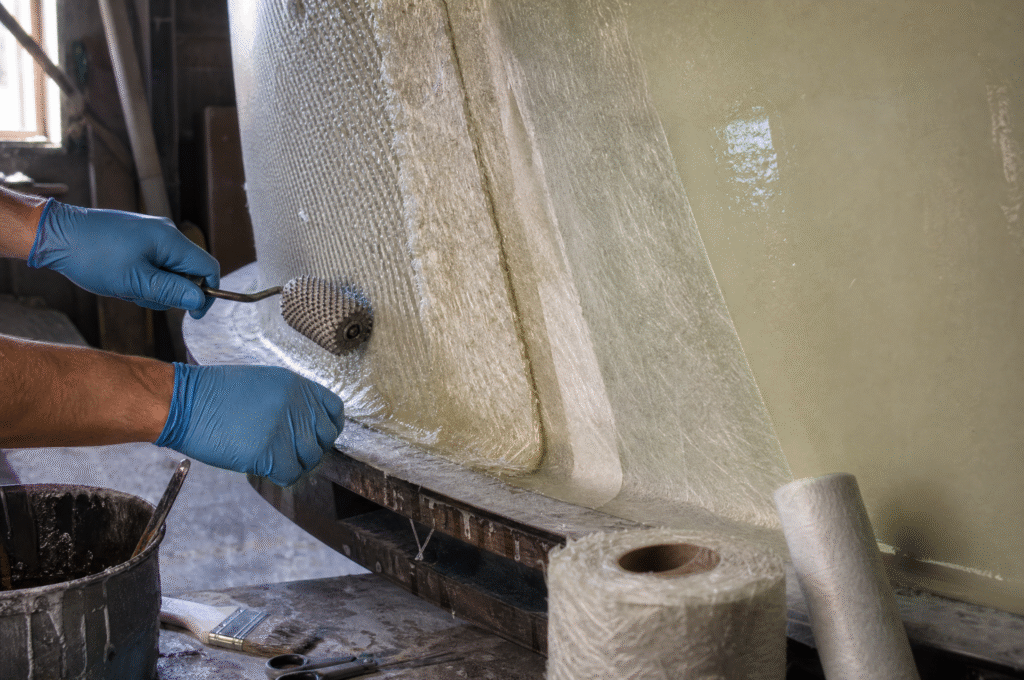
The quality of a tank ultimately depends on each layer of the laminate. An agricultural tank wall is built from gelcoat, surface mat, chopped strand mat and woven roving, laid in sequence, rolled ply by ply, and cured together. The chopped strand mat sits in the structural plies in the middle, where it builds wall thickness and connects the inner surface layer to the load-bearing woven roving — the layer that decides whether the tank lasts in service.
Peru's Agricultural Expansion Ends Up in Equipment in the Field
Every Ply Added Also Traps Air Between Layers
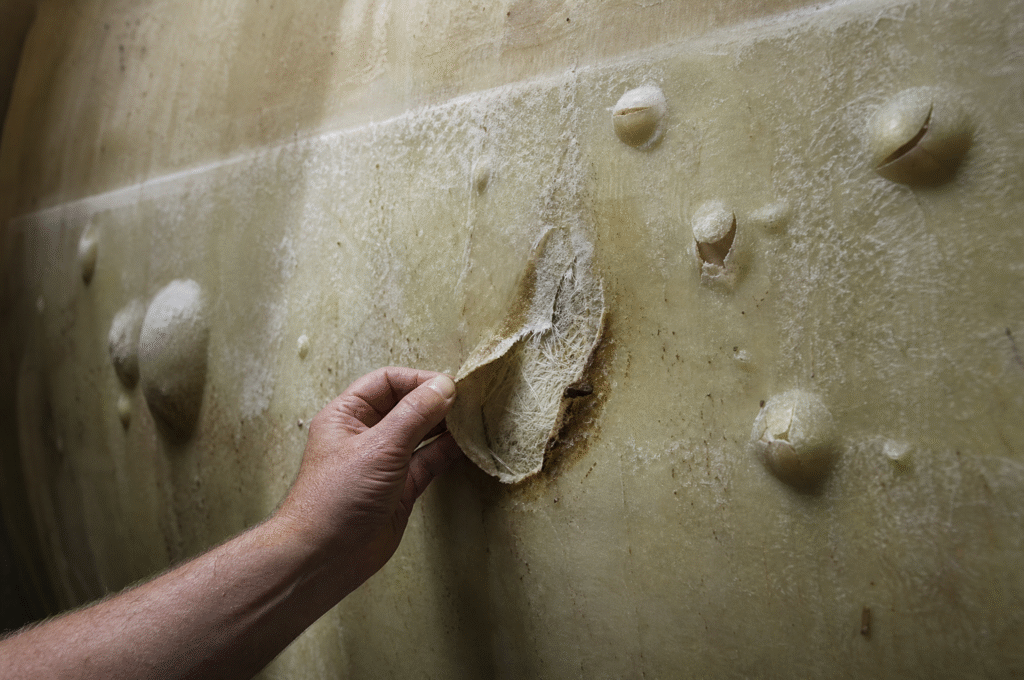
Wall thickness is stacked up ply by ply, and each ply adds another surface where one layer meets the next. Where the mat is not fully wet out and the roller does not reach, air stays trapped. Once the tank is filled with fertilizer solution those voids blister first and then separate ply from ply, ending as bulging and delamination.
White Strands and Dry Patches Are a Wet-Out Rate Problem
Resin needs time to work its way into a bundle of fibres. With emulsion-bonded mat, the outer binder has to be softened and broken down by the resin before resin can get in, so it wets out slowly. Workers who cannot wait lay the next ply, and the white strands and dry patches are sealed inside — with no resin there, that is an open leak path.
Insufficient Width Turns the Joint into a Weak Line
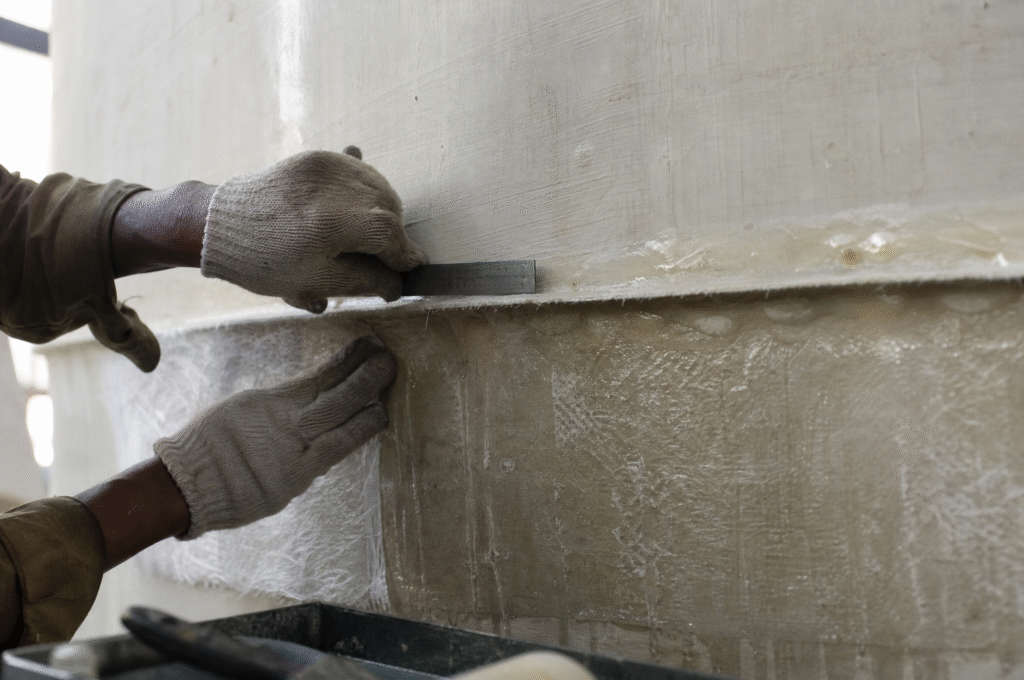
If the mat is too narrow to wrap a full course, it has to be overlapped. The overlap is thick on one side and thin on the other, air collects under that step during rolling, and the resin content there differs from the rest of the wall. Shrinkage after cure differs too, so the joint becomes a weak line in the shell.
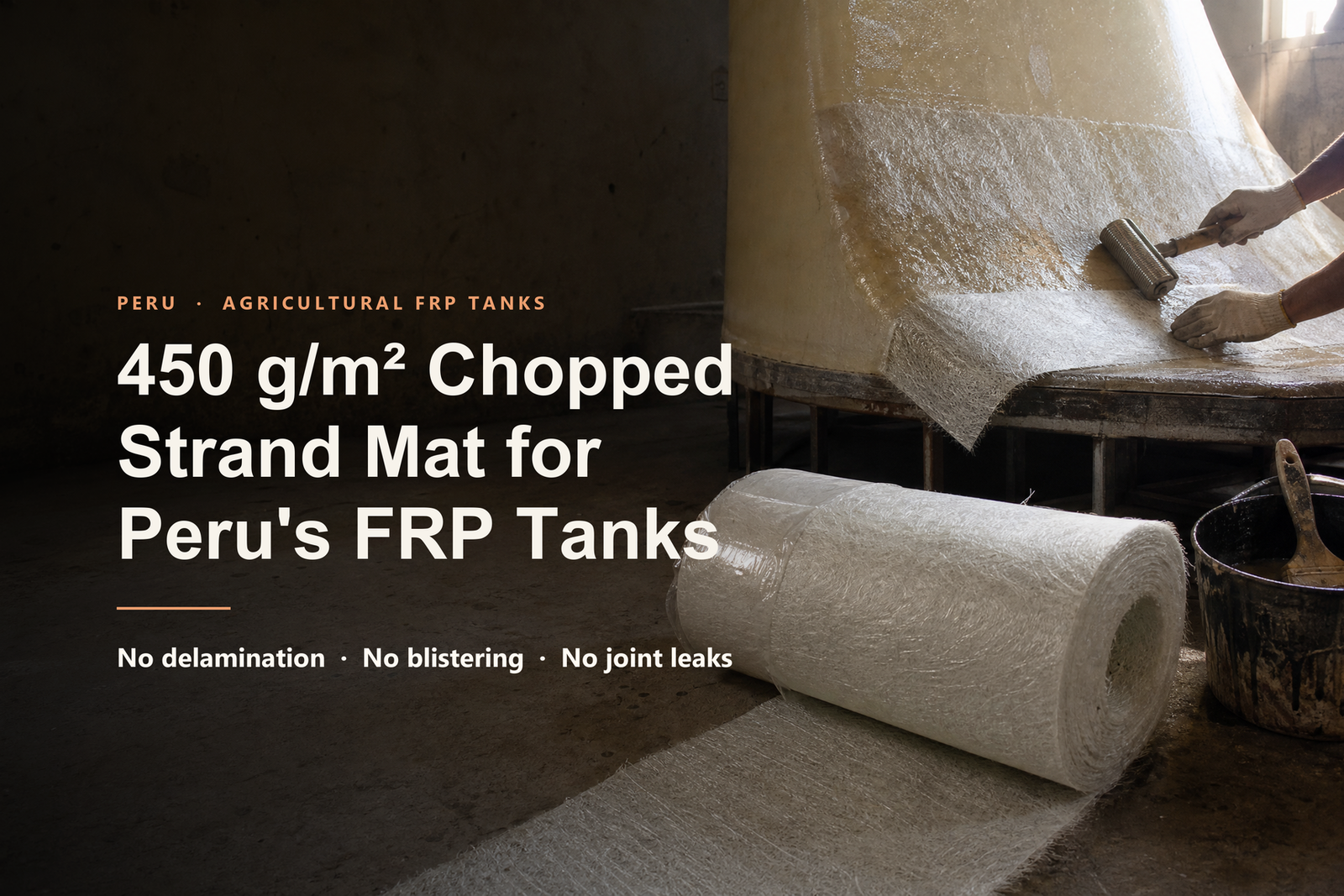
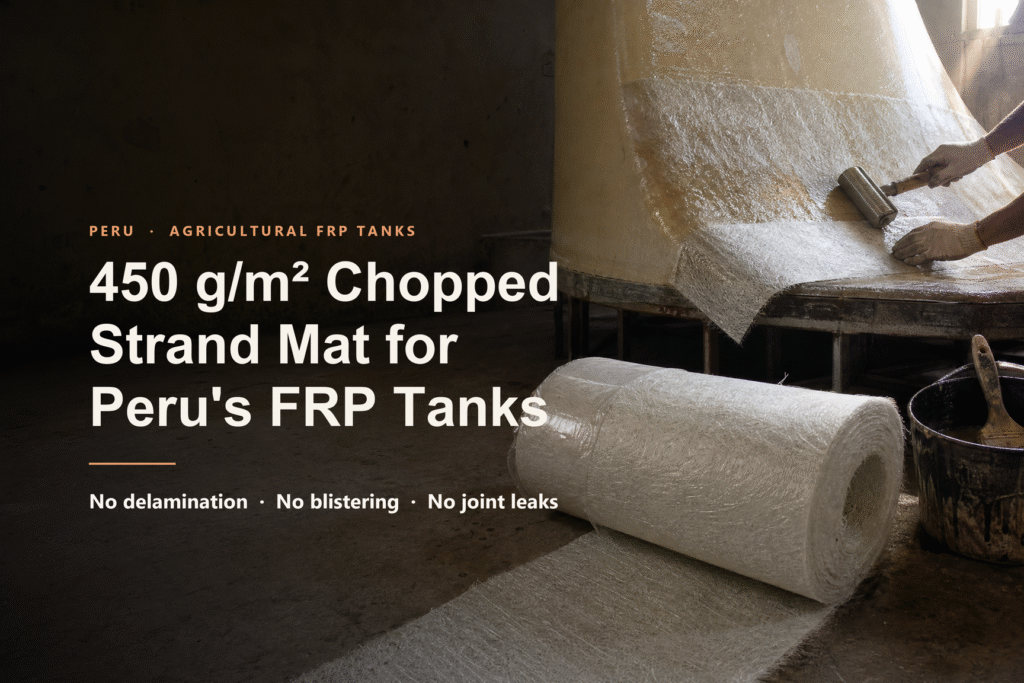
450 g/m² Chopped Strand Mat: Denser Plies, Fuller Wet-Out, Fewer Joints
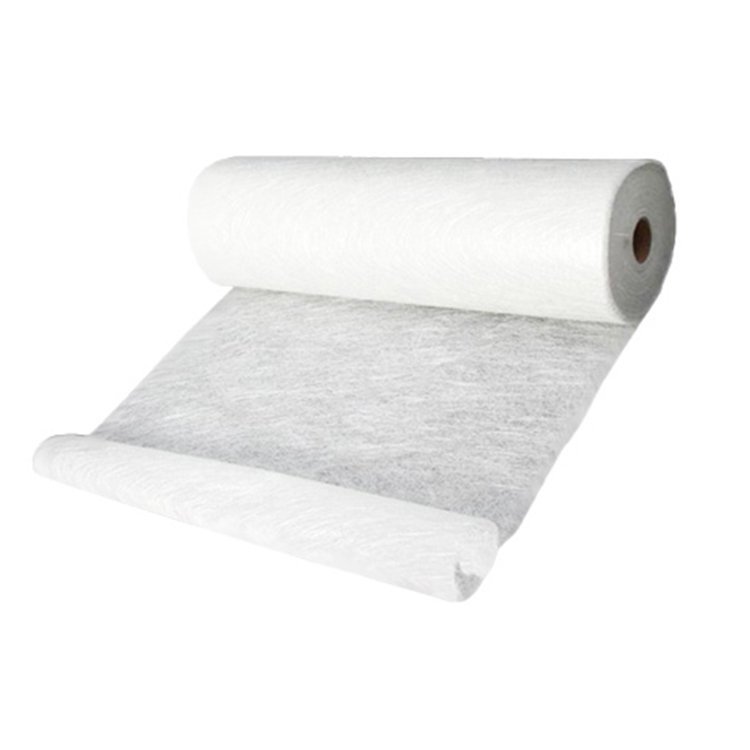
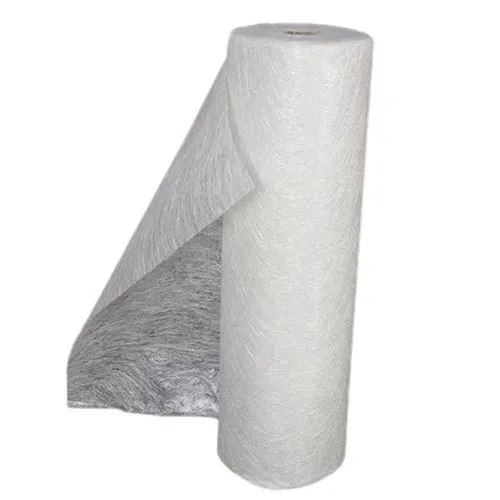
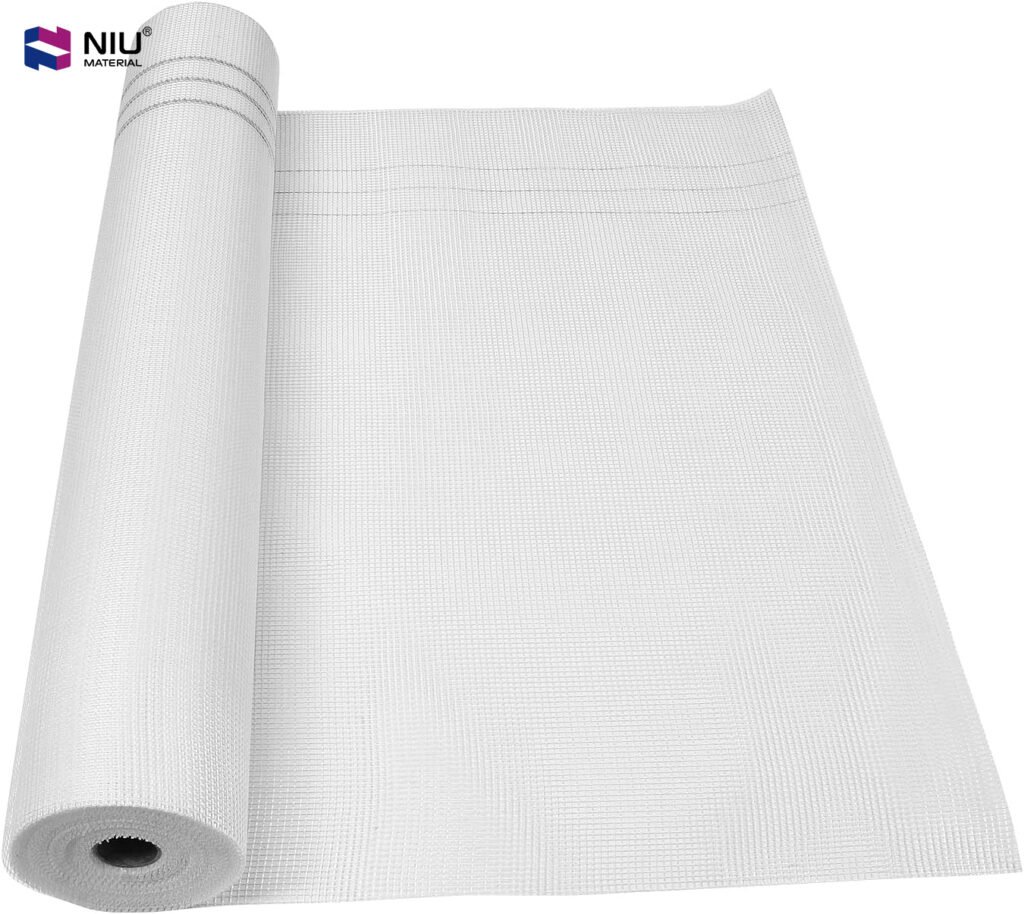
Chopped strand mat is produced by cutting glass strands to length, forming them into a random web and consolidating the web into a roll with a binder. The specification we supply for the wall-build layer of agricultural tanks is 450 g/m² at 1.27 m width, powder-bonded. Each of these three parameters corresponds to one part of that layer.
Resin Travels Through the Mat, and the Plies Cure as One Body
The powder binder dissolves on contact with resin and forms no barrier on the fibre surface. Resin moves from the face of the mat through to the back, driving air out ahead of the roller; when the next ply is laid, the two cure together within the same body of resin rather than being held to each other by a film of binder.
Once the tank is filled with fertilizer solution, there is no void between plies that can expand, and bulging and delamination lack the conditions to occur. That failure mode is eliminated at the material stage.
Full Wet-Out, So Dry Patches and White Strands Fall Away
The powder binder does not obstruct resin entry into the fibre bundle, so wet-out time shortens and air escapes more readily under the roller. The face and the back of the mat wet out to the same degree, and white strands and dry patches are markedly reduced.
With no residual binder film on the fibre surface, resin bonds directly to glass and interlaminar bond strength is higher. For a tank holding fertilizer solution, no weak interface within the laminate means no path for the medium to migrate along.
Width Matched to the Tank's Circumference, So the Shell Carries No Lateral Overlap
At 1.27 m, the width matches the circumference divisions common on Peruvian agricultural tanks: one wrap covers the course, no lateral overlap is needed, and the step at the joint does not arise. With that weak line absent from the shell, there is one less entry point for leakage.
Edge trim waste and roll changes fall at the same time, lay-up time per tank shortens, and the line runs more continuously.

All Three Materials in the Tank Wall Can Be Supplied Together
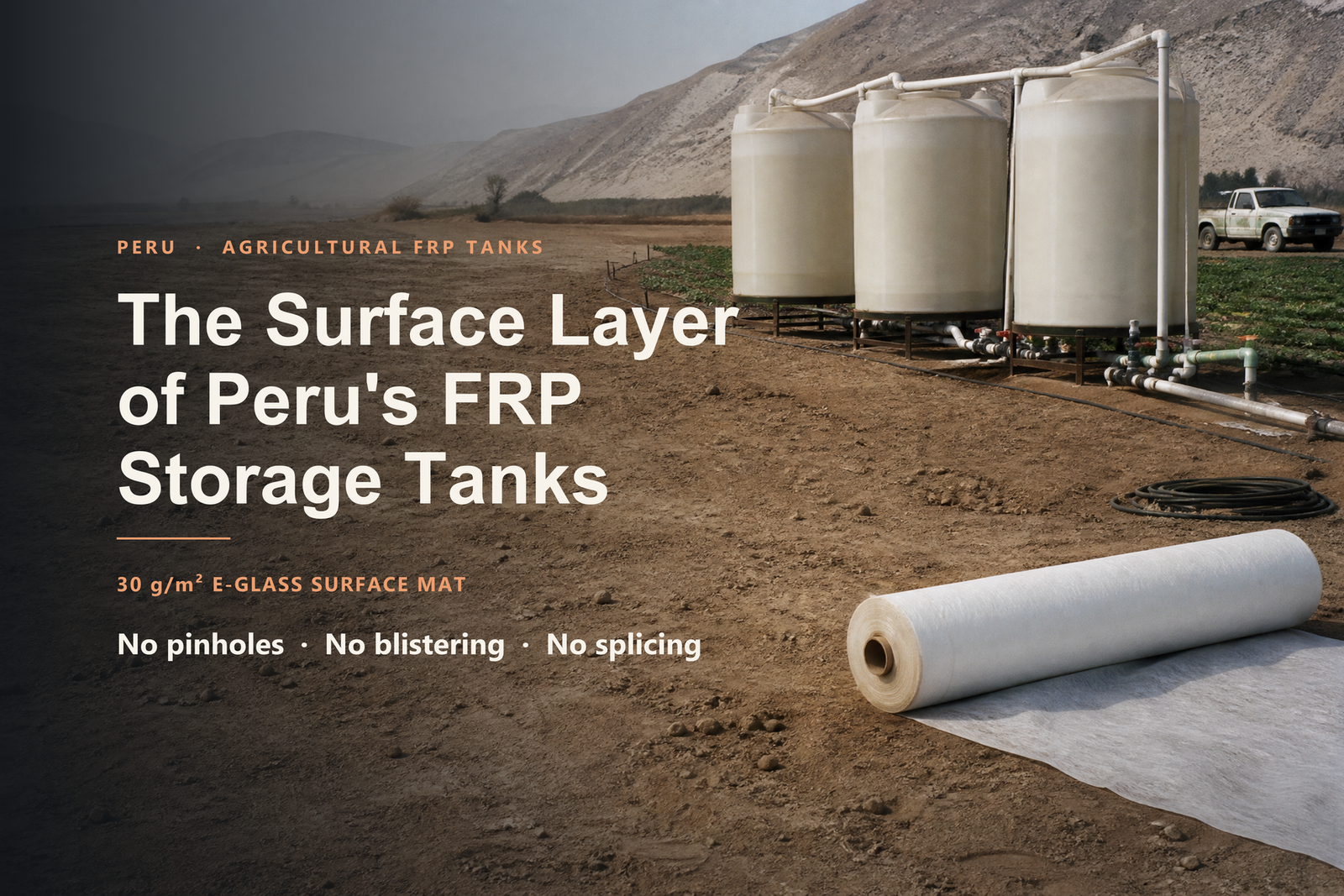
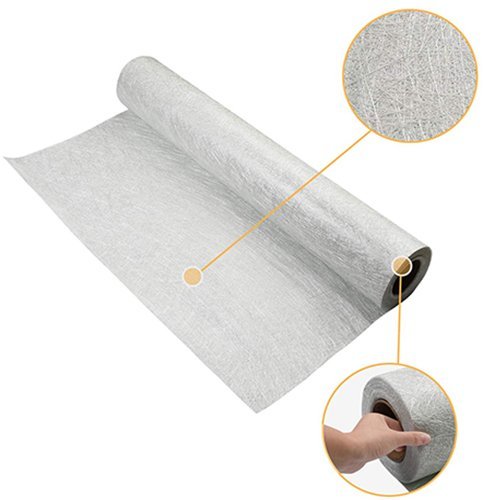
An agricultural FRP tank uses three glass fibre materials from inside out: surface mat, chopped strand mat, woven roving. If they come from different suppliers, the surface treatment on the fibre differs, and so do the wet-out speed and the bond — the usual result is surface mat that wets out quickly and chopped strand mat that cannot keep up, with the slowest layer setting the pace of the whole line.
We produce all three on one surface treatment formula: surface mat for the dense, resin-rich inner face, chopped strand mat for wall thickness and connection between plies, woven roving for load carrying in two directions. Used together, they wet out and cure at the same pace, and changing material does not mean starting the learning curve again.
About Us
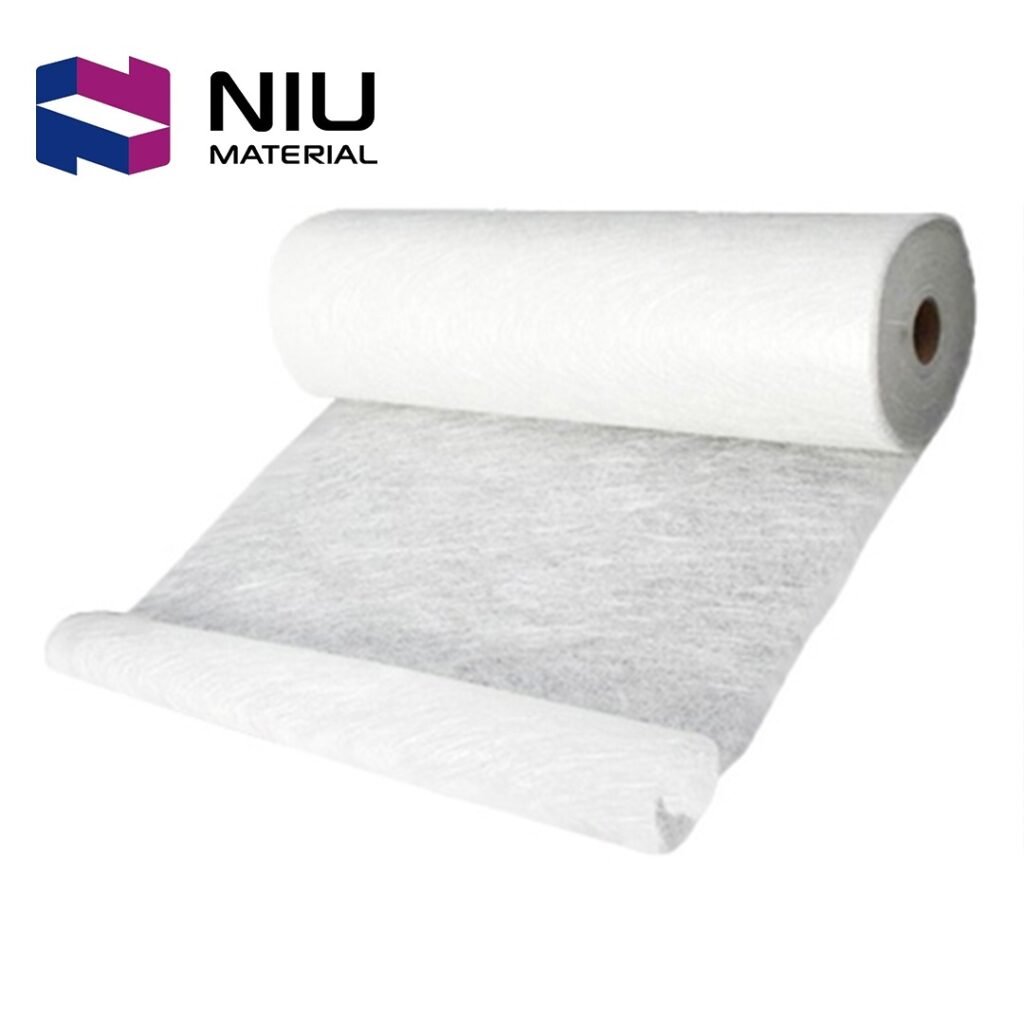
Founded in 2012, our company brings more than twenty years of team experience in the glass fibre industry. Our products are exported to South America, the Middle East and Europe, and hold SGS, CE and ISO9001 certification.
Quality control runs through the entire process from fibre drawing to the finished roll, with weight, width, moisture content and binder content tested batch by batch and reported. If mat weight drifts, wall thickness drifts with it, and both tank weight and strength become hard to hold — which is why we control this property by batch.
Products can be customised to your process: weight, width, roll length and binder type are all adjustable. Tank designs with many corners and tight curves can run emulsion-bonded mat; where wet-out speed and bond between plies come first, powder-bonded is the choice. On the export side, shipping plans are laid out by week, documents are issued consistently from the same entity, and long-cycle projects are followed up by email.
Conclusion
Mechanisation in Peruvian agriculture is still advancing, and demand for field tanks will rise with it, along with the requirements placed on them. A tank’s service life depends on the quality of the laminate, and laminate quality starts with the material.
Our 450 g/m² powder-bonded E-glass chopped strand mat, 1.27 m wide, addresses the three most common problems in the wall-build layer: trapped air and delamination between plies, dry patches from incomplete wet-out, and excess overlaps caused by insufficient width.
If you are an FRP tank manufacturer, composites processor or materials trader in Peru or across South America, contact us for samples and technical datasheets, or to discuss a custom weight and width against your tank design and process.