Introduce
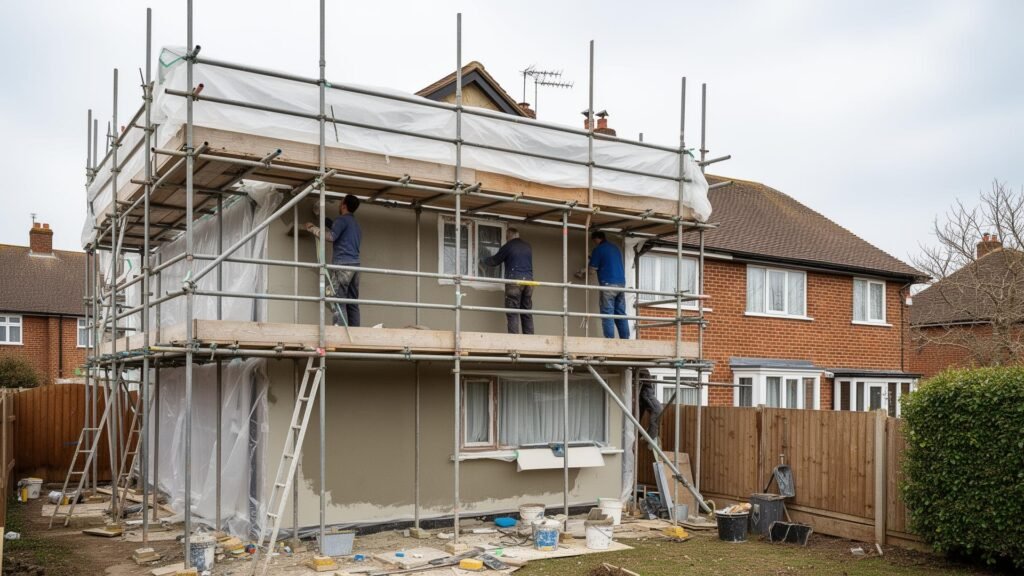
The UK’s refurbishment market — insulation upgrades, render renewal on ageing elevations, and repair work on older walls — keeps demand for fiberglass mesh cloth growing. Yet contractors and material suppliers there keep running into three recurring problems: hairline cracks appearing within the first year of handover, mesh lines showing through the finish, and hollow or debonded base coats — each one bringing scaffold-level rework and, for the supplier, ongoing after-sales and reputational cost.
Core Challenges in UK Render and Insulation Work
These three problems persist, and their root is rarely the render mix. It is the mesh layer in the middle, and the way it is embedded.
Early cracking and visible mesh lines: A light cloth cannot carry the tensile stress that a cement-based base coat develops as it cures, so it fails first at overlaps, corners, and around openings. Embedded too shallow, or too stiff to lie flat, the mesh then telegraphs through the finished render — problems that usually appear after sign-off.
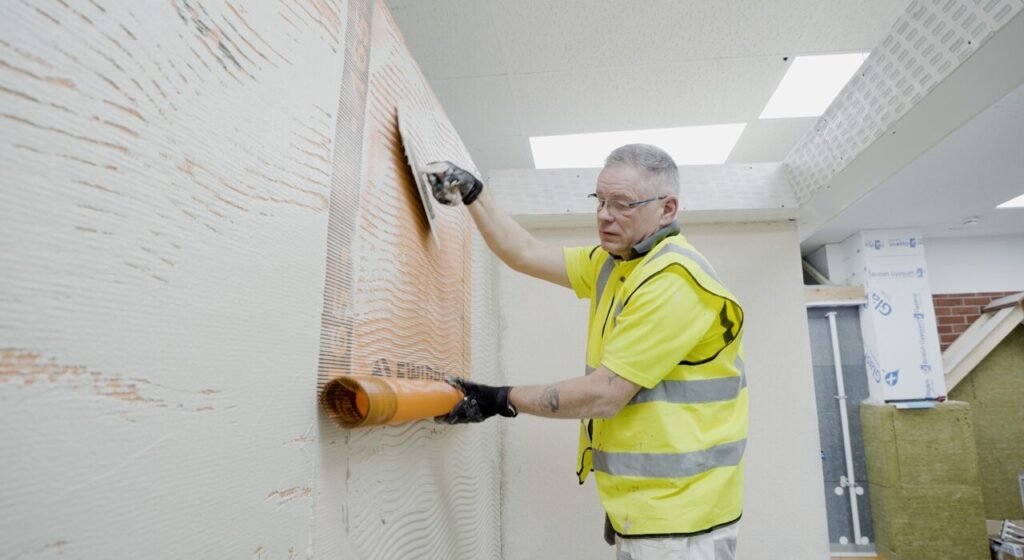
Hollow patches, debonding, and coverage that cannot be checked: When mortar does not actually pass through the openings and wrap the strand, the mesh sits proud, creating voids that end in debonding. And a white mesh on grey mortar makes coverage, overlap width, and missed patches impossible to confirm during application, so defects are sealed into the wall by the finish.
Doubts about imported material, and the cost of trial: Specifications are often “close” rather than the one the job actually uses, and basis weight, meterage, and coating cannot be verified before the container opens. The result is weeks of trial, with capital tied up and the installation window running.


Our Targeted Solutions with Precision-Woven Fiberglass Mesh Cloth
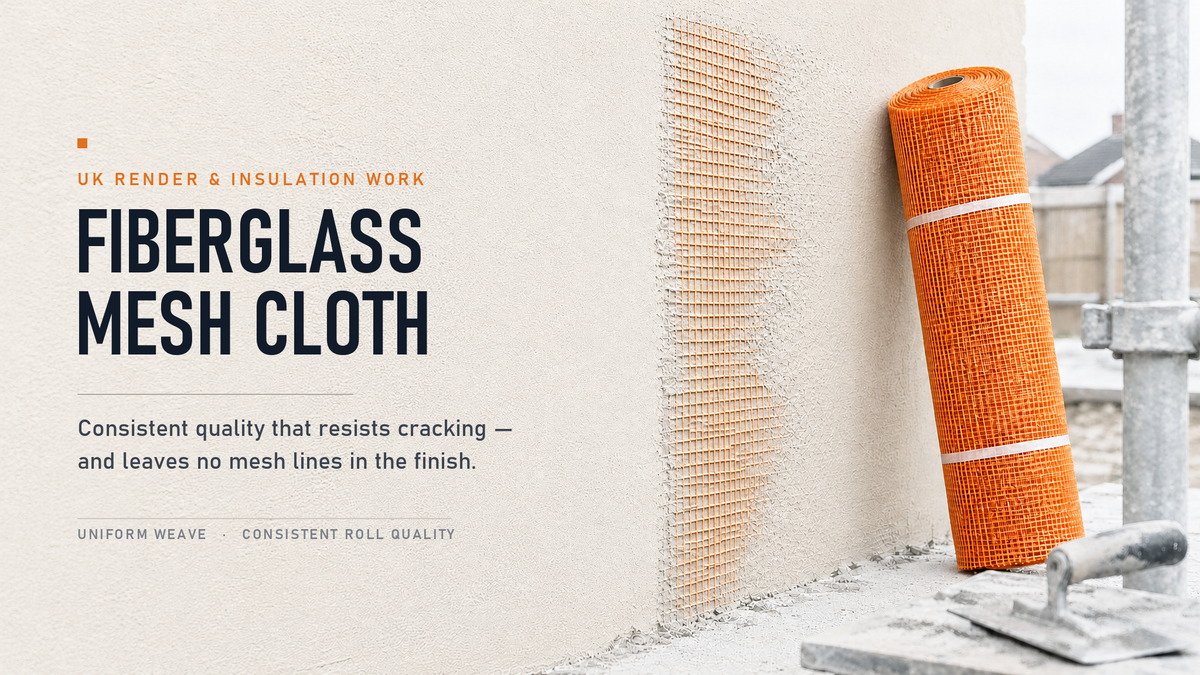
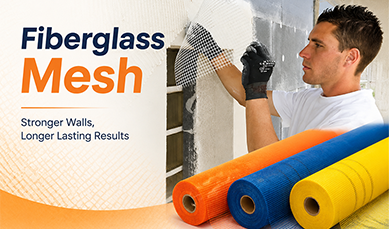
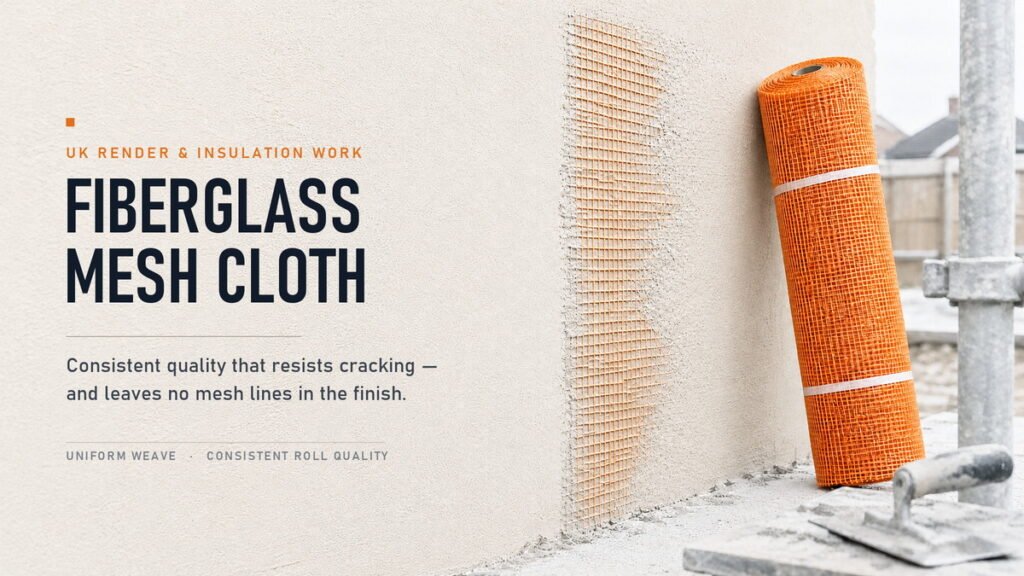
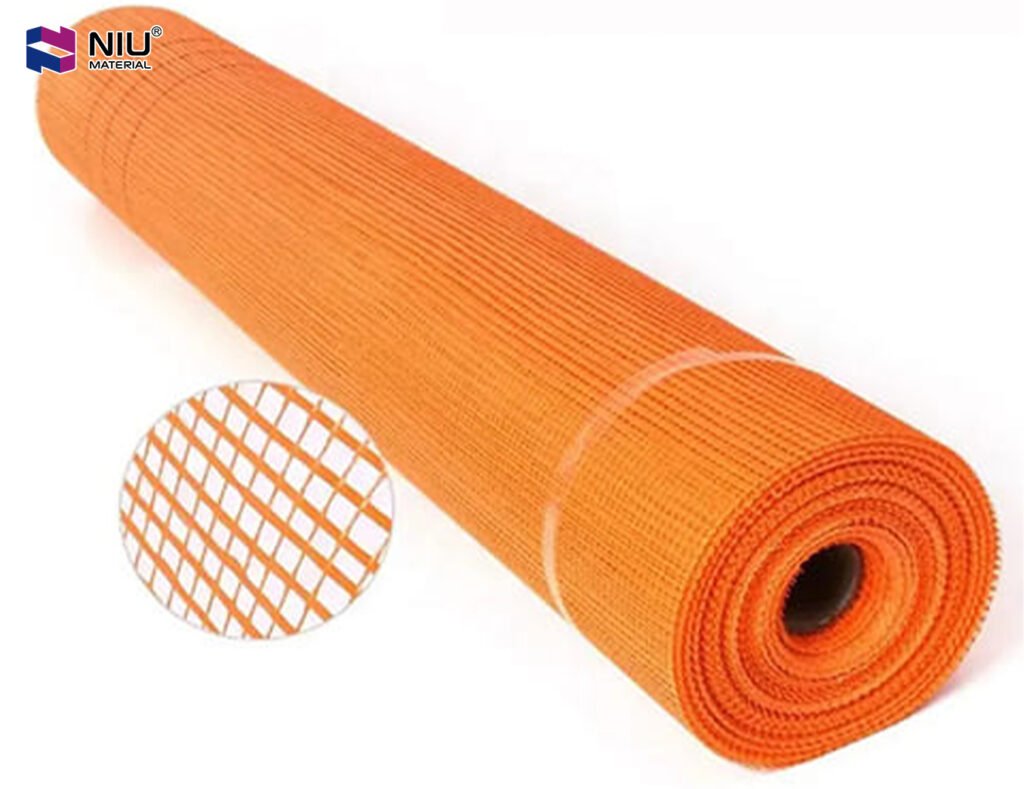
Centred on our 160 g/m² fiberglass mesh cloth in 5×5 mm openings — available in white or in a colour specified for the market, with orange a common choice for render work — we address each problem at its source, through specification, visual verification, and data support.
Weight and Opening Matched to the Job, Against Cracking and Mesh Lines
To solve cracking, we treat weight and opening as engineering parameters rather than filling them from stock.
At 160 g/m² there is enough glass to carry the curing stress of a cement-based base coat with margin, holding at overlaps, corners, and around openings — the points where stress concentrates. 5×5 mm openings let mortar pass through and wrap each strand, so the mesh sits inside the layer and works with the render instead of lying on the surface waiting to debond. Warp and weft strength is tested batch by batch, so the cloth does not shed or break during fast application and trowelling.

Visible Colour and Even Alkali-Resistant Coating, Against Missed Coverage and Early Failure
Coverage that cannot be checked and early failure in an alkaline environment are handled from two sides — colour and coating.
Orange reads clearly against grey mortar, so coverage, overlap width, and missed patches can be seen and corrected before the render closes over them: a defect caught at that stage costs minutes, not a scaffold. The colour also gives the material an identity on site, which helps a supplier build its own recognition.
On the coating side, an alkali-resistant layer is applied evenly to every roll to block attack from the alkaline pore solution in cement. In a cement-based system it is usually the coating, not the glass composition, that decides service life; uneven coating leaves soft spots that surface months later as exposed fibre, bloom, and local loss of strength. Coating weight is controlled batch by batch so that the whole roll and the whole batch behave the same.

Verified Data and Case Support That Cut the Cost of Trial
To answer doubts about imported material, we replace “let’s try a batch” with documents that can be checked.
We provide a laboratory test report for every batch, including warp and weft tensile strength, technical datasheets and MSDS for each specification, and sample rolls for trial under the customer’s own process and on its own sites. We can also share supply records for the same specification in other export markets, under confidentiality, as evidence of how it performs outside the factory. That lets a supplier complete verification before committing stock, and keeps the cost of trial to a minimum.
Verified Production and Quality Results
A specification is worth only the tolerance it is held to. In production, these are checked batch by batch rather than assumed:
- Basis weight and coating weight controlled as running parameters, not spot-checked at the end of the line
- Mesh opening verified against the loom setting, so 5×5 mm describes the finished roll
- Warp and weft strength tested per batch, matching the direction the base coat actually loads
- Winding tension and roll meterage checked roll by roll at packing
- An official test report with every batch, and basis weight, mesh opening, roll format, and batch number marked on the roll for traceability
Wider Applications Beyond Render and Insulation Base Coats
Beyond exterior render and insulation base coats, the same mesh cloth is used for wall crack repair, decorative render finishing, GRC component reinforcement, roof waterproofing reinforcement, and floor screed crack prevention.
Lighter weights suit interior finishing and thin plaster, where the layer must stay thin and show no imprint; heavier weights such as this 160 g/m² suit exterior thick render and structural reinforcement. As a manufacturer, we can also customise weight, opening, colour, roll length, and packing to different processes and performance requirements.


Why Choose Us as Your Fiberglass Mesh Manufacturer
As a fiberglass manufacturer serving European and Middle Eastern markets, we bring three core strengths:
Strict and consistent quality control: control points from incoming yarn through to the finished roll keep every roll to the same performance standard, with an official test report for every batch.
Custom development capability: our process team can work backwards from your application method and market requirements to set weight, opening, colour, roll length, carton printing, and labelling.
Export delivery support: shipping plans laid out in weeks, documents issued consistently from the same entity, and long-term email follow-up, so lead times and paperwork do not drift during the quiet stretches of a buying cycle.
Summary
Our 160 g/m² fiberglass mesh cloth in 5×5 mm openings — white or in a colour specified for the market, with an even alkali-resistant coating — is a proven reinforcement solution for exterior render and insulation base coats, addressing early cracking, visible mesh lines, hollow and debonded layers, and coverage that cannot be verified.
If you are a building material distributor, trader, or render system supplier in the UK or across Europe looking for a reliable fiberglass mesh manufacturer, contact us for samples, detailed technical datasheets, or a customised bulk quote.