
Introduce
As a professional fiberglass mesh manufacturer and supplier, we work with construction material manufacturers, distributors, contractors, and project suppliers who need fiberglass mesh that delivers consistent performance from production to installation.
The right fiberglass mesh is not simply about choosing a higher or lower GSM. Mesh weight, opening size, coating, width, color, and application all affect the final performance of the reinforced system.
For example, fiberglass mesh used for EIFS/ETICS may require different specifications from mesh used in cement mortar, GRC, waterproofing, or wall reinforcement. A distributor purchasing standard mesh in bulk may also have different requirements from a manufacturer looking for customized specifications.
This guide focuses on the key factors buyers should consider when selecting fiberglass mesh and how the right specification can improve product performance, production efficiency, and project reliability.


Fiberglass Mesh Specifications That Matter in Real Projects
Fiberglass mesh performance depends heavily on the specification selected for the application.
Common fiberglass mesh specifications include:
- Weight: 60–160 g/m²
- Mesh opening: 4×4 mm, 5×5 mm, 10×10 mm
- Width: Available in different widths according to application and customer requirements
- Colors: White, pink, blue, black, and customized options
- Coating: Alkali-resistant coating for improved compatibility with cement-based materials
For many construction applications, 60–100 g/m² mesh is suitable for general reinforcement, while 145–160 g/m² mesh is commonly selected when higher reinforcement performance is required.
The correct mesh opening also matters. A 4×4 mm or 5×5 mm opening can provide a suitable balance between reinforcement and material coverage, while larger openings may be preferred for specific applications.
Match the Mesh to the Application, Not Just the Price
Different construction systems require different reinforcement solutions.
EIFS / ETICS and Wall Insulation
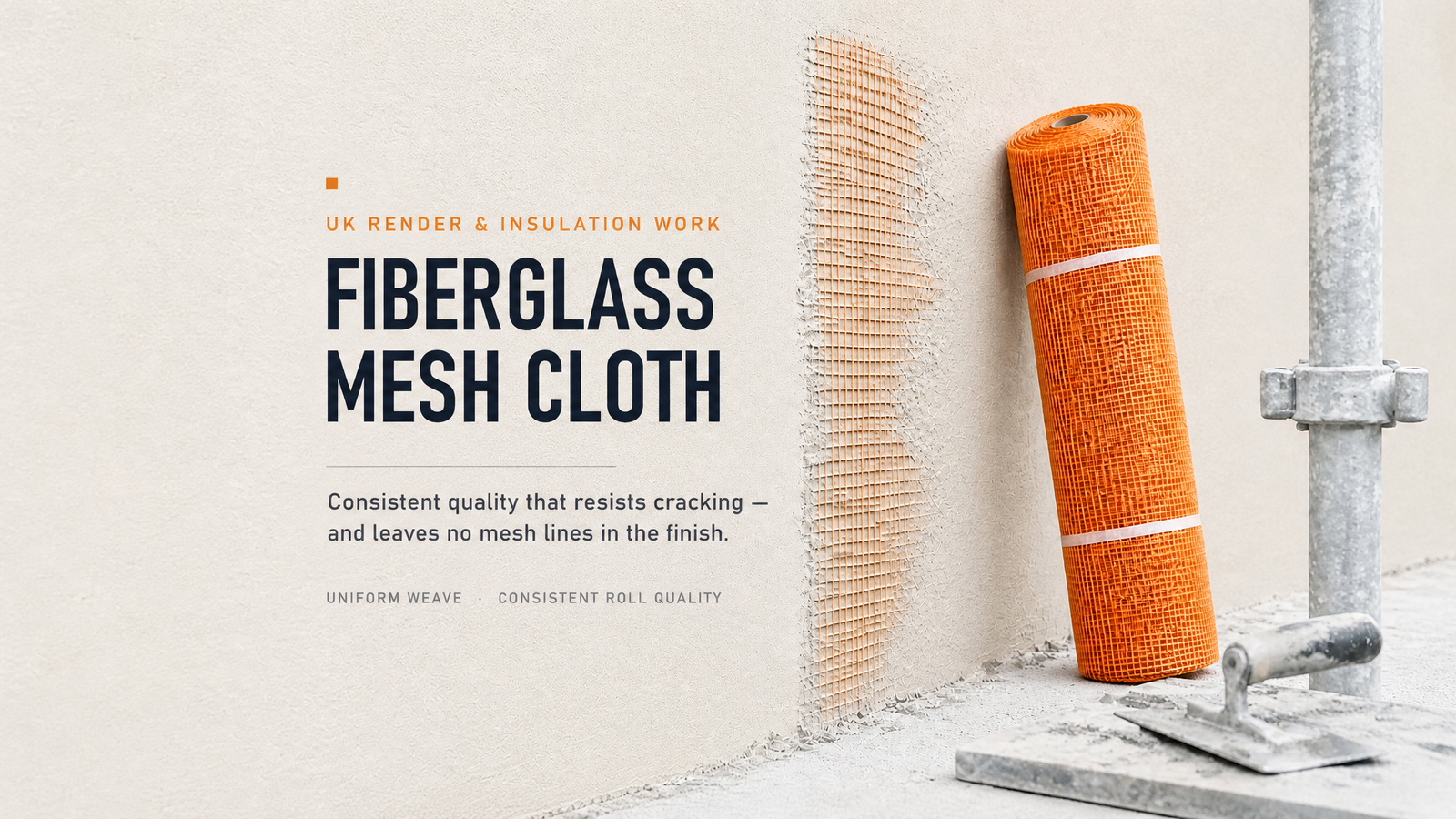
Fiberglass mesh is widely used as a reinforcement layer in exterior insulation systems. It helps improve crack resistance and provides additional reinforcement to the surface layer.
For standard insulation systems, 4×4 mm or 5×5 mm mesh is commonly used. Heavier mesh can be selected for areas requiring stronger reinforcement.
Cement Mortar and Wall Reinforcement
Fiberglass mesh can be embedded into cement-based mortar to improve the stability of the reinforced layer and reduce the risk of cracking.
GRC and Cement-Based Products
For GRC and other cement-based products, alkali-resistant fiberglass mesh can provide additional reinforcement while maintaining compatibility with cementitious materials.
Waterproofing
Fiberglass mesh is also used in waterproofing systems to reinforce waterproof coatings and membranes, especially where additional dimensional stability is required.

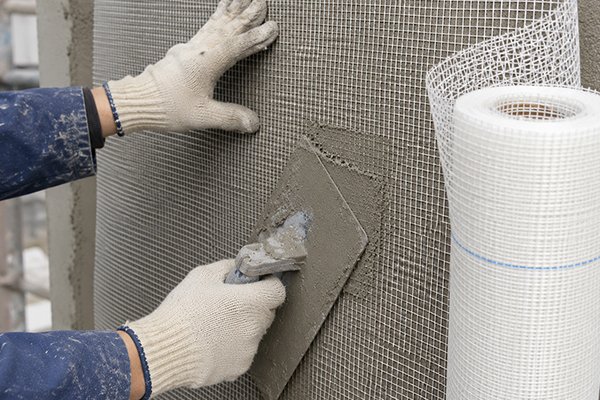

Alkali Resistance Is Critical for Cement-Based Applications
When fiberglass mesh is used with cement or mortar, alkali resistance becomes an important purchasing factor.
Cement-based materials create an alkaline environment. If the mesh coating and fiberglass properties are not suitable for this environment, long-term reinforcement performance may be affected.
Our fiberglass mesh is produced with an alkali-resistant coating designed for construction applications. This helps the mesh maintain its reinforcing function when embedded in cement-based systems.
For customers purchasing mesh for EIFS, ETICS, cement mortar, GRC, or similar applications, selecting the right alkali-resistant specification is more important than simply choosing the lowest-cost mesh.
From 60 to 160 GSM: Choose the Right Reinforcement Level
Not every project needs the same reinforcement strength.
Lighter fiberglass mesh, such as 60–75 g/m², can be suitable for applications where flexibility and easy handling are important.
100 g/m² mesh provides a balanced solution for many general construction applications.
For applications requiring stronger reinforcement, 145–160 g/m² mesh can provide a heavier reinforcement layer.
The key is to select the mesh according to the construction system rather than automatically choosing the highest GSM.
Mesh Opening and Width: Small Details That Affect Installation
Mesh opening affects how the fiberglass mesh interacts with mortar, adhesive, and other construction materials.
Common options such as 4×4 mm, 5×5 mm, and 10×10 mm can be selected according to the application and installation method.
Width is another practical consideration. Standard rolls are suitable for many construction projects, while customized widths can help manufacturers and contractors improve cutting efficiency and reduce material waste.
For bulk buyers, choosing the right combination of GSM, mesh opening, and roll width can make a significant difference in overall material efficiency.
Why Choose YUNIU Fiberglass Mesh for Your Business?
For B2B buyers, fiberglass mesh is not simply a construction material. It is part of your production, project delivery, and customer satisfaction.
At YUNIU Fiberglass, we focus on stable fiberglass production and long-term supply for international customers.
Our fiberglass mesh solutions cover different construction requirements, including EIFS/ETICS, cement mortar, GRC, waterproofing, wall reinforcement, and related applications.
We can supply different mesh weights, openings, widths, and colors according to customer requirements, supporting both standard specifications and customized bulk orders.
With more than 20 years of fiberglass manufacturing experience, YUNIU focuses on consistent production, quality control, stable delivery, and long-term cooperation with overseas customers.
Find the Fiberglass Mesh Specification That Fits Your Application
The best fiberglass mesh is not necessarily the heaviest or the most expensive. It is the mesh that matches your application, construction system, production process, and purchasing requirements.
Whether you are sourcing 60–160 g/m² fiberglass mesh, looking for a specific 4×4 mm, 5×5 mm, or 10×10 mm opening, or need customized width, color, and packaging, selecting the right specification from the beginning can make your procurement much more efficient.
For fiberglass mesh manufacturers, distributors, contractors, and construction material suppliers, YUNIU can provide a practical solution based on your product and application requirements.
Tell us your required specification and quantity, and our team can help you match the suitable fiberglass mesh for your application.