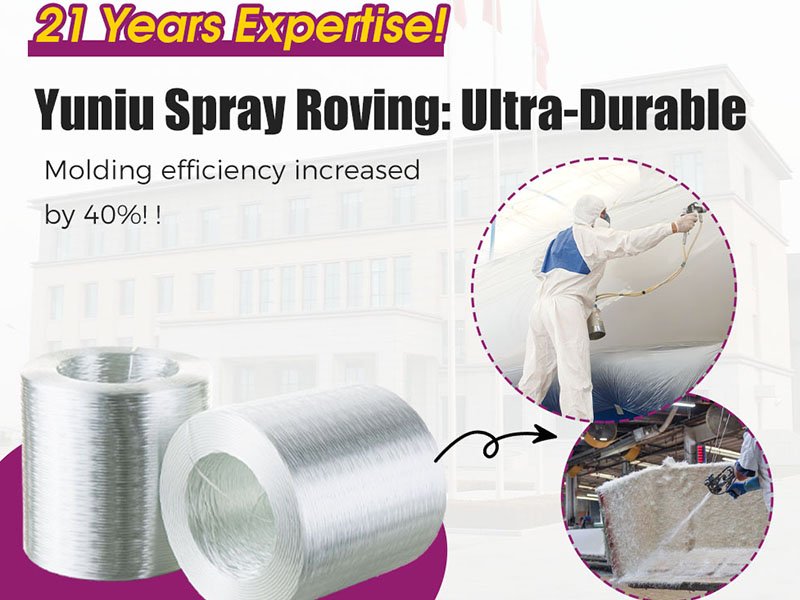
Why Do Brazil's Wastewater Projects Need Fiberglass Spray-Up Roving?
Brazil is accelerating toward its 2033 sanitation targets: 99% potable water coverage and 90% sewage collection and treatment. A large number of newly built and upgraded pipe networks, pump stations and tanks operate in high-temperature, high-humidity conditions with hydrogen sulfide present, and concrete and metal corrode far faster than their design life assumes. Glass fiber reinforced plastic (known locally as PRFV) has therefore become the mainstream alternative material, and spray-up is one of the most flexible and economical processes for producing these irregular-shaped and liner-type components. As the primary reinforcement for spray-up, fiberglass spray-up roving determines whether this layer can work reliably over the long term in a corrosive environment.
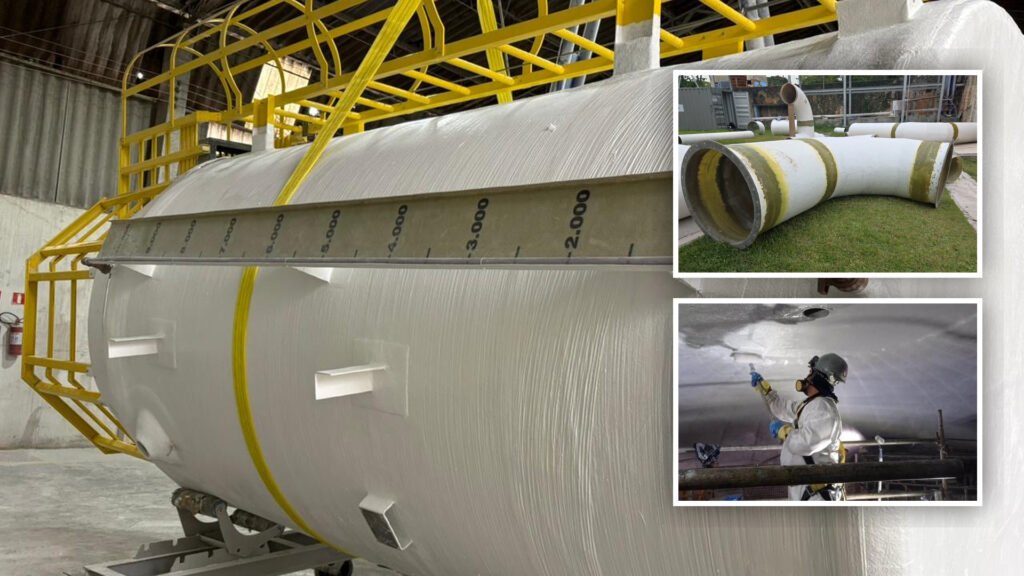
Why Does the Wastewater Environment Demand So Much from Reinforcement Materials?
In wastewater systems, sulfate-reducing bacteria generate hydrogen sulfide under anaerobic conditions, which is oxidized to sulfuric acid on the pipe crown and tank walls — the classic “crown corrosion.” High temperatures and alternating wet-dry cycles in tropical climates further accelerate the process. This means the reinforcement must not only provide strength, but also keep the fiber-resin interface stable under long-term acidic, humid service, without delamination, wicking or pinholes. Glass fiber itself is not resistant to strong acid attack; what actually provides corrosion protection is the integrated structure of “fiber + resin + resin-rich liner layer.” Therefore, the surface treatment of the fiber (sizing) and its compatibility with the resin matter more than a strength figure on its own.
What Role Does TEX2400 Spray-Up Roving Play in Wastewater FRP Products?
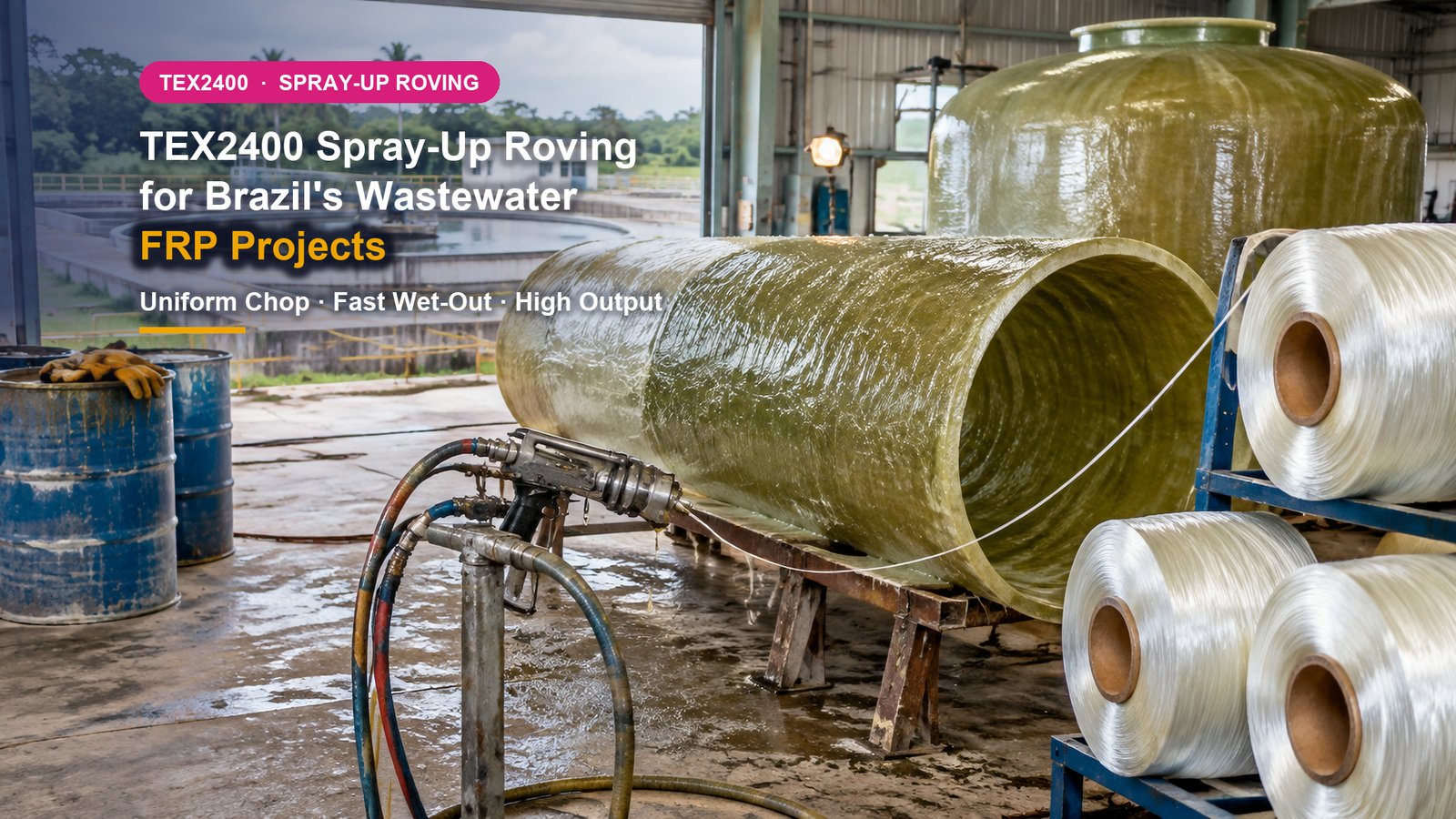
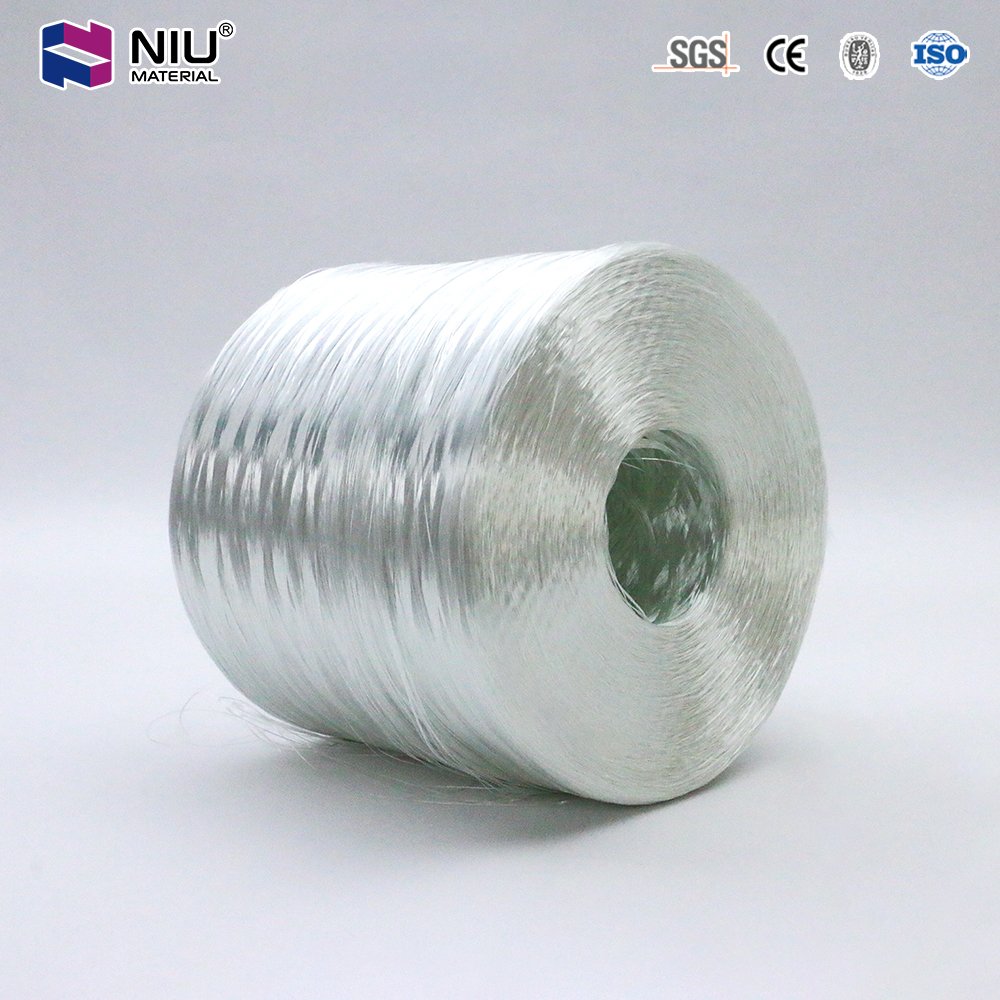
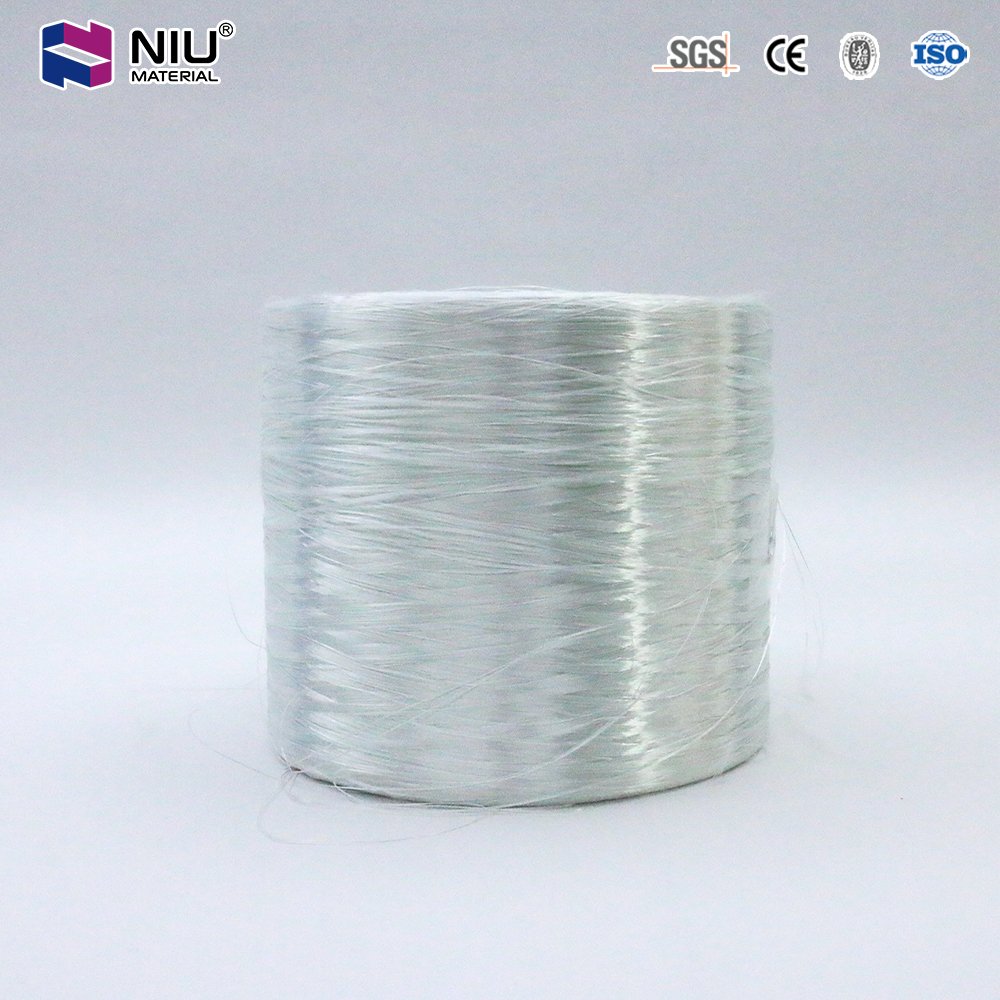
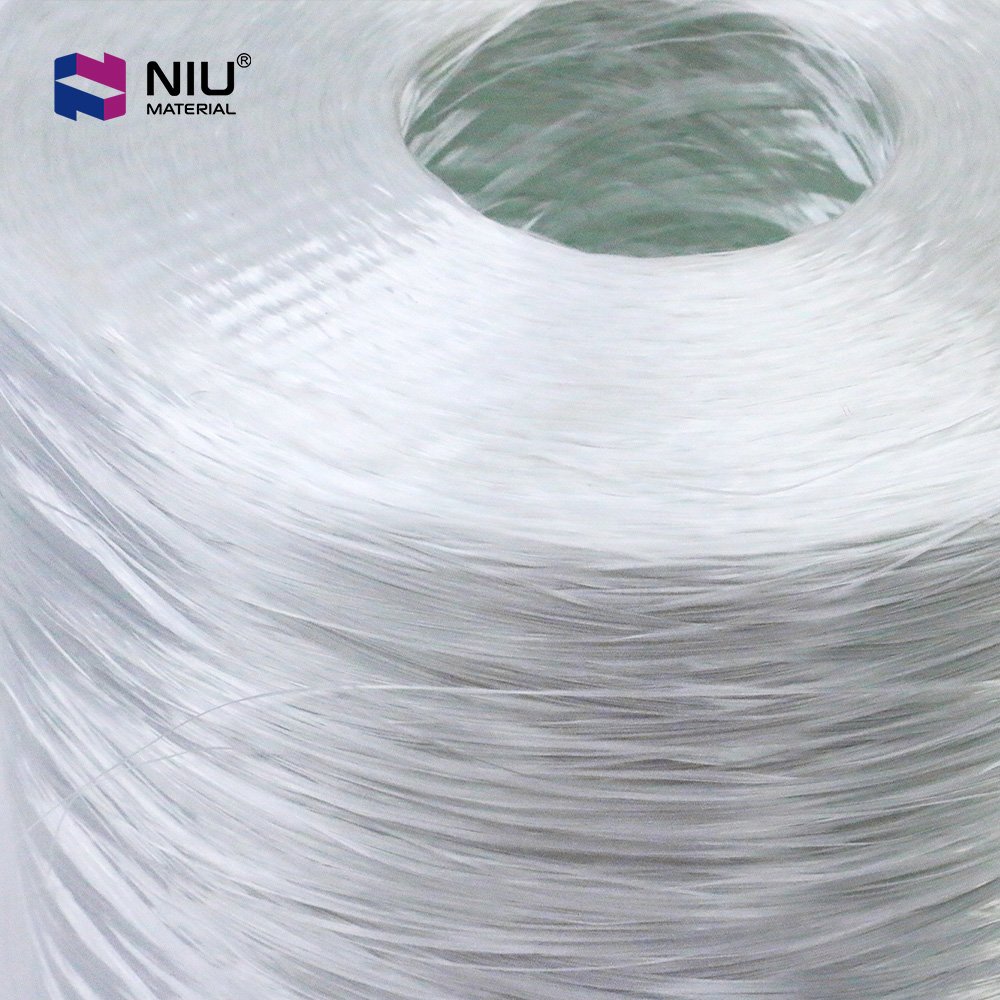
TEX2400 refers to an assembled spray-up roving with a linear density of 2400 tex. In a chopper gun it is cut to length and deposited onto a mold or substrate together with resin; after rolling and curing it forms the chopped-strand reinforcement layer. What it supports is the mechanical structure of the part: stiffness, interlaminar strength, impact resistance and thickness consistency. According to the parameters published on your product page, the YN-SUR2400 series has a sizing (LOI) content of 0.95%–1.30%, a moisture content of no more than 0.10%, and is compatible with unsaturated polyester, vinyl ester and epoxy resins. It should be understood as one part of a complete formulation, not a standalone solution to corrosion or strength problems — it must be evaluated together with the surfacing mat, the resin system and the construction process.
Why Do Linear Density and Chopped Length Matter for Wastewater Components?
Linear density determines how much fiber is deposited per unit length. A stable 2400 tex means that at the same chop length and gun travel speed, the fiber content deposited in each pass is consistent and the layer thickness is uniform, with no local resin-rich areas (brittle and crack-prone) or local resin-starved areas (dry spots that leak). Chopped length directly affects dispersion and rolling: normally 25–50 mm. Too short (below 10 mm) weakens the reinforcement; too long (above 50 mm) is hard to disperse in the gun, tends to ball up, and bridges during rolling to form trapped air. Most wastewater tank liners are vertical or large-area work, so the consistency of these two parameters often determines the yield of good parts more than peak strength does.

How Is TEX2400 Spray-Up Roving Applied in Wastewater Project Production?
A typical sequence is: substrate or mold preparation → application of a gelcoat or resin-rich layer → lay-up of 45 g/m² surfacing mat → spraying of the chopped-strand layer → rolling to remove air → curing → repeating in layers as designed. A practical process window includes: fiber content controlled at 25%–35%, resin-to-glass ratio by weight of 2.5–3.5:1, spray distance of 300–500 mm held as perpendicular to the surface as possible, 0.5–1.0 mm per pass, and thorough rolling between passes to remove air. For wastewater corrosion service, isophthalic polyester or vinyl ester resin is recommended, with overall resin content raised above 65%, so that a genuine corrosion barrier is formed. Fiber type, addition ratio and mixing sequence should all be validated in small lab batches as part of the formulation.
What Should Manufacturers Check Before Selecting Spray-Up Roving?
Before finalizing a specification, it is advisable to confirm the following technical details one by one:
- Linear density and tolerance: confirm the nominal value, permitted deviation and batch coefficient of variation — these directly determine thickness consistency.
- Moisture content: require no more than 0.10%; high moisture generates bubbles and pinholes during cure.
- Sizing type and content: confirm that it is silane-based, whether it suits the resin actually used (UP, VE or EP), and whether the content falls within the 0.95%–1.30% range.
- Stiffness and strand separation rate: stiffness affects spray fan-out and vertical hang-up; separation rate affects dispersion uniformity after chopping.
- Anti-static performance: high static causes fuzz, gun buildup and broken chop during continuous spraying.
- Compatibility trial with local resin: test wet-out speed, gel time, 24-hour Barcol hardness and interlaminar bond using resin purchased in Brazil.
- Appearance and packaging: check strand consistency, whether fused or undispersed coarse bundles are present, and whether roll weight, pallet and moisture-barrier packaging suit ocean freight.
The correct specification should be determined jointly by the material supplier and the formulator, rather than copied from another project’s parameters.
How Do You Find the Right Spray-Up Roving for Your Wastewater FRP Project?
Every project has a different resin system, chopper gun, component geometry and curing condition. To select the right TEX2400 spray-up roving, tell our team the required linear density, chopped length, sizing type, target fiber content, matching resin and your existing spray equipment. NIU MATERIAL can help confirm the available specification combinations and provide samples for laboratory evaluation and line trials.
Contact us to discuss your wastewater FRP product requirements and identify the right glass fiber reinforcement solution.