Introduce
The expansion of farm mechanisation and horticulture in Peru has driven strong demand for FRP tanks that hold fertilizer, pesticide, and irrigation water on agricultural equipment. A tank has to do more than hold liquid: it has to survive coastal UV, salt spray, and corrosive farm chemicals.
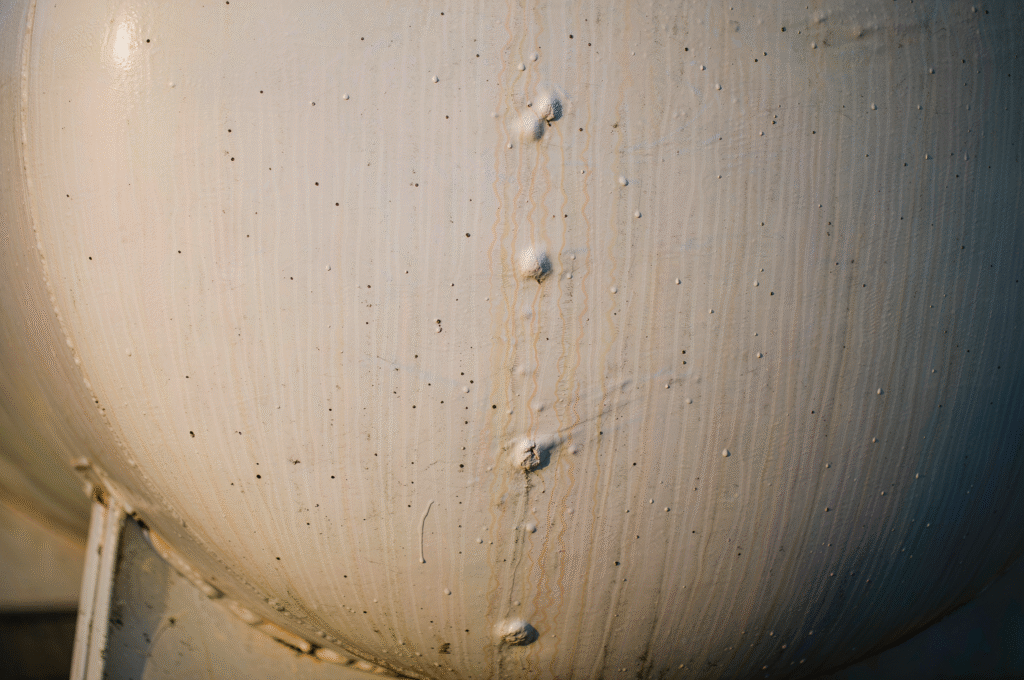
Local tank manufacturers have long been held back by one part of the job: the material on the surface layer is not good enough. With poor surface mat, tanks come out with pinholes, resin flow marks, and an uneven face; within a year or two they start to blister and delaminate. Appearance and service life fall together, and market competitiveness falls with them.

Core Challenges for Agricultural FRP Tank Manufacturers in Peru
Fibre left outside the resin gives liquid a path to follow. Light surface mat with uneven fibre distribution and poor resin compatibility leaves pinholes, resin flow marks, and an uneven face. These are not only cosmetic: exposed glass filament is an open route for liquid, and corrosion and early leakage come next.
A layer that is too thin puts the sun and salt spray straight onto the structure. Cheap mat is usually low-grade glass with no dedicated treatment, so the finished face is only a thin film of resin. Under Peru’s intense UV, coastal salt spray, and corrosive agricultural liquids that film degrades quickly, and blistering and delamination follow.
Short rolls leave the splice as the weakest point in the job. Surface mat arrives in short rolls, so production means constant splicing; those joints end up uneven in thickness, short on strength, and the first place to wrinkle. Frequent roll changes also break the rhythm of the line and stretch the build time per tank.
Our Targeted Solutions with 30 g/m² E-Glass Surface Mat
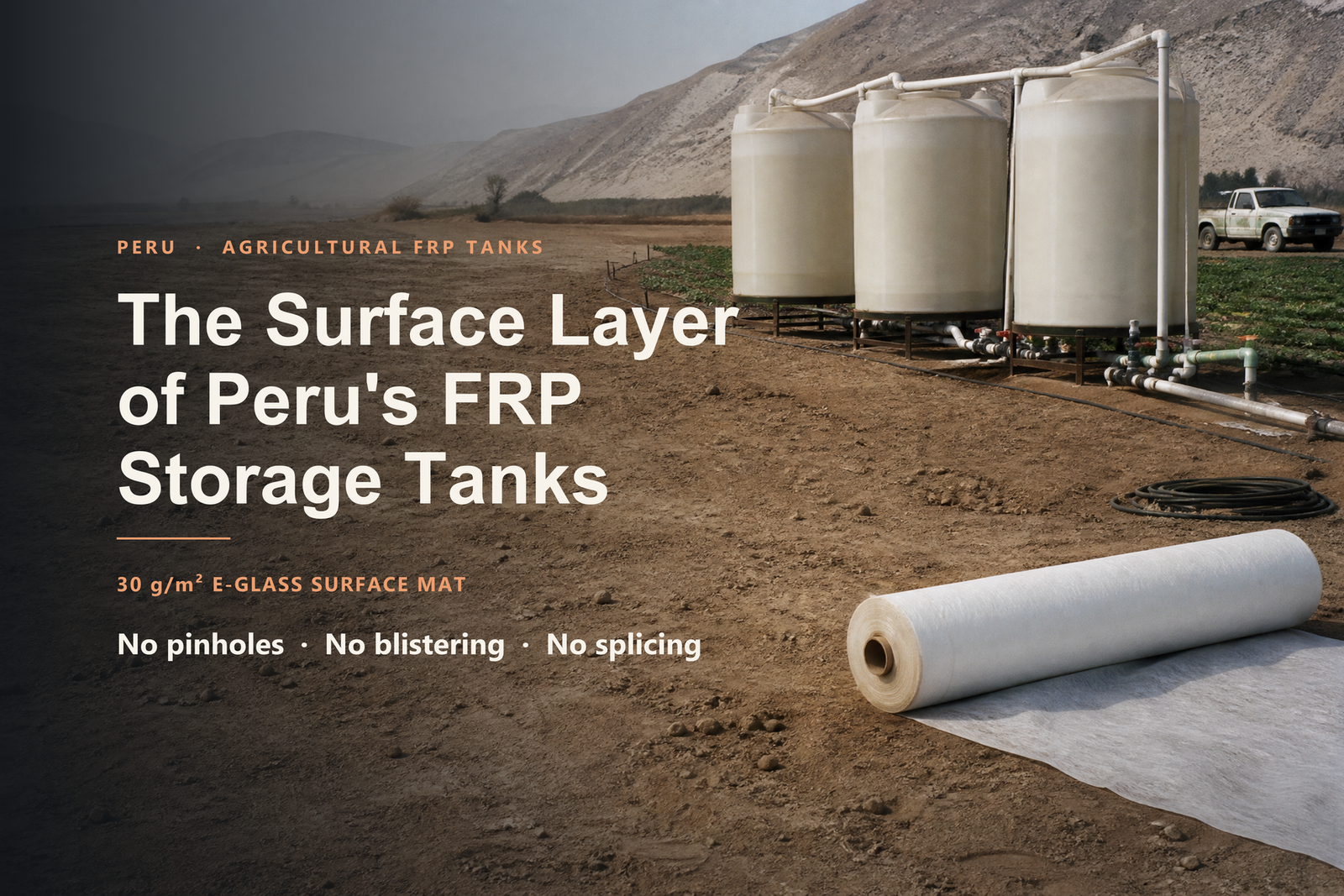
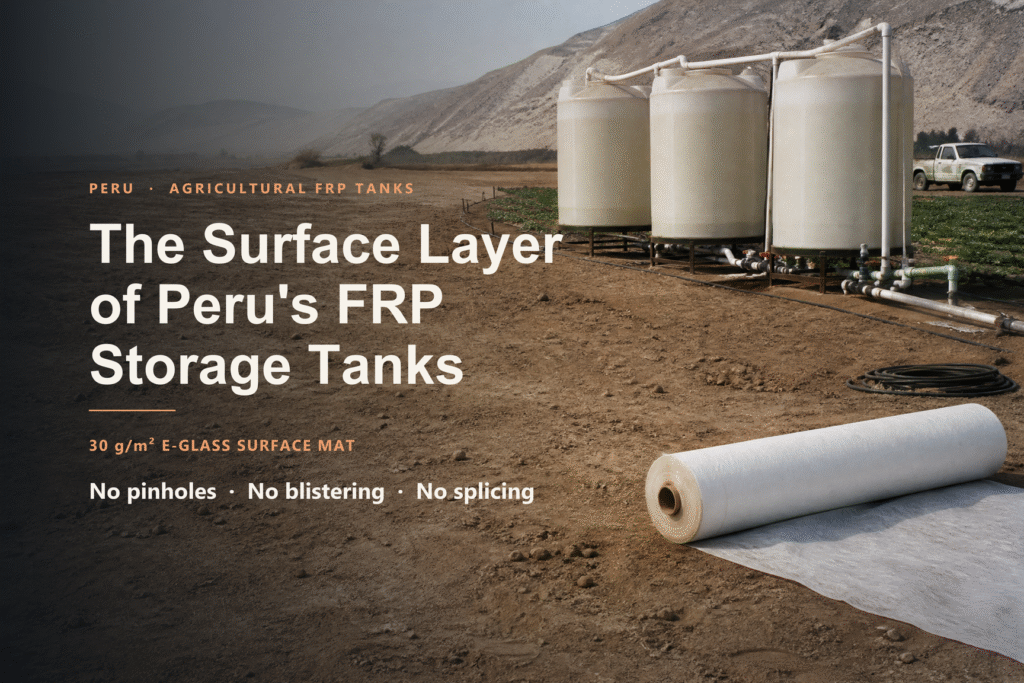
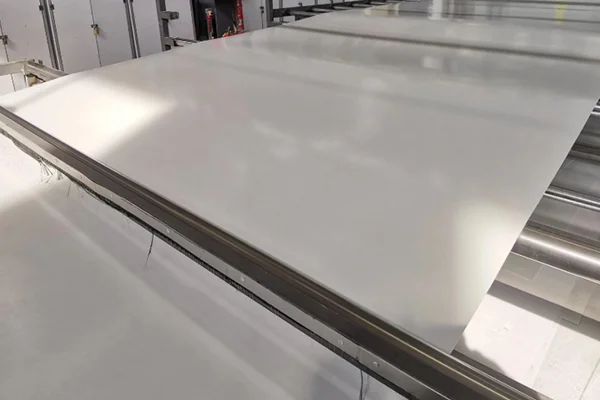
First, what it is: surface mat is a very thin non-woven glass fibre mat, 30 g/m², supplied 1 m wide in continuous 300 m rolls. It carries no structural load. Its job is to form a smooth, dense resin surface on the innermost face and seal the structural layers behind it.
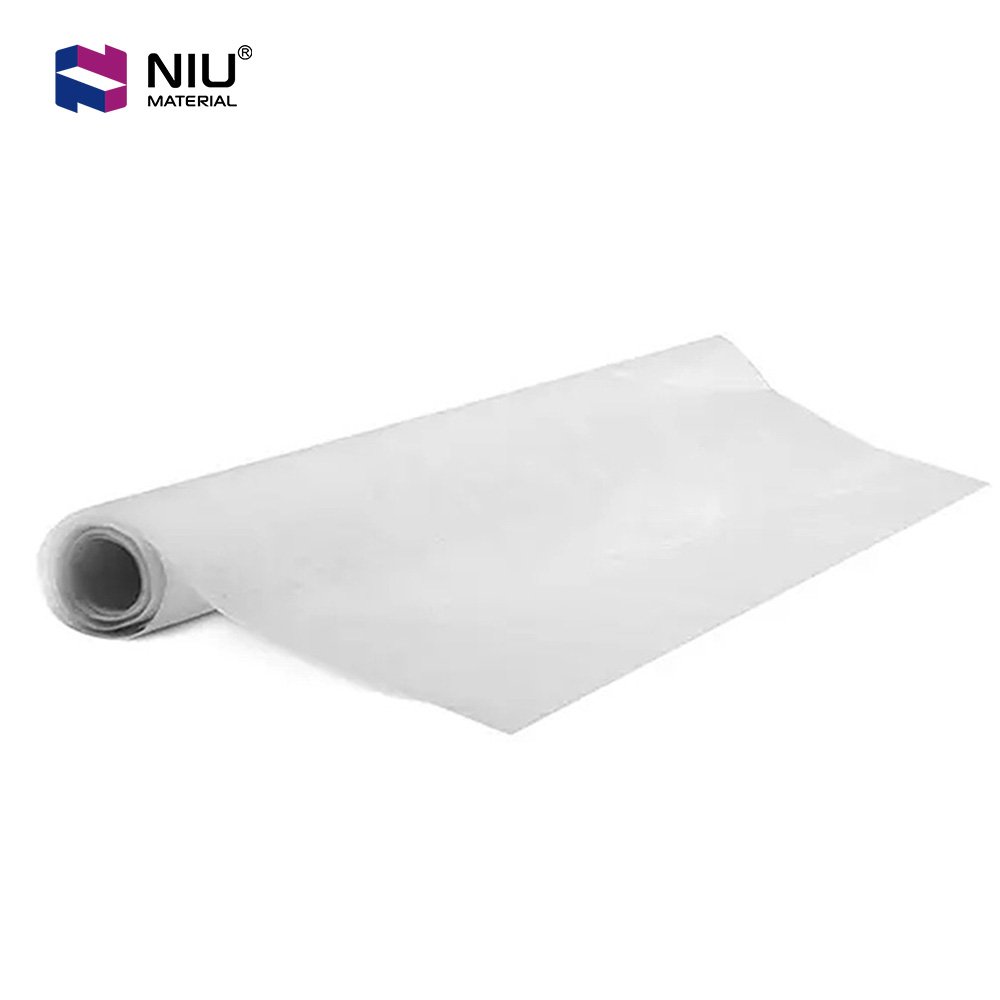
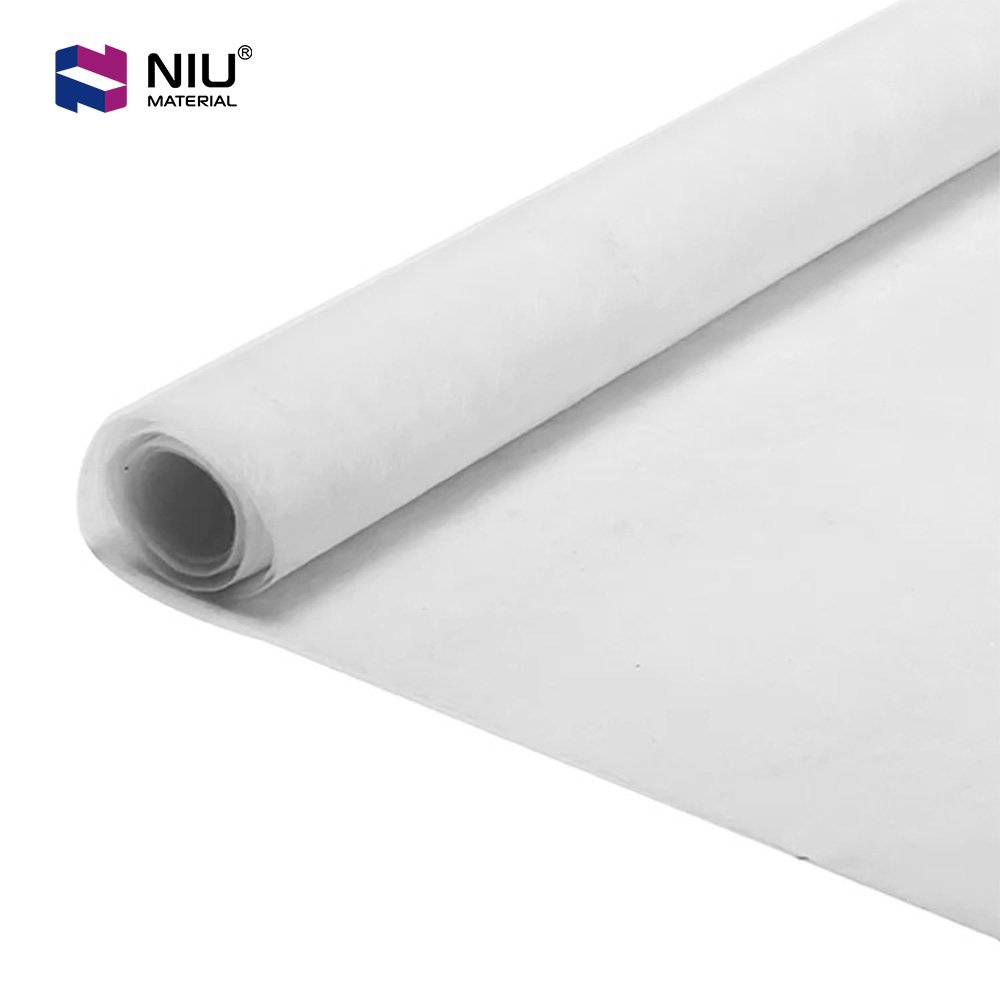
Even Fibre Distribution and Resin Compatibility Give a Clean Surface
At 30 g/m² the mat is extremely thin and extremely even — no thin spots, no clumps. The fibres are randomly dispersed with no direction, so on the shell curve and the base knuckle it does not arch or spring back.
Its treatment is compatible with common FRP resins, so resin goes in fast and spreads evenly, air escapes under the roller, and no fish-eyes or pinholes are left behind. A clean surface achieves two things: it looks like a finished product, and the corrosion path is closed, which is what lets the surface resin layer actually protect the laminate.
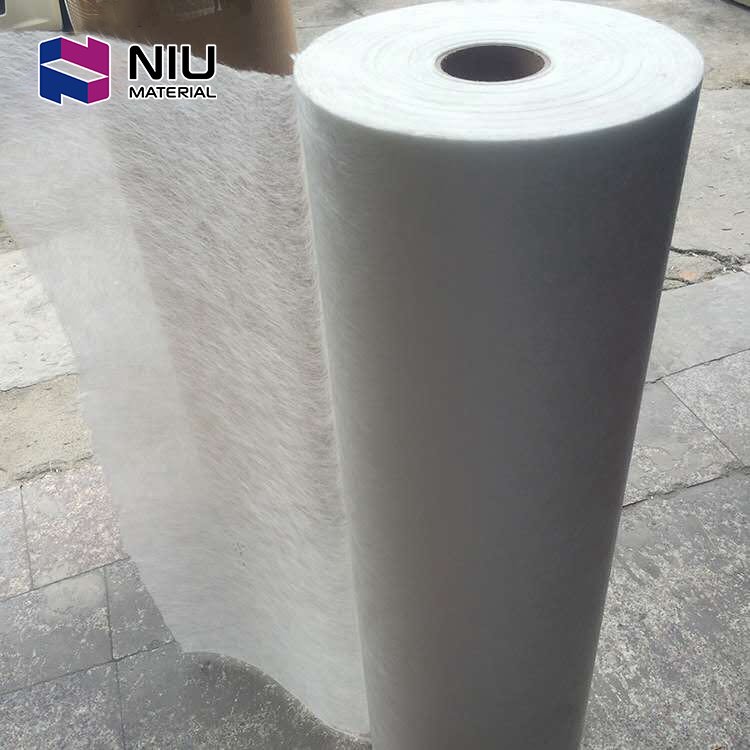
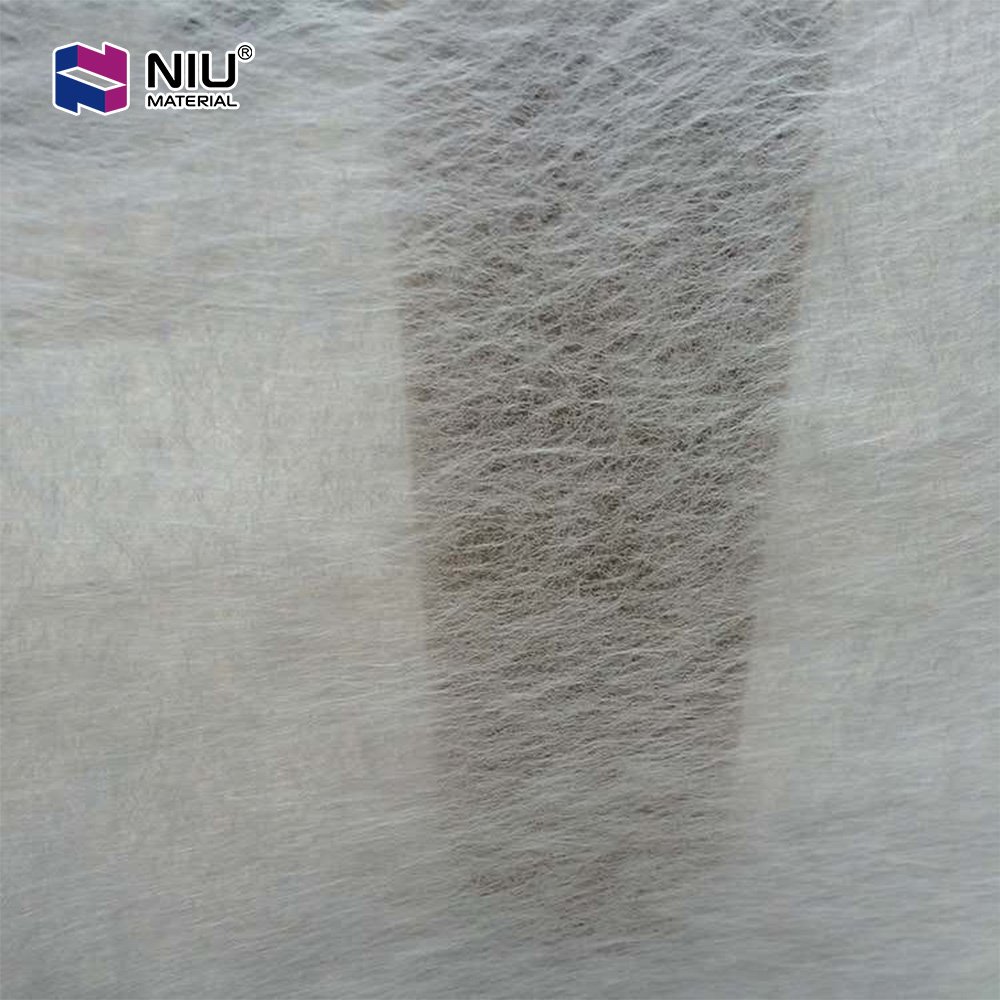
E-Glass and Even Treatment Hold Up to Peruvian Sun and Chemicals
The raw material is E-glass. E-glass resists water and holds its strength — it does not go soft after soaking the way low-grade glass does.
What the surface mat does is make the surface resin thicker and more continuous. Together with the gelcoat it forms a complete protective layer, so UV, salt spray, and fertilizer or pesticide have to get through that before they reach the glass inside. If the surface layer is not breached, it will not blister or delaminate, and the service life of the tank is extended with it.
1 m × 300 m Rolls: Less Splicing, Less Waste
A continuous 300 m roll at 1 m width matches the circumference dimensions common on agricultural FRP tanks. A shift needs very few roll changes, and constant splicing disappears.
Three things improve together: there are fewer joints, and joints are the weak points; there is less cutting waste; and with the lay-up running smoothly, the build time per tank shortens and line capacity rises with it.
Optimised Production and Product Results
After several months of full-line production validation, this specification fully meets the customer’s quality and process requirements. The changes came in three places:
- Surface quality stabilised, with noticeably fewer pinholes and flow marks and better consistency from tank to tank
- The surface layer resists corrosion and weather better, with less blistering and delamination, and suits the local climate more closely
- Fewer roll changes and splices, less material waste, a smoother production rhythm, and higher overall capacity
Why Choose Us as Your Fiberglass Surface Mat Manufacturer
We supply the South American market, and we offer three things:
Strict and consistent quality control. Quality management points run from glass melting through to the finished roll, every roll meets the same performance standard, and every batch comes with an official test report. Surface mat is thin, and only when every roll is even can a tank’s surface quality stay stable.
Flexible customisation. Our in-house development team can adjust weight, width, roll length, and treatment formula to your product and process, and propose a surface reinforcement solution matched to your line.
Delivery that holds. Shipping plans laid out by week, documents issued consistently from the same entity, and email follow-up through the long quiet stretches, so lead times and paperwork do not slip in the off-season.


Summary
Our 30 g/m² E-glass surface mat, 1 m wide in 300 m rolls, is a long-proven surface reinforcement for FRP tank manufacturing. It addresses the three core problems: exposed fibre, insufficient weather and chemical resistance, and too many splices.
If you are an FRP manufacturer or composites trader in Peru or across South America looking for a reliable fiberglass surface mat manufacturer, contact us for samples, detailed technical datasheets, or to discuss a customised bulk solution against your specification.