Introduce
In fiberglass-reinforced plastic (FRP) manufacturing, the weight of fiberglass chopped strand mat (CSM) determines the amount of glass fiber used per square meter and is closely related to resin impregnation, laminate thickness, and finished product performance.
From boatbuilding and storage tank production to automotive components and sanitary ware, different applications require different CSM weights. For FRP manufacturers seeking a consistent material supply, selecting the appropriate GSM helps maintain product quality and improve production efficiency.
So, how much does fiberglass chopped strand mat actually weigh, and which GSM is suitable for different manufacturing applications?


Common Fiberglass Chopped Strand Mat Weights
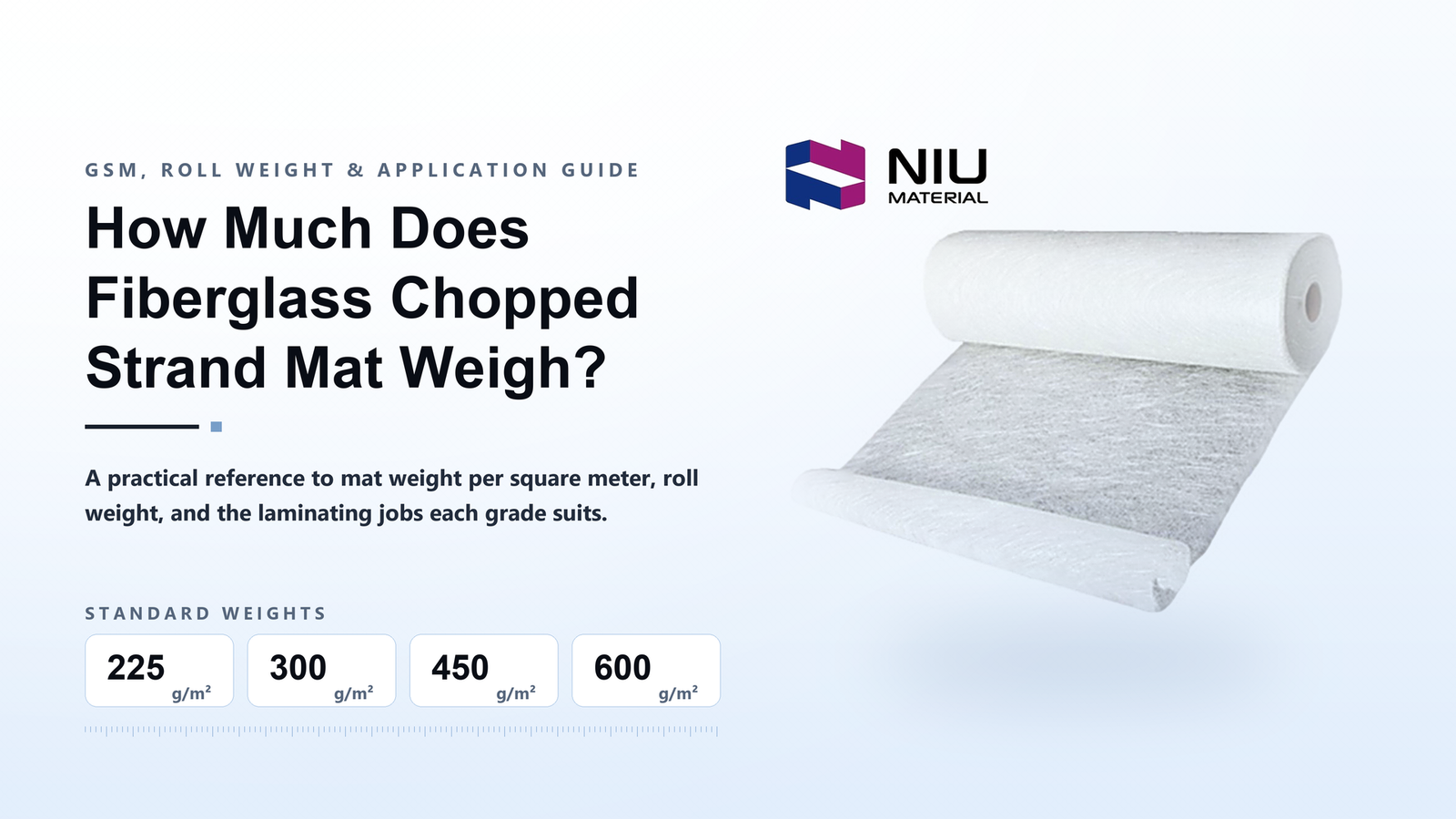
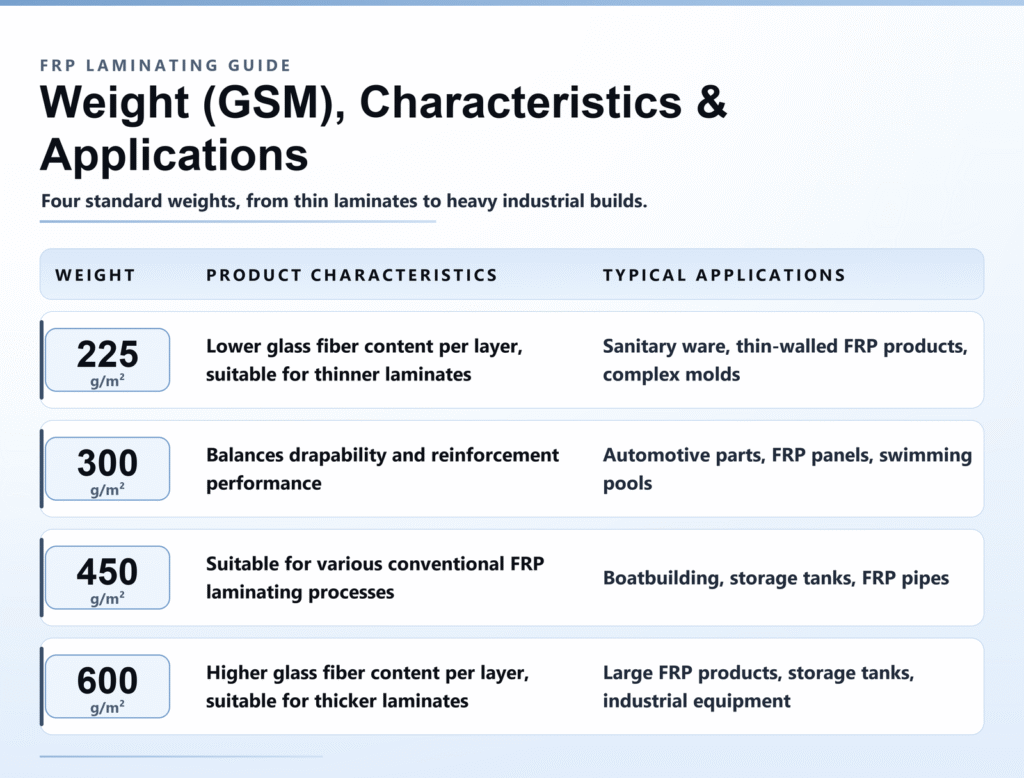
Fiberglass chopped strand mat is typically specified by its areal weight, measured in grams per square meter (GSM or g/m²).
Common CSM specifications include 225g/m², 300g/m², 450g/m², and 600g/m². Each weight is designed to meet different reinforcement requirements and processing conditions.
It is important to note that higher GSM does not automatically mean higher finished product strength. The final mechanical properties also depend on laminate design, fiber content, resin system, and curing conditions.
For FRP products requiring multiple reinforcement layers, manufacturers often combine different CSM weights to achieve the desired thickness and structural performance.
How Much Does a Roll of Fiberglass Chopped Strand Mat Weigh?
When purchasing fiberglass chopped strand mat, GSM and total roll weight are two different measurements.
GSM indicates the weight of one square meter of material, while the total roll weight also depends on the roll width and length.
Roll Weight Calculation
Roll Weight (kg) = GSM (g/m²) × Roll Width (m) × Roll Length (m) ÷ 1000
For example, a standard 450g/m² fiberglass chopped strand mat with a width of 1.27 meters and a length of 50 meters has an approximate net weight of **28.6 kg per roll.
This is an approximate weight, as the actual roll weight may vary slightly due to GSM tolerances. The gross shipping weight also includes the paper core and packaging materials.
For bulk orders, confirming roll weight and packaging specifications in advance helps manufacturers and distributors plan pallet loading, container shipments, and warehouse storage more efficiently.
What Factors Affect CSM Performance Beyond GSM?
Even when two fiberglass chopped strand mats have the same GSM, their drapability, resin wet-out speed, and processing stability may differ depending on the manufacturer.
These differences are mainly related to fiber distribution, strand length, and binder characteristics.
Fiber Length and Distribution Uniformity
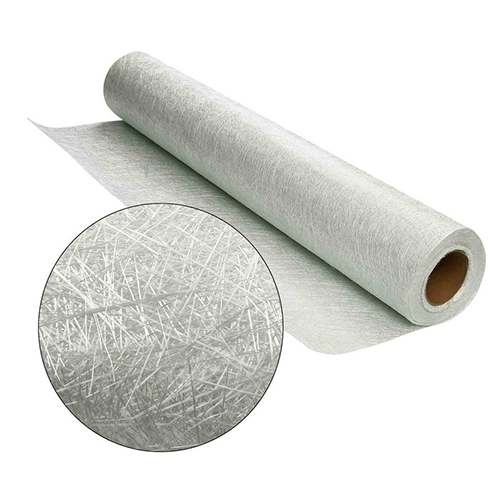
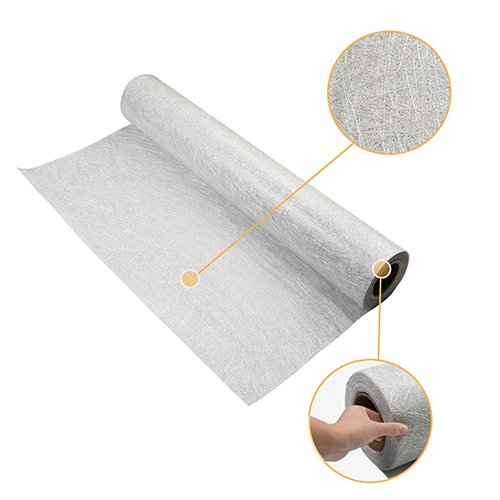
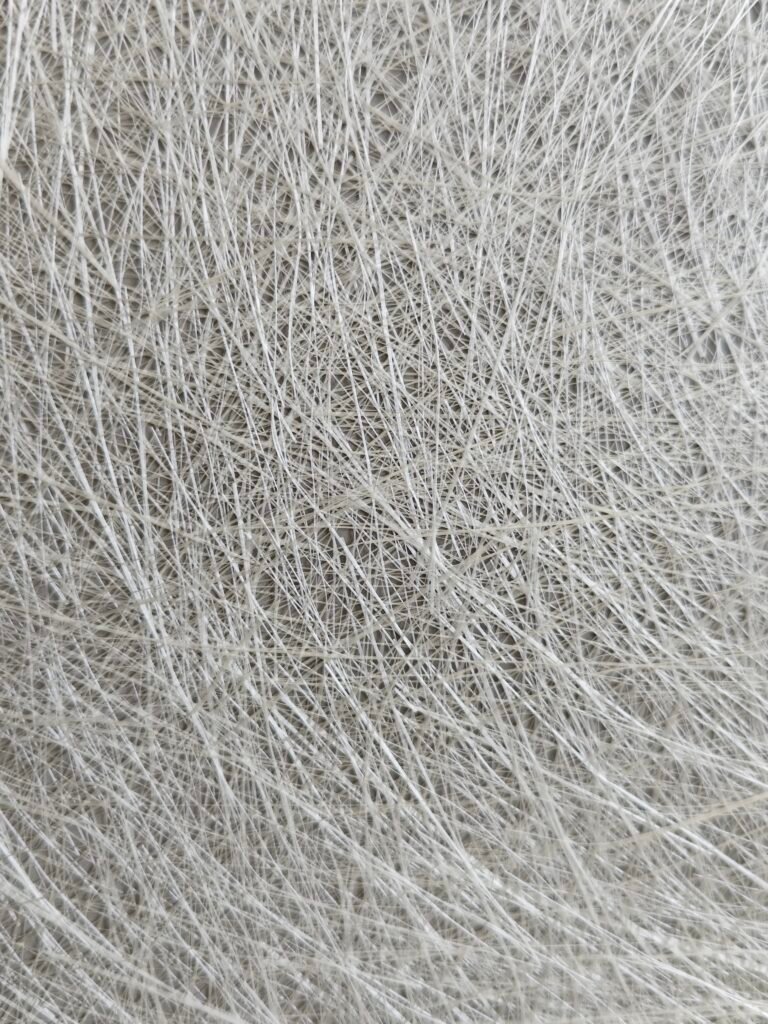
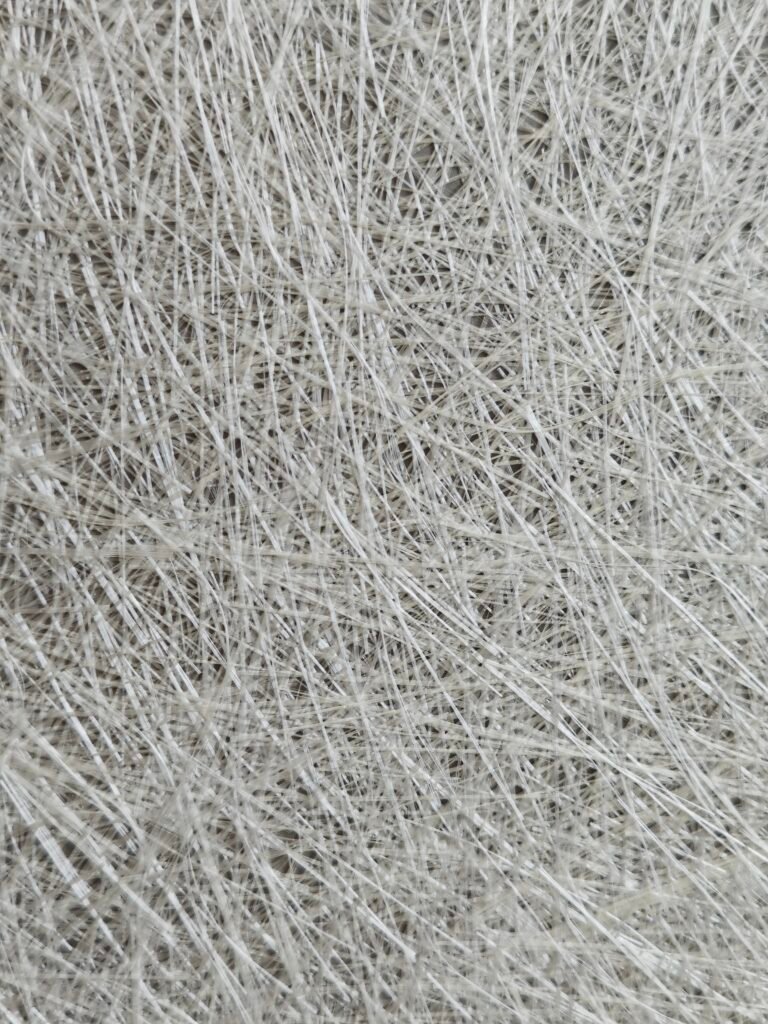
Chopped strand mat is manufactured by cutting glass fibers into specified lengths and distributing them randomly to form a mat.
Fiber length, dispersion, and distribution uniformity all influence the material’s processing performance.
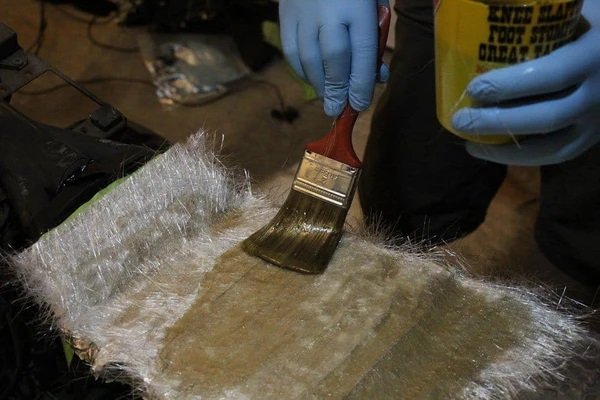
For curved structures such as boat hulls and bathtubs, good drapability allows the mat to conform closely to mold surfaces, reducing wrinkles and localized fiber accumulation.
In FRP panel production and continuous manufacturing processes, uniform fiber distribution helps maintain consistent laminate structure.
Therefore, when selecting CSM, manufacturers should consider fiber distribution and processing compatibility in addition to GSM.
Binder Type and Content
Fiberglass chopped strand mat is commonly produced using powder binders or emulsion binders to hold the glass fibers together.
These two binder systems can differ in flexibility, mat integrity, and resin wet-out performance.
Powder-Bound Chopped Strand Mat:
Powder-bound CSM generally offers good resin wet-out and drapability, making it suitable for various hand lay-up FRP processes. Actual performance depends on the binder formulation.
Emulsion-Bound Chopped Strand Mat:
Emulsion-bound CSM generally provides good mat integrity and handling stability, making it suitable for manufacturing processes with specific handling and processing requirements.
Binder characteristics affect not only processing performance but also compatibility with different resin systems.
Therefore, manufacturers should confirm both binder type and resin compatibility rather than selecting CSM based on GSM alone.
How Does CSM Weight Affect FRP Manufacturing?
For FRP manufacturers, selecting 225g/m², 300g/m², 450g/m², or 600g/m² chopped strand mat is not simply about adjusting the amount of glass fiber. It also affects the overall laminating process.
Resin Consumption
Under the same resin system and processing conditions, a higher GSM generally requires more resin per square meter for a single layer.
For example:
For 450g/m² CSM, assuming a resin-to-glass weight ratio of 2:1, the estimated resin consumption is approximately 900g/m².
For 300g/m² CSM, under the same ratio, the estimated resin consumption is approximately 600g/m².
These figures are illustrative calculations based on a specific resin-to-glass ratio.
Actual resin consumption depends on factors such as resin viscosity, application method, consolidation, and target glass fiber content.
Laminate Thickness
Different CSM weights produce different single-layer thicknesses after resin impregnation and curing.
For FRP products with specific thickness requirements, using higher-GSM chopped strand mat can often reduce the number of layers needed to achieve the target glass fiber content.
However, higher GSM is not always the best choice.
For complex curves, corners, and detailed mold surfaces, lighter CSM may be easier to position and conform to the mold.
Therefore, an appropriate laminate design is generally more important than simply increasing the mat weight.
Choosing the Right CSM Weight for Different Applications
Fiberglass chopped strand mat is widely used in marine, construction, automotive, and industrial FRP applications. Different products have different requirements for material weight and processing performance.
Boatbuilding and Yacht Manufacturing
Boat hulls, decks, and other fiberglass components generally require a balance between drapability and structural reinforcement.
300g/m² and 450g/m² CSM are commonly used in marine FRP laminates, while 600g/m² CSM may also be used in structures requiring higher glass fiber content per layer.
The final selection should be based on hull design, laminate stacking sequence, and resin processing requirements.


FRP Pipes and Storage Tanks
For FRP pipes, storage tanks, and other industrial fiberglass products, 450g/m² and 600g/m² CSM can be incorporated into suitable reinforcement layer designs.
These applications typically require careful consideration of resin wet-out, interlaminar bonding, and long-term service conditions.
For corrosion-resistant products, the resin system and overall corrosion barrier design must also be considered. Increasing CSM weight alone does not guarantee the required corrosion resistance.

Automotive Components and FRP Panels
Automotive FRP components and fiberglass panels often require consistent thickness and stable molding performance.
225g/m², 300g/m², and 450g/m² chopped strand mats can be selected according to product thickness, molding processes, and reinforcement requirements.
Sanitary Ware and Swimming Pools
Bathtubs, shower trays, and swimming pools often feature curved surfaces that require good material conformability.
225g/m² and 300g/m² CSM are suitable for areas requiring good drapability, while 450g/m² CSM can be used for additional reinforcement layers.
The specific GSM and layer combination should be determined according to mold geometry and product design.
Conclusion
There is no single standard weight for fiberglass chopped strand mat. The key is selecting the GSM that best matches the specific requirements of FRP manufacturing.
225g/m² and 300g/m² CSM are suitable for various thinner laminates and complex molds, while 450g/m² is a widely used reinforcement specification. For applications requiring higher glass fiber content per layer, 600g/m² CSM provides another option.
Beyond GSM, fiber distribution, binder type, resin compatibility, and roll dimensions are also important factors when selecting fiberglass chopped strand mat.
YUNIU supplies fiberglass chopped strand mats in standard weights ranging from 225g/m² to 600g/m², supporting the production of boats, pipes, storage tanks, and various other FRP products.
If you are looking for a reliable fiberglass chopped strand mat manufacturer, contact YUNIU to learn more about our product specifications, technical data, and bulk purchasing options.