
Introduce
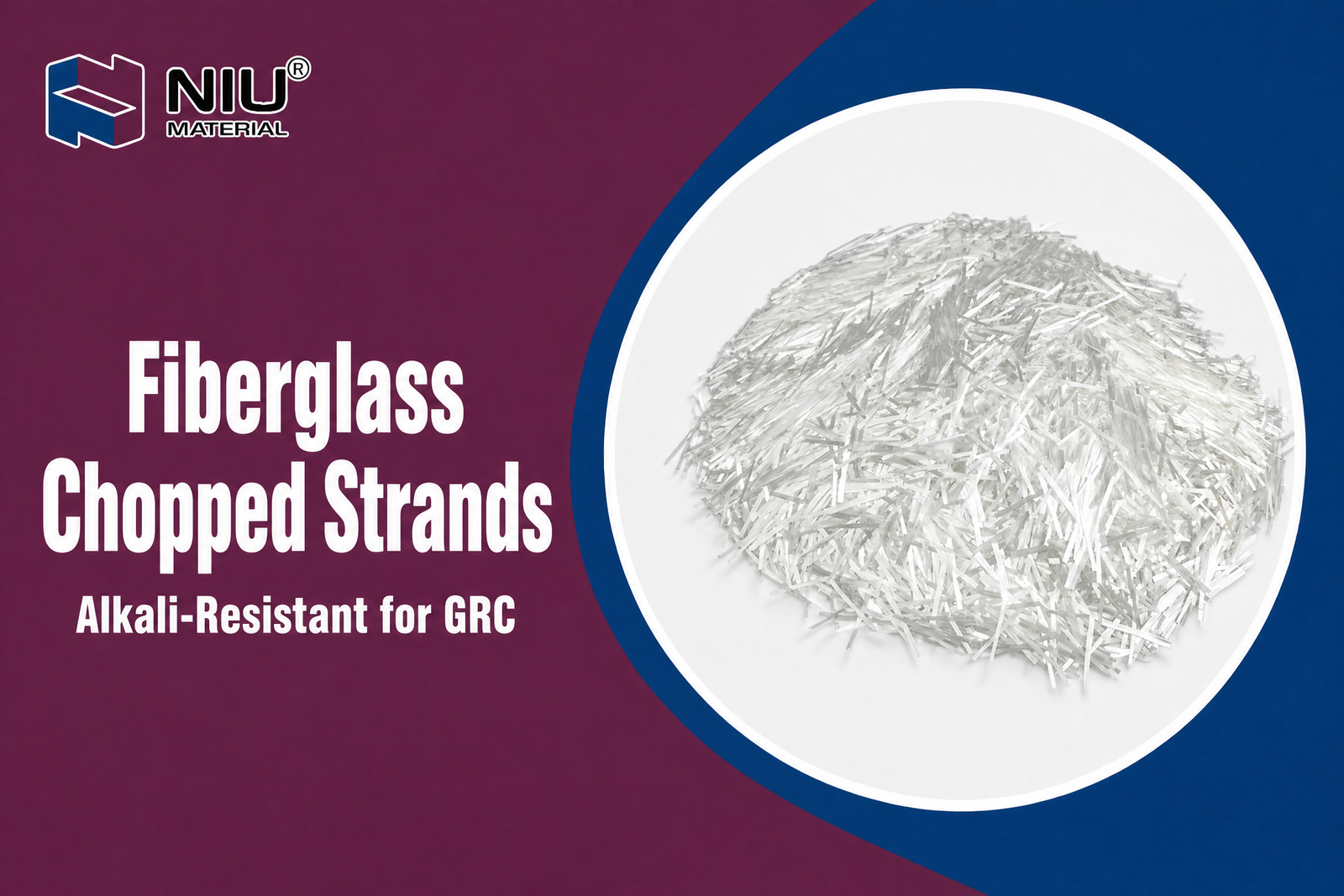
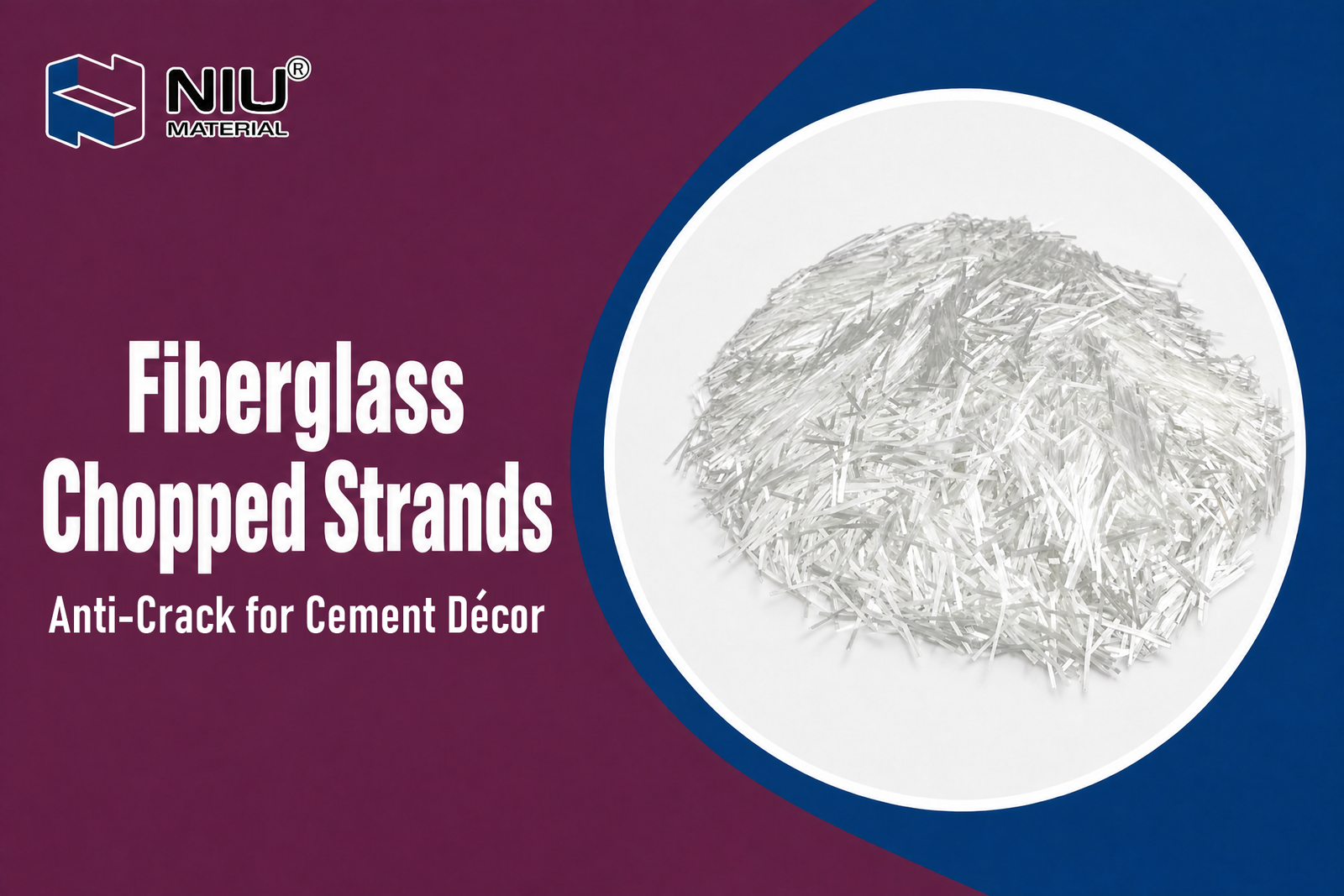
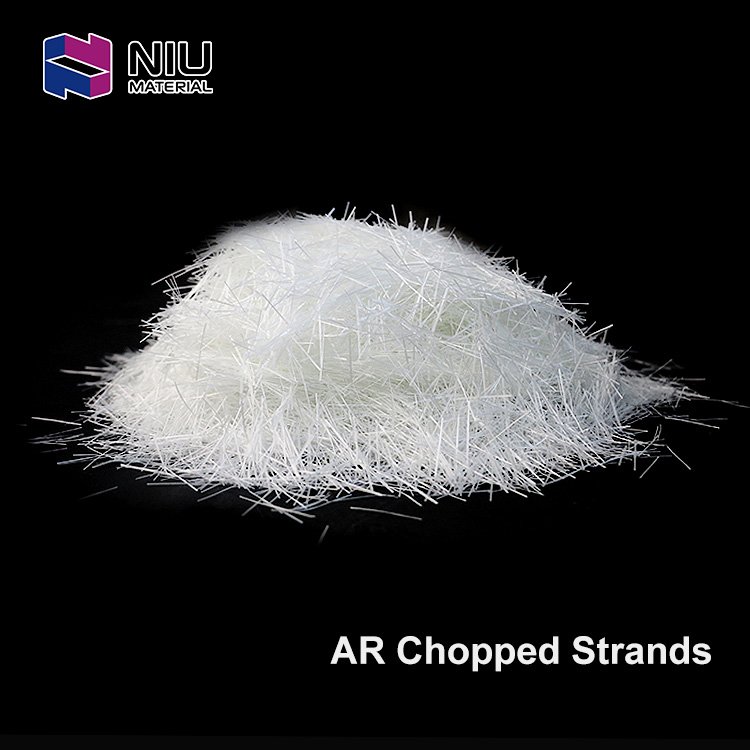
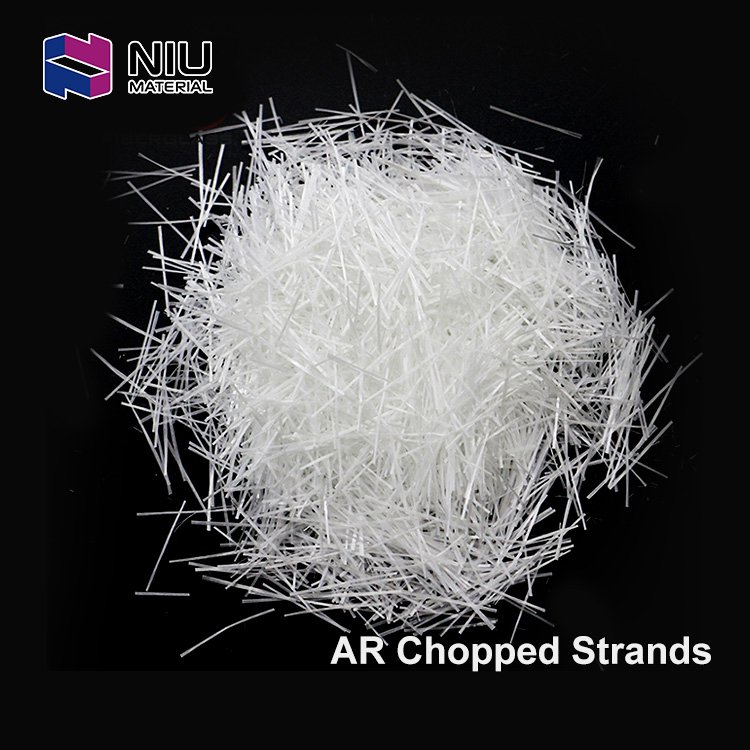
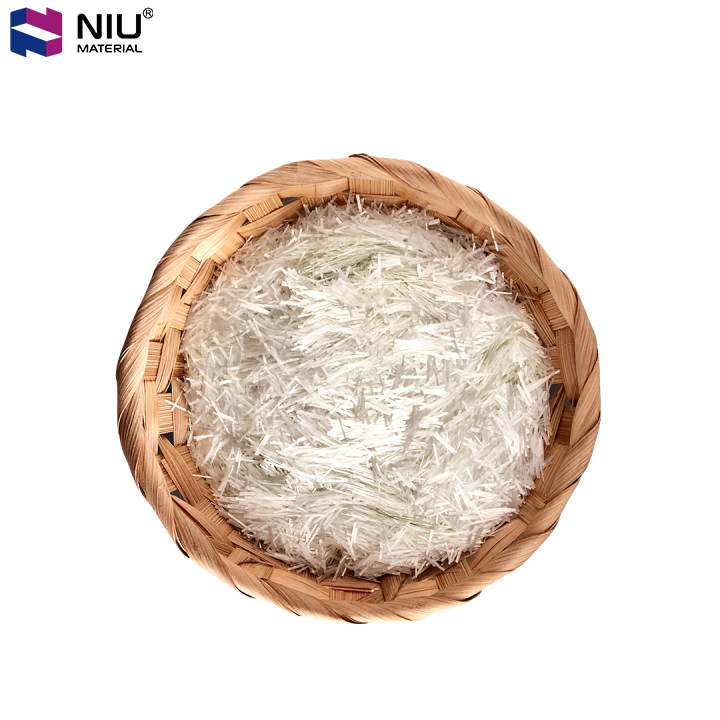
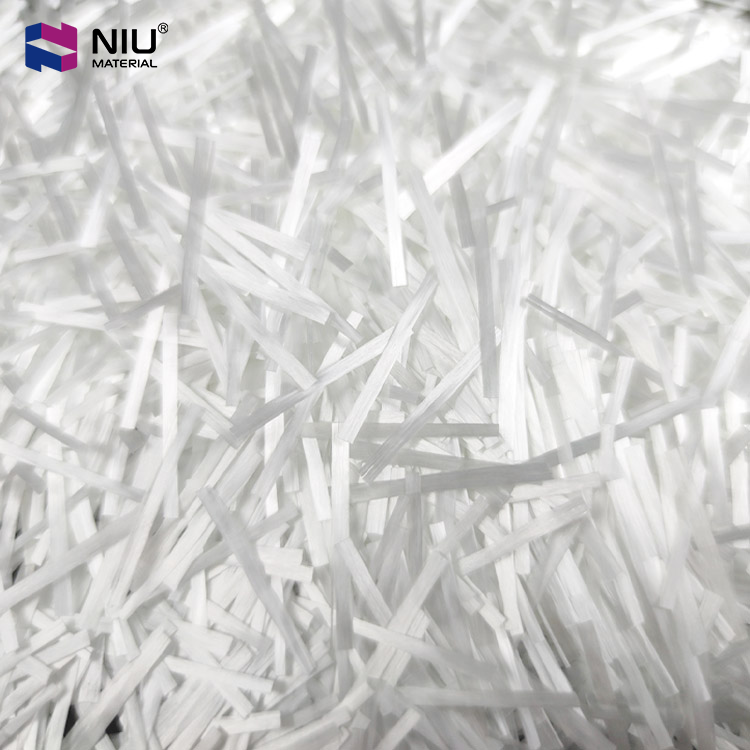
Alkali-resistant chopped strands are one of NIU® MATERIAL’s main products, mainly used in GRC curtain wall panels and decorative elements, manhole covers, road and concrete reinforcement, and UHPC. Standard lengths are 6 mm, 12 mm and 18 mm, with 12 mm the most common for GRC panel forming; length uniformity, dispersion and alkali resistance can be discussed against your project.
What AR Strands Actually Solve in GRC Panels
GRC (glass-fiber reinforced concrete) panels are thin-walled, large-format, freely shaped exterior elements — curtain wall panels, mouldings, sunshades, landscape features. Inside them, chopped strands do a few very concrete jobs:
- Keeping a panel from failing outdoors after twenty or thirty years. Cement is strongly alkaline, and ordinary glass fiber buried in it is attacked continuously, losing strength year after year; once a curtain wall is no longer strong enough, what shows up is cracking, chipped corners and, in bad cases, whole sections coming away. The anti-alkali formulation (including zirconia) blocks that step — and “how many years it holds” can be written into a technical requirement as a figure, rather than left as the word “alkali-resistant”.
- Keeping cracks and chipped edges away from corners and openings. GRC panels are thin and large, so during setting the shrinkage stress crowds around corners and openings, and those are the first places to crack. Evenly dispersed strands hold the shrinkage in three directions and stop the cracking at the forming stage.
- Keeping strands off the decorative face. Where fiber density runs low, strands float to the surface, and neither coating nor polishing will cover them — which hits the selling price directly. Even dispersion with a matching fiber length keeps the formed face smooth and strand-free.
- Running on the equipment the client already has. Get the length wrong and fibers clump and tangle in the mixer — brittle where they are rich, weak where they are poor. 12 mm matches the spray-up and premix forming common in GRC panels, with 6 mm for fine pieces and thin-walled shapes, so a switch needs no new equipment and no rebuilt line.
Now the Moroccan market: continued investment in construction and urban landscape means genuine demand for GRC curtain walls and decorative elements; yet Morocco produces no glass fiber of its own and imports everything, while shipments from China face a 40% tariff and a long voyage. That means a local plant compares suppliers on long-term performance, batch consistency and supply stability together — not on how one batch feels in the hand.
What the Strands Solved for This Client
In this order the strands had one clear job: to pass the client’s sample testing first. And what that testing verifies is exactly what GRC plants in Morocco generally have to face.
Will it still be reinforcing years from now
A GRC curtain wall must stand outdoors for twenty or thirty years, and the biggest risk is strength fading year by year. That cannot be answered with adjectives: we set out the anti-alkali formulation’s performance in measurable terms, mapped it to the design life, and let sample testing verify it.
The formulation answers first and sample testing verifies it — giving the client something in figures that can go into a technical requirement for a wall expected to last twenty or thirty years.
Will the fibers disperse, and will the formed face show strands
Once a thin, large panel disperses unevenly, one area turns brittle while another shows strands; a decorative panel is judged by appearance, and visible strands sell poorly. The 12 mm length combined with controlled dispersion lets the strands restrain shrinkage in three dimensions.
The 12 mm length with dispersion kept under control covers both at once: no cracking around corners and openings, and a smooth formed face free of protruding strands — the two spots where decorative panels fail most often, and where end users look first.
Does 12 mm match the forming process
GRC panel forming mainly uses processes such as spray-up and premix, so fiber length has to follow the process: too short and overlap is insufficient, so reinforcement efficiency drops; too long and fibers clump and tangle in the mixer. In that range 12 mm disperses evenly and reinforces sufficiently.
With the specification settled, it runs on the equipment and line the client already has, as delivered.
The samples passing testing was the most concrete milestone in the two years and five months this order took — once the product cleared, tariffs, lead time and terms were worth negotiating. For GRC plants in Morocco these three points are common ground anyway: with no local fiber production and everything imported, what a supplier is really judged on is the sum of long-term performance, batch consistency and supply stability, not how one batch feels in the hand.
Commercial Terms and Payment Arrangements — Settling Each Request
The third hurdle was commercial terms and payment arrangements. The client clearly asked for more commercial support, and also wanted to pay in installments to ease pressure on its cash flow. Either request on its own is reasonable; together, they test whether a supplier can actually coordinate internally.
Our approach was neither to dodge nor to dig in. On one side, we used our internal application channel to secure an exclusive cooperation package for the client. On the other, we kept negotiating the payment arrangement, laying out the viable options one by one. The terms were gradually aligned — the client got what it genuinely needed, and the deal had a foundation to move forward on.
What Else We Solve for the Client
Supplying the goods is only part of a partnership. Whether an order lands also depends on whether someone is watching these on the client’s behalf.
Tariff and origin disadvantage. Shipments from China into Morocco face a 40% tariff, while Egypt and Europe ship in with lower duties, faster transit and shorter routes. That disadvantage cannot be wished away; we make the proposal solid to offset it — full-container shipment to pull lead time in, plus commercial support.
Lead time. Bulk cargo takes longer to deliver and a full container shorter, and the client was sensitive to that gap, so the plan moved toward full containers from the start to bring the delivery cycle down.
Commercial terms. The client asked for better pricing and an instalment arrangement, and wanted terms better than the quotation given at the exhibition. We took it back to management, and after discussion offered dedicated terms; on freight we provided supportive terms as well.
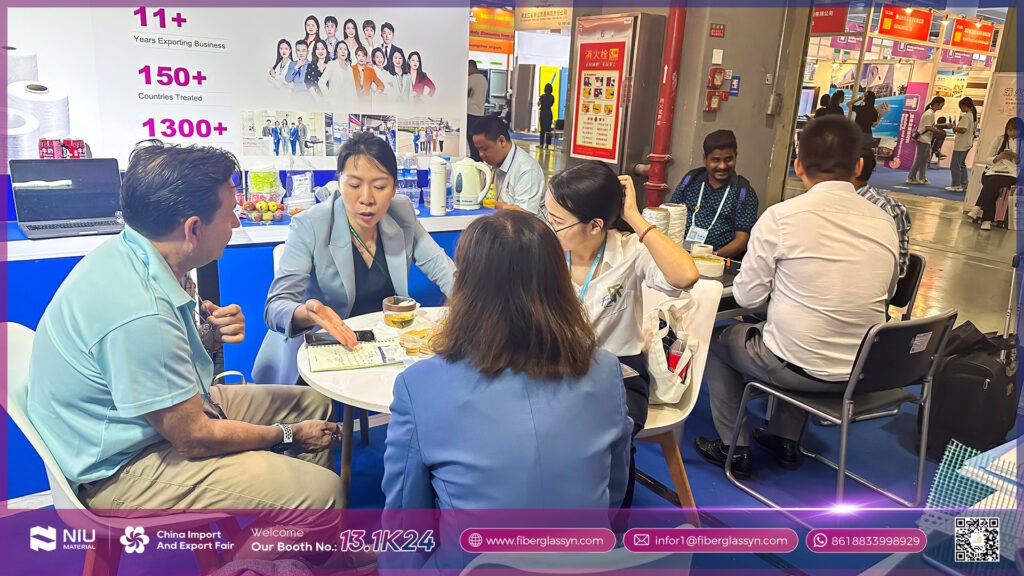
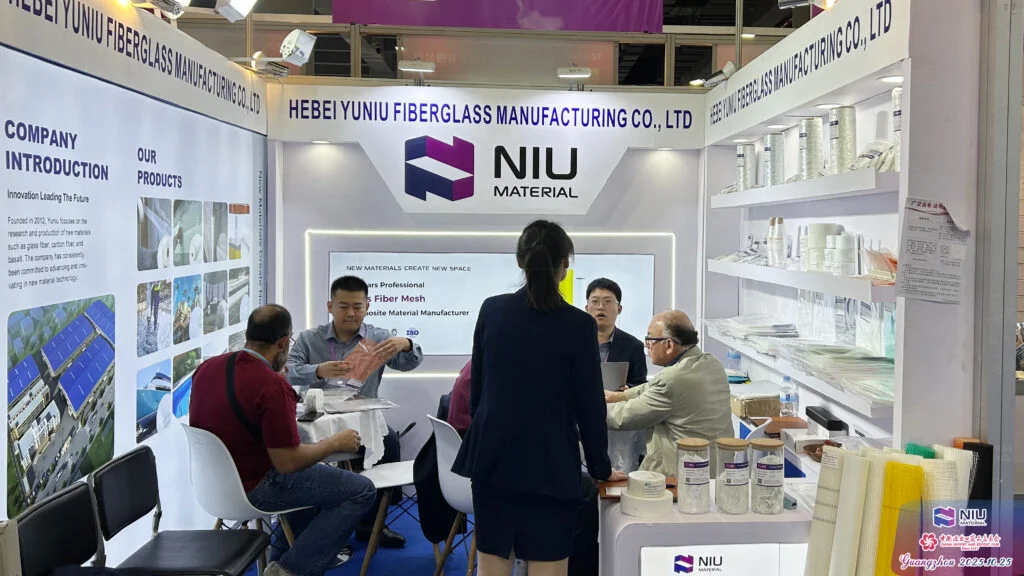
Talking it through face to face. We invited the client to meet at the exhibition, where technical requirements, lead time and terms were all settled in one sitting — many things that do not travel well by email become clear in half an hour across a table.
What Else We Solve — Mesh and Self-Adhesive Tape for an Own-Brand Client
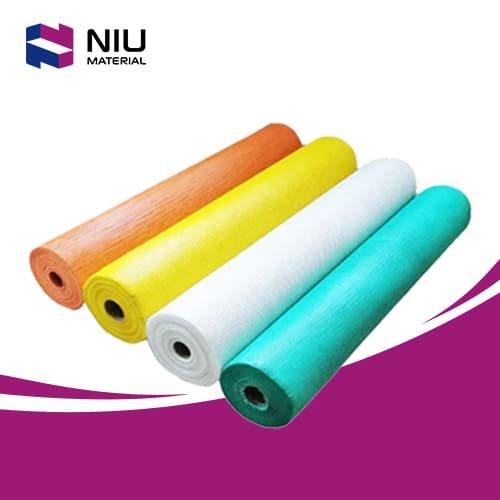
With mesh and self-adhesive tape, 4×4 or 4×5 openings and what weight — set by the plasterboard jointing and wall repair scene, rather than one catalogue grade sent to everyone.
Will the tape curl, will the fold lie flat — weight and adhesive backing are matched together, unrolling ready to use so workers on scaffolding need no extra cutting or glue.
Will it still work years after being buried in filler, and will batches drift — the coating is stated in alkali-resistance terms, and weight and openings are produced and re-inspected against one parameter set, with every later shipment following the same set.
Who supports compliance and risk-control documents, and how custom labels and packaging are handled — these two decide whether an own brand can stand, and are aligned from the sampling stage.
How samples are dispatched, and who owns each milestone from PI to production scheduling and dispatch — samples go out the fastest way available, and someone follows every step to the end.
These have all been settled on a client’s line: a UK building-materials wholesaler built exactly this pairing into a brand of its own.
About Us
NIU® MATERIAL, based in Hebei, China, was founded in 2012, and our team brings over two decades of fiberglass production experience. Our products are certified to SGS, CE and ISO9001 and exported to Europe, the Middle East, Southeast Asia, Africa and Latin America. Most of our clients are hands-on manufacturers in GRC and FRP — which is exactly why we understand what stable raw material and parameters that match really mean to a production line.
From alkali-resistant chopped strands and chopped strand mat to fiberglass mesh, our method is simple: get the specification right first, then make delivery dependable. Sampling, parameter confirmation, production and shipment — every step has someone accountable. And when the real-world problems show up, tight lead times or long routes, we prefer to sit down with you and work them out rather than leave the difficulties for the client to swallow.
If you are choosing a reinforcement solution for GRC products, or need a glass fiber supplier that gets the details right, we would be glad to hear from you — the right specification, for your real problems.