Add a header to begin generating the table of contents
Introduce
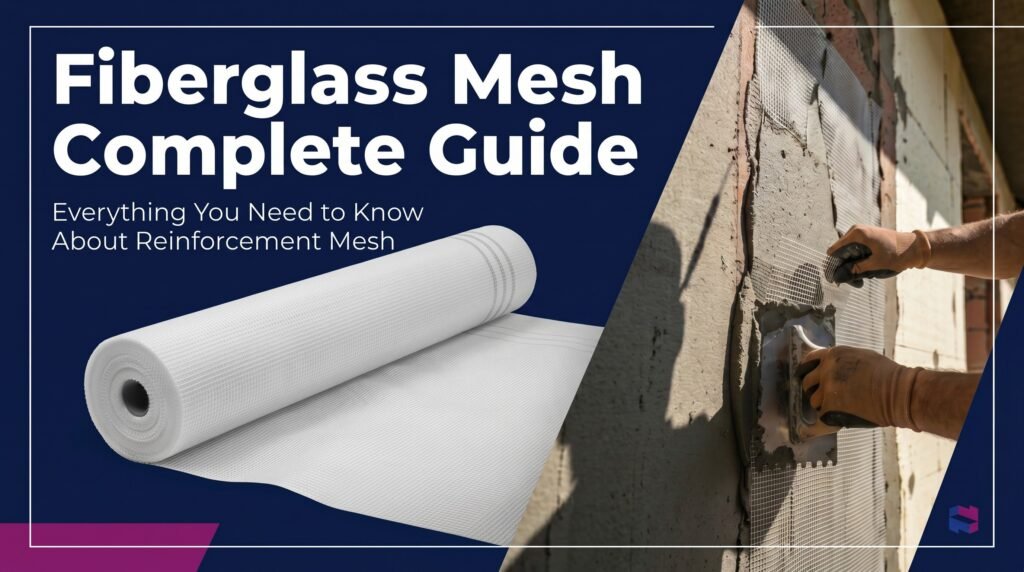
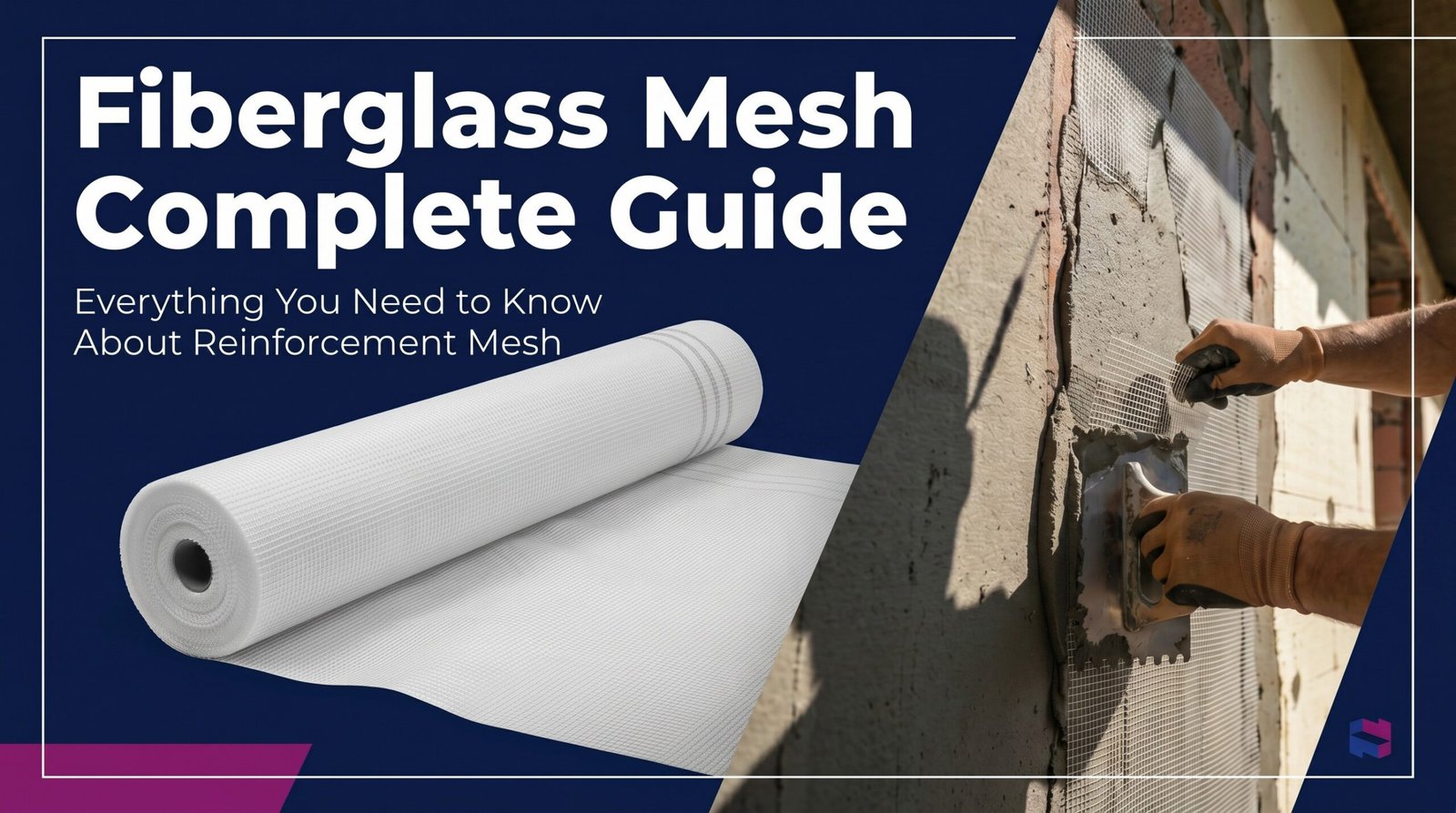
Fiberglass Mesh serves as the core anti-crack and reinforcement material for construction, widely applied in EIFS external thermal insulation, GRC precast components, roof waterproofing, interior plastering and other scenarios. This practical reference guide covers five dimensions: substrate types, core performance indicators, coating systems, application scenarios and product selection methods.
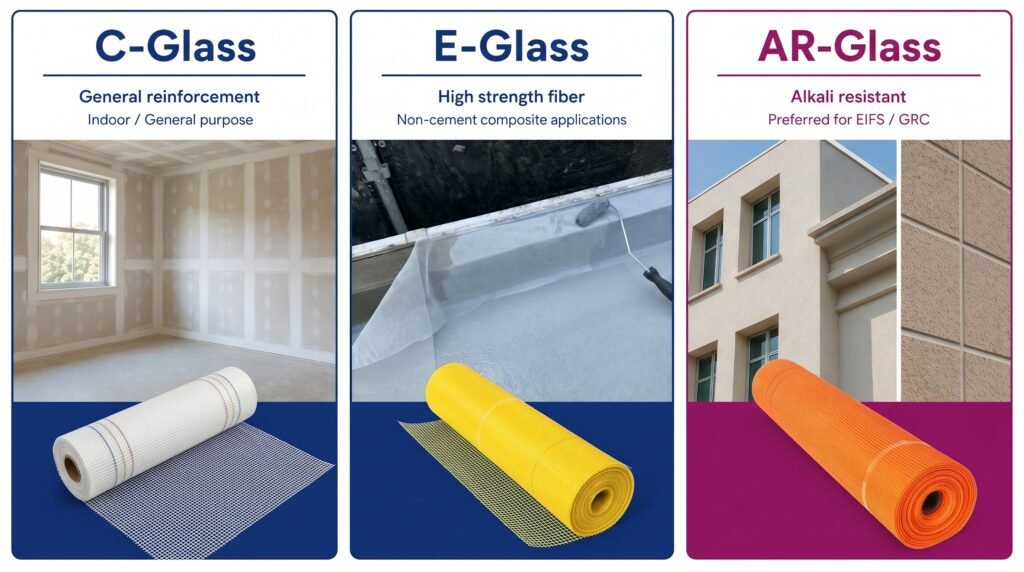
Three Substrate Types: C-Glass, E-Glass And AR-Glass
The chemical composition of fiberglass roving fundamentally defines the performance limits of fiberglass mesh.
Parameters
C-Glass (Medium Alkali Resistant)
E-Glass (Alkali-Free)
AR-Glass (Alkali Resistant)
Alkali Resistance
Medium
Poor
Excellent
Original Tensile Strength
Medium
High
Medium to High
Cost
Low
Medium
High
Service Life In Cement Environment
5–10 Years
2–5 Years
Over 20 Years
Applicable Scenarios
Interior plastering, low-rise exterior walls
Asphalt waterproofing, non-cement composites
EIFS, GRC, harsh outdoor environments
Selection Suggestions: Choose AR-Glass or high-performance coated C-Glass for outdoor environments with long-term contact with cement mortar; standard C-Glass meets the needs of indoor mild alkali environments. E-Glass is not suitable for direct reinforcement in cement-based materials.
Four Core Performance Indicators
Gram Weight (g/m²): The most intuitive specification parameter, with a common range of 45–600g/m². Require suppliers to specify tolerances in contracts (premium manufacturers can achieve ±3%). Conduct random sampling and weighing inspection upon receipt of goods.
Tensile Breaking Strength (N/50mm): Core indicator for mechanical performance. The closer the warp and weft values, the more uniform the force bearing in all directions.
Alkali Resistance Strength Retention Rate (%): The most critical durability indicator. Test residual strength after soaking mesh in NaOH solution for 28 days. The EN 13496 standard requires a minimum retention rate of ≥50%, while premium products can reach over 75%.
Mesh Size (mm): Common specifications include 4×4mm, 5×5mm and 10×10mm. Overly small meshes hinder mortar penetration and fiber wrapping, while excessively large meshes weaken stress dispersion effects.
Coatings: An Underestimated Key Link
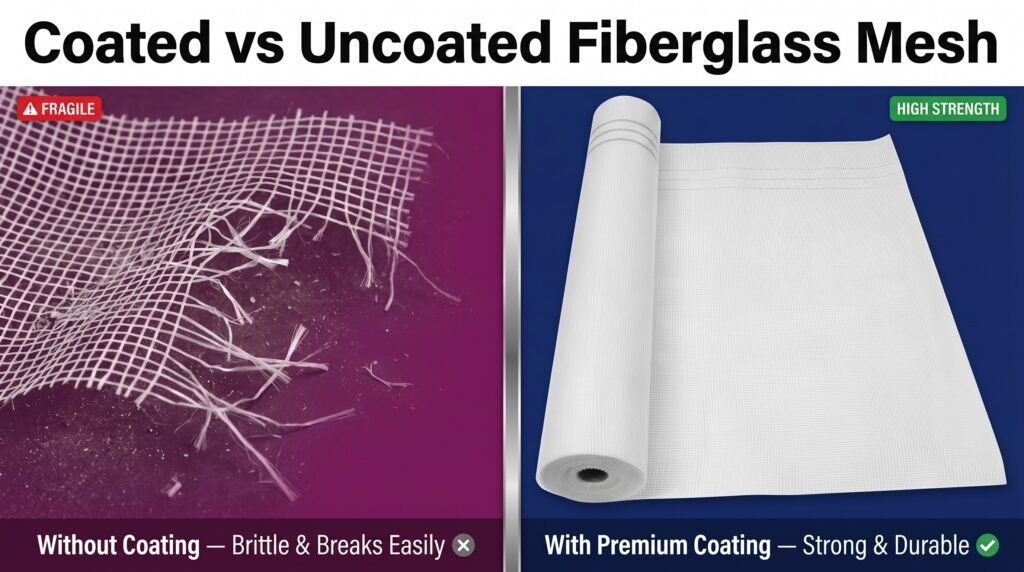
Coatings not only determine alkali resistance but also directly affect construction performance, with three core functions:
Alkali Resistant Barrier: Acrylic emulsion coatings form a protective film on fiber surfaces to block erosion from alkaline substances.
Fiber Locking: Coatings penetrate and wrap fiber bundles to prevent fraying during cutting.
Construction Hand Feel: The soft-hard balance of coatings determines whether the mesh curls up during laying and fits tightly around corners.
Simple Self-Testing Methods: Fold the mesh to check for whitening or cracking along creases → Soak in clean water for 24 hours and inspect coating peeling → Rub repeatedly to test for coating flaking.
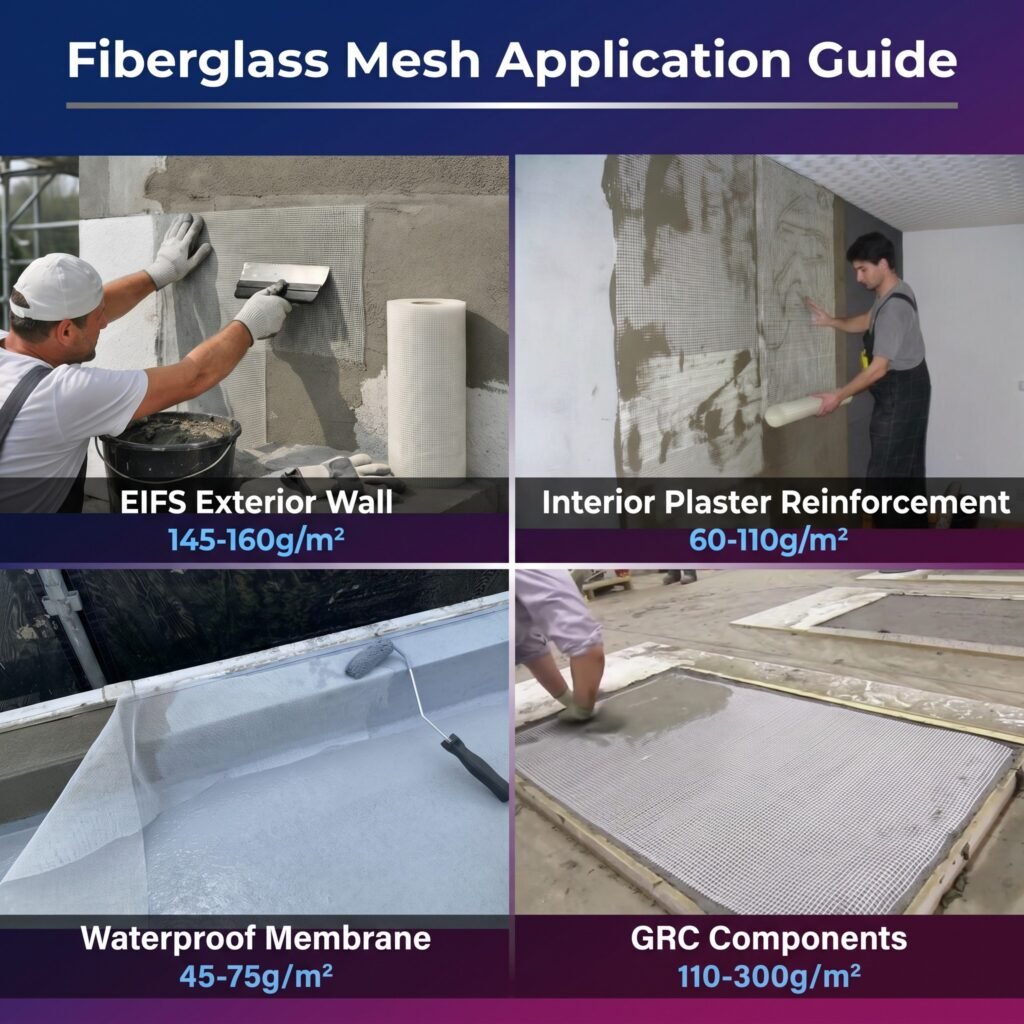
Main Application Scenarios And Matching Gram Weights
Application Scenario
Recommended Gram Weight
Key Requirements
EIFS External Thermal Insulation
145–160g/m²
High alkali resistance, high flexibility
Interior Plaster Reinforcement
60–110g/m²
Smooth construction hand feel, no fraying
Roof Waterproof Reinforcement
45–75g/m²
Lightweight, compatible with coatings
Stone Back Mesh
110–160g/m²
Compatible with stone adhesives
GRC Precast Components
110–300g/m²
Ultra-high alkali resistance
Decision-Making Logic: First evaluate environmental severity (outdoor cement environments: AR/C-Glass with heavy coating; indoor environments: C-Glass) → Match the corresponding gram weight → Confirm certification requirements for target markets (EU CE/EN 13496, US ASTM, China GB/T 29906).
Product Features Of Yuniu Fiberglass Mesh
Yuniu’s production base is located in Xingtai, Hebei. Fiberglass mesh is its core product line covering the full gram weight range of 45–600g/m², with support for OEM/ODM customization.
Alkali Resistance Performance: Dual solution of zirconia-containing fiberglass substrate and imported acrylic coating, delivering 28-day alkali strength retention rate ≥75%.
Accurate Gram Weight: Three-level verification including on-line monitoring, spool-by-spool weighing and laboratory re-inspection, with ±3% tolerance guaranteed in contracts.
Premium Coating Quality: Imported acrylic copolymer emulsion, featuring no fraying after cutting, no edge curling during laying and no hand irritation during manual operation.
Stable Weaving: High-speed leno looms with automatic tension control, ensuring highly consistent mesh size and warp-weft density across full rolls.
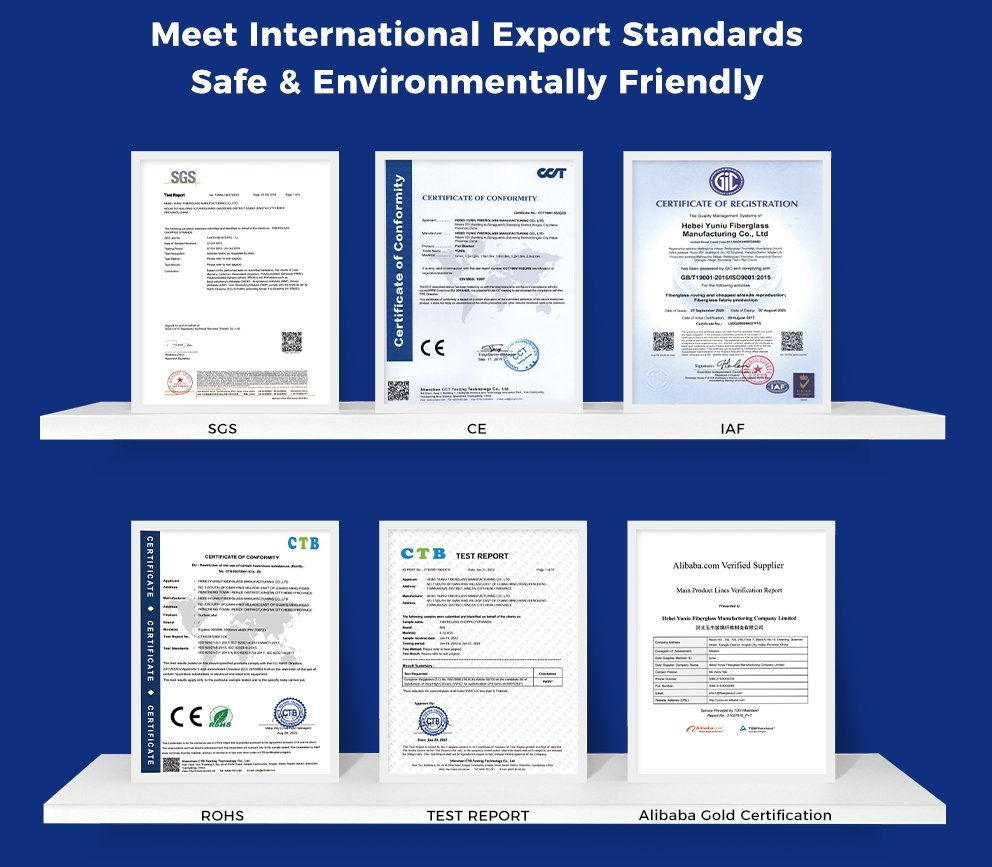
Certification Support: ISO 9001 quality management system, with products eligible for international certifications including CE and ASTM.
In Conclusion
Fiberglass mesh is embedded inside walls and cannot be replaced after installation. Its quality relies not merely on data on specification sheets, but on whether the supplier’s quality control system can withstand batch-by-batch inspection.
Would you like to obtain samples and test reports of Yuniu fiberglass mesh? Contact the Yuniu team, and we will provide customized solutions and technical support tailored to your engineering requirements.
Please leave a message regarding the fiberglass and other composite materials you’re interested in or looking for.
We will send you a definitive quote (including product price and shipping costs) within 12 hours.
Product Inquiry/Quote
You can leave a message about the fiberglass materials you are interested in/looking for.
We will send you a clear quotation (including product price + shipping cost) within 12 hours.
Are you considering fiberglass for your application?
You can leave your needs and contact information~and We can provide you with usage suggestions + product suitability analysis + free sample delivery!
Leave us your interest and contact information, and we’ll send you detailed information for your reference!
Do you want to know the technical parameters and TDS of products?
You can leave the specifications and contact information you need~ Our technicians will immediately organize the exclusive information for you and send it to your email!
Interested in this specification?
You can leave your contact information here, and we will send you detailed specifications and application cases to make your purchase clearer~
How can we help you?
You can leave a message about the fiberglass materials you are interested in/looking for.
We will send you a clear quotation (including product price + shipping cost) within 12 hours.