Add a header to begin generating the table of contents
Introduce
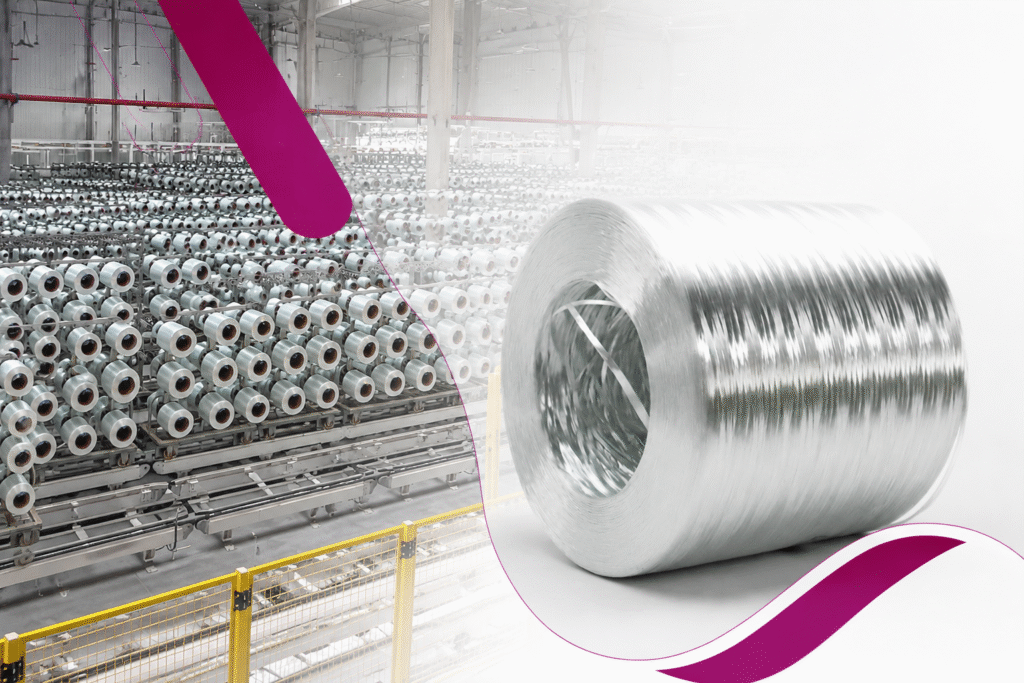
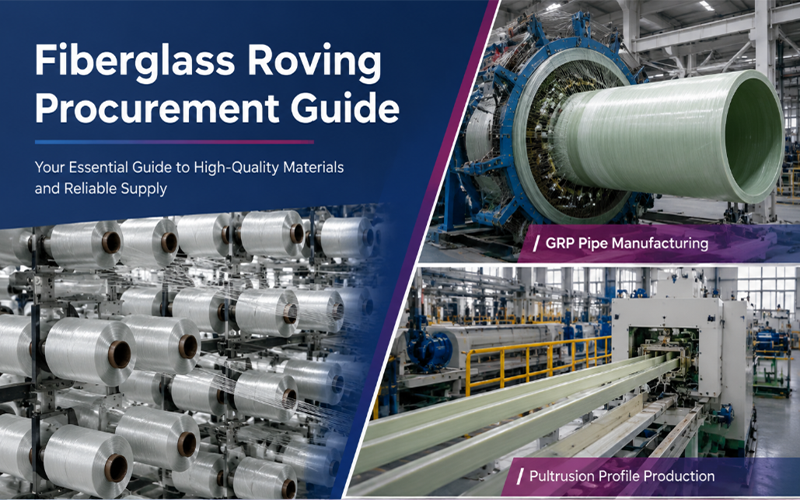
In the realm of composite materials (FRP), if resin can be regarded as flesh and blood, fiberglass roving serves as the muscle and skeleton that supports the entire structure. Whether manufacturing high-pressure chemical storage tanks, wind turbine blades, or municipal pipelines stretching for kilometers, the tensile strength and processing stability of roving directly determine the safety rating and service life of finished products.
This article analyzes the core technologies of fiberglass roving and demonstrates how Yuniu supplies core driving force for composite material factories worldwide through technological innovation and high-standard production.
Core Classification: Match Your Processing Requirements
When purchasing fiberglass roving, the primary step is to select the appropriate type according to your production process:
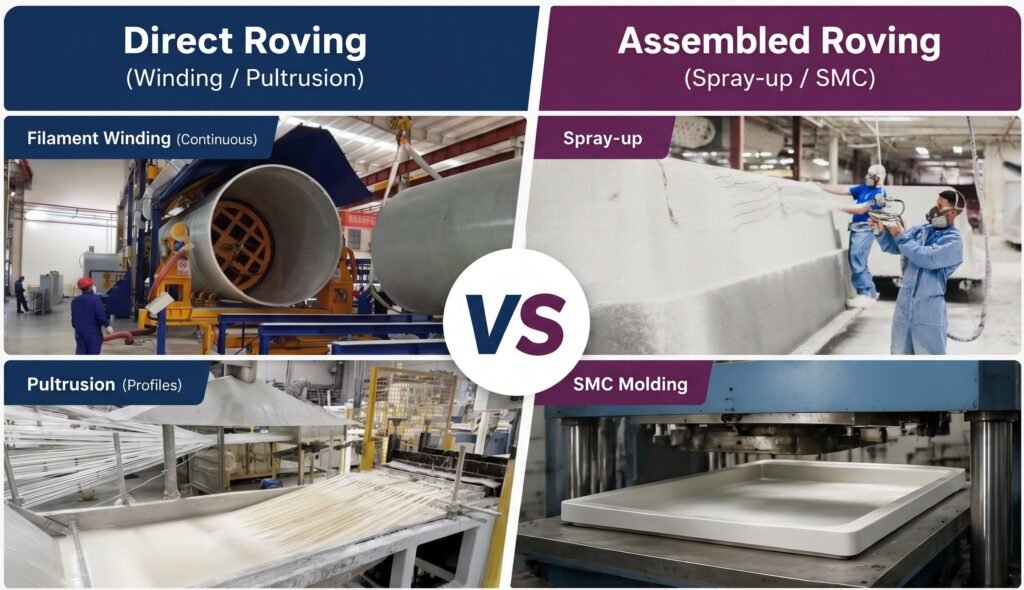
Direct Roving
Features: Bundled directly from single strands without twisting, featuring highly consistent physical properties.
Advantages: Ultra-high tensile strength and excellent bundling performance. It is the top choice for filament winding, pultrusion and weaving processes.
Assembled Roving
Features: Combined from multiple strands with abundant fiber ends.
Advantages: High resin absorption capacity, easy to cut and static-free. Widely applied in spray-up molding, SMC (Sheet Molding Compound) and continuous panel production.
Why Yuniu Rovings Serve As The Cornerstone Of High-Performance Manufacturing
For highly automated composite production lines, any tiny fiber defect will be magnified exponentially. Yuniu guarantees full-speed operation of your production line with four core brand advantages:
Rapid And Uniform Wet-Out
In continuous winding processes, rovings pass through the resin bath in less than one second. Yuniu adopts self-developed sizing technology to enable instant bonding between fibers and polyester, epoxy or vinyl resin at high running speeds. This eliminates micro air bubbles inside products and improves the transverse shear strength of finished parts.
Perfect Ribbonization And Stability
High-quality direct roving should unwind into flat uniform ribbons instead of round cords. Yuniu rovings boast outstanding bundling performance, maintaining consistent width during laying to ensure uniform product wall thickness without resin shortage or fiber stacking defects.
Precise Tex Linear Density Control
Minor deviations in linear density can trigger drastic fluctuations in end-product performance. Yuniu applies online CNC monitoring systems to maintain extremely low Tex tolerance for every pallet and spool of roving, providing reliable data support for quality acceptance of large-scale engineering projects.
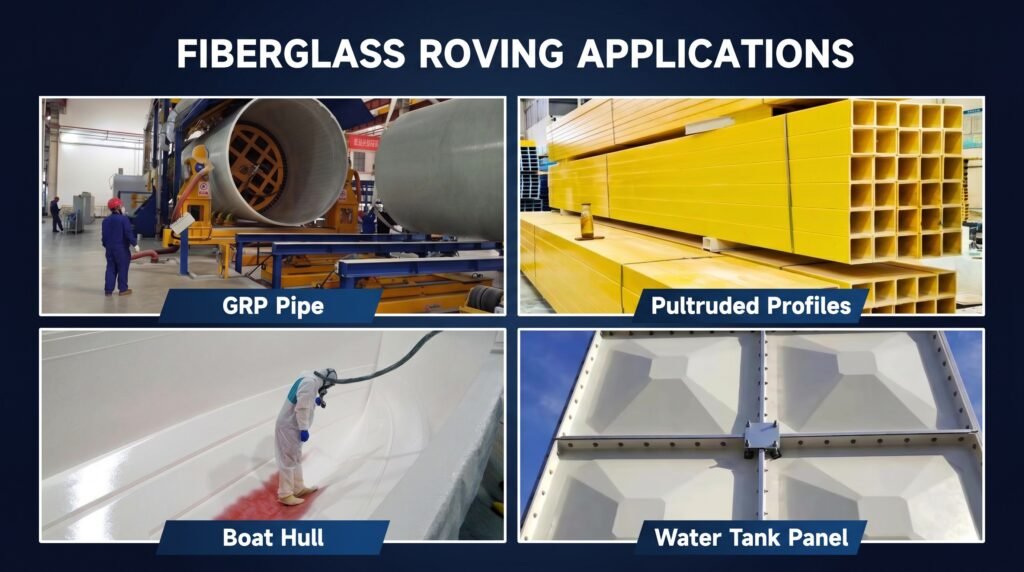
Construction Profiles: Fiberglass reinforced profiles manufactured via pultrusion technology
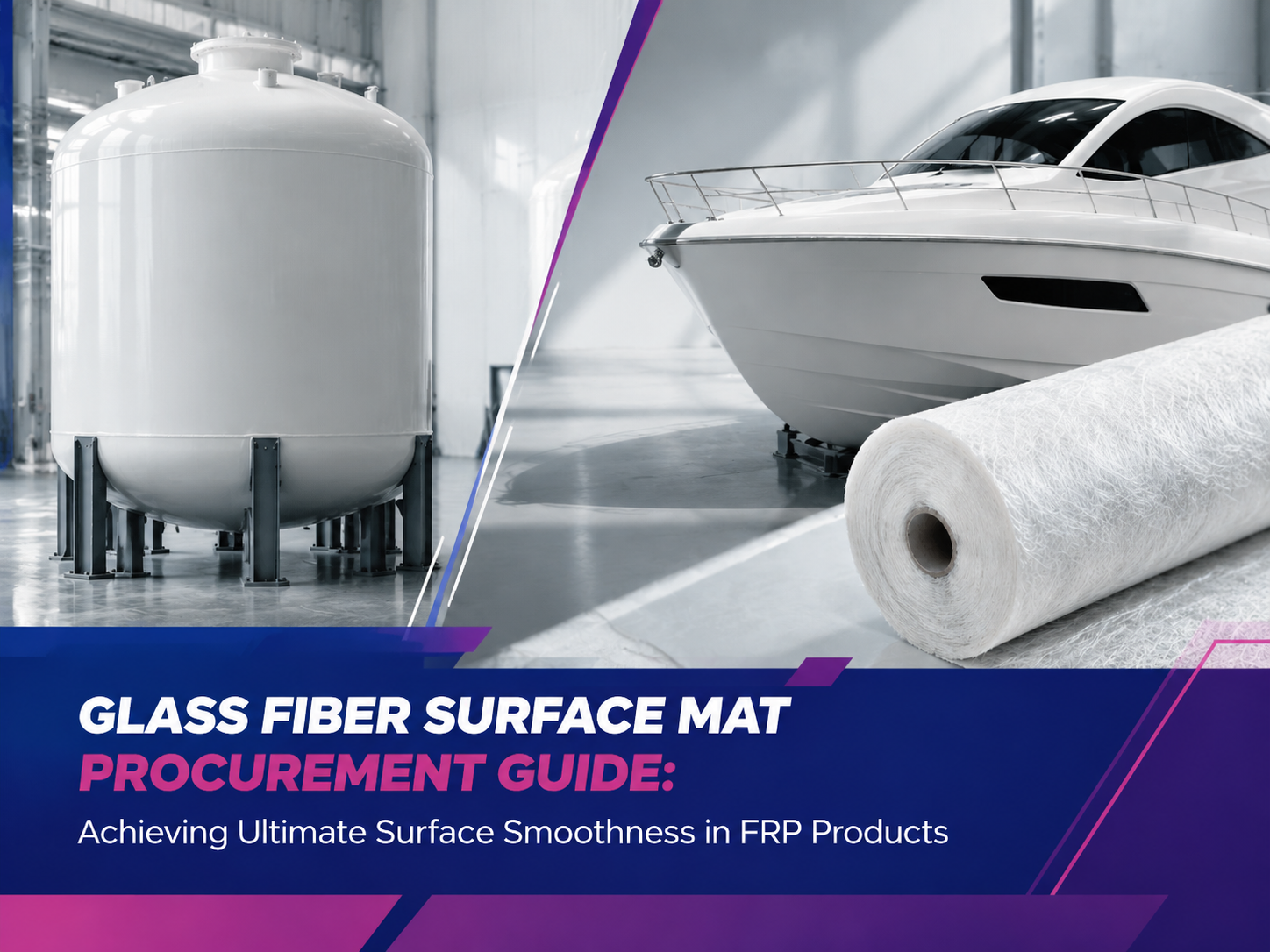
Shipbuilding: Hand-laminated hull shells, yacht decks, anti-corrosion structural panels for marine use
Water Storage Equipment: SMC hot-pressed prefabricated FRP water tank panels, assembled panels for domestic water supply tanks
In Conclusion
Fiberglass roving is more than a raw material; it represents a commitment to engineering safety. With its manufacturing base in Xingtai and robust OEM production capacity, Yuniu commits to making every spool of roving a sturdy backbone supporting customers’ success.
Looking for low-fuzz, high-efficiency roving solutions?
Contact Yuniu’s technical team to obtain customized sizing formula recommendations tailored to your specific resin system and free test samples. Let us weave superior strength with professional expertise.
Please leave a message regarding the fiberglass and other composite materials you’re interested in or looking for.
We will send you a definitive quote (including product price and shipping costs) within 12 hours.
Product Inquiry/Quote
You can leave a message about the fiberglass materials you are interested in/looking for.
We will send you a clear quotation (including product price + shipping cost) within 12 hours.
Are you considering fiberglass for your application?
You can leave your needs and contact information~and We can provide you with usage suggestions + product suitability analysis + free sample delivery!
Leave us your interest and contact information, and we’ll send you detailed information for your reference!
Do you want to know the technical parameters and TDS of products?
You can leave the specifications and contact information you need~ Our technicians will immediately organize the exclusive information for you and send it to your email!
Interested in this specification?
You can leave your contact information here, and we will send you detailed specifications and application cases to make your purchase clearer~
How can we help you?
You can leave a message about the fiberglass materials you are interested in/looking for.
We will send you a clear quotation (including product price + shipping cost) within 12 hours.