

Introduce
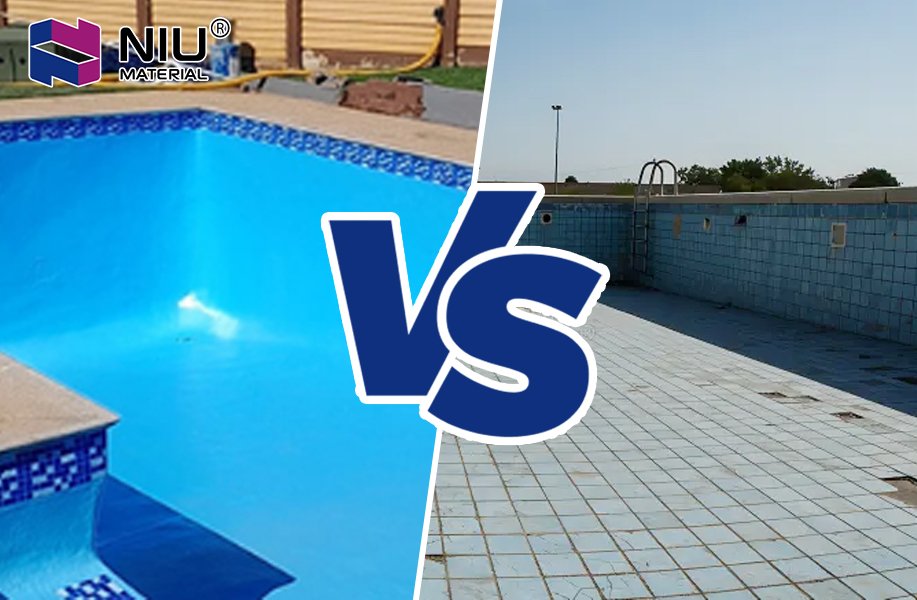
As a swimming pool investor, operator, or private pool owner, one of our core concerns is the service life and maintenance cost of the pool. Fiberglass Reinforced Plastic (FRP) swimming pools have become a popular choice due to their light weight, flexible molding, and aesthetic appeal. However, long-term immersion in water containing chlorine disinfectants and pH adjusters, coupled with ultraviolet radiation and temperature changes in outdoor environments, makes the pool body prone to corrosion, aging, leakage, and other problems—such as wrinkling, peeling, and water leakage of the pool wall. These issues not only affect the user experience but also require a lot of money for repeated maintenance, or even forced shutdown and replacement, which is undoubtedly a trouble that every customer is unwilling to face.
Glass fiber chopped strand mat, as the core reinforcing base material in the production of FRP swimming pools, seems insignificant, but it plays an irreplaceable role in improving the corrosion resistance of the pool, extending its service life, and reducing maintenance costs. Many customers, when choosing an FRP swimming pool, often only pay attention to the pool thickness and appearance design, but ignore the quality and application details of the glass fiber chopped strand mat. Little do they know that it is the “invisible guardian” that determines whether the pool can resist corrosion and maintain a good condition for a long time. Today, from the customer’s perspective, we will detailedly explain how glass fiber chopped strand mat builds a corrosion-proof line for FRP swimming pools, helping you avoid misunderstandings in purchase and use, and making the pool more durable and worry-free.
First, Understand: What Are the Corrosion Pain Points of FRP Swimming Pools in the Eyes of Customers?
In daily use, the corrosion of FRP swimming pools does not occur suddenly, but is the result of long-term erosion by various factors. These pain points are directly related to our user experience and investment costs, which can be divided into three categories:
First, water quality chemical corrosion. To ensure that the pool water quality meets the standards, we need to regularly add chemical agents such as chlorine-containing disinfectants and pH adjusters. These substances soak the pool body for a long time, which will gradually erode the resin surface layer of the FRP, leading to resin aging, degradation, and phenomena such as powdering and cracking—just like the plastic containers at home that become brittle and leaky when filled with acidic liquids for a long time. Especially for public swimming pools with large passenger flow and frequent water quality fluctuations, the speed of chemical corrosion will be faster, and large-scale maintenance is often required in 3-5 years.
Second, water penetration and environmental erosion. The swimming pool is in a full water state for a long time, and water molecules will penetrate into the interior through the tiny pores on the surface of the FRP, leading to dampness and aging of the internal structure of the pool body; if it is an outdoor swimming pool, ultraviolet rays will accelerate the oxidation of the resin, making the pool wall fade and become brittle. Freezing expansion in winter and high-temperature exposure in summer will also cause thermal expansion and contraction stress on the pool body, leading to cracks, making it easier for corrosion media to invade. In addition, if the make-up water is high-hardness water quality, calcium and magnesium ions will form scale attached to the pool wall, which will also accelerate the aging of the material in the long run.
Third, secondary corrosion caused by structural damage. If there is local damage to the FRP swimming pool, such as bubbles left during construction or scratches caused by collisions in later use, corrosion media will invade the interior of the pool body through these “breakthroughs”, damage the bonding interface between glass fiber and resin, lead to a decrease in the strength of the pool body, aggravated leakage, and even local collapse, and the maintenance cost will increase significantly. If ordinary FRP swimming pools are not reinforced with high-quality chopped strand mat, their structural compactness is insufficient, and such problems are more likely to occur.
For us customers, solving these corrosion pain points essentially means making the pool have the ability of “anti-permeability, anti-chemical, anti-aging, and anti-damage”. Glass fiber chopped strand mat improves these core performances from the root by optimizing the internal structure of the FRP swimming pool, helping us reduce maintenance troubles and long-term investment.
Core Analysis: 3 Key Roles of Glass Fiber Chopped Strand Mat in Improving the Corrosion Resistance of FRP Swimming Pools
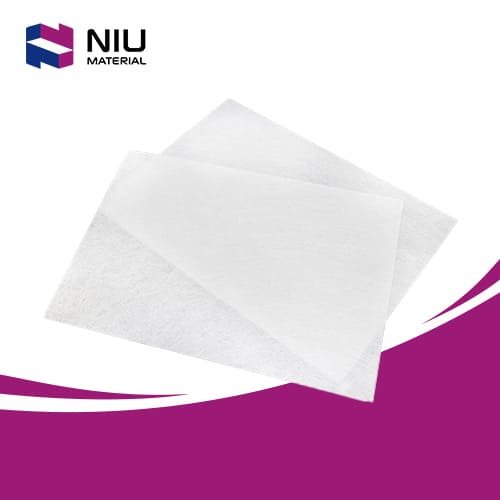
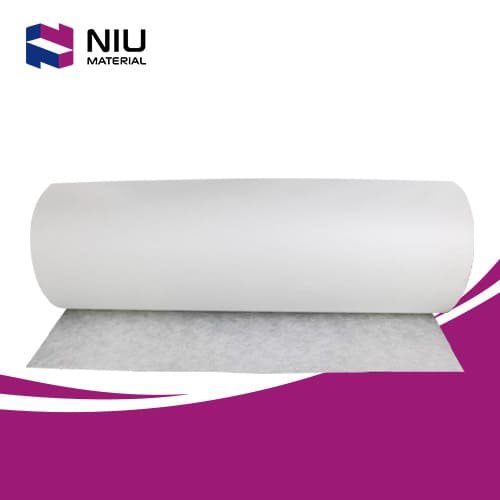
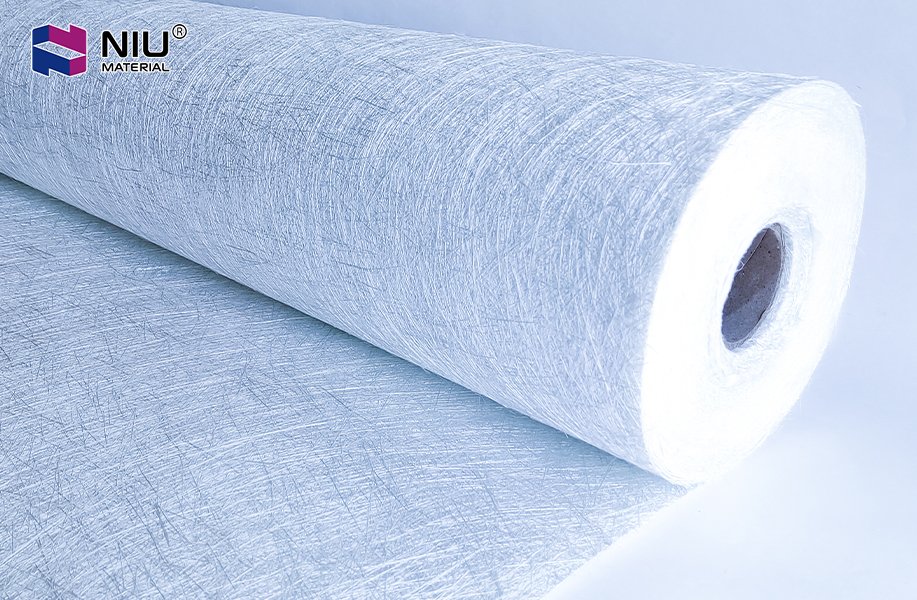
Glass fiber chopped strand mat is a sheet material formed by uniformly distributing and bonding short-cut glass fiber filaments of a certain length through chemical binders. It is soft in texture and flexible in molding, and can be perfectly integrated with resin. In the production of FRP swimming pools, it mainly improves corrosion resistance through the following three aspects, each of which is directly in line with the core needs of our customers.
Dense Filling, Building an "Anti-Permeability Barrier" to Prevent the Invasion of Corrosion Media
Most of the corrosion of FRP swimming pools starts with “water and chemical agent penetration”—if there are pores and gaps inside the pool body, corrosion media will penetrate into the interior gradually like water seeping into a sponge, damaging the structure. The short-cut fibers of the glass fiber chopped strand mat are randomly and uniformly distributed in the mat body. After mixing and molding with resin, they can fully fill every tiny gap of the pool body, forming a dense and continuous overall structure, just like putting a “seamless protective coat” inside the pool, blocking the penetration path of corrosion media such as water and chlorine-containing agents from the root.
More importantly, the fibers of high-quality glass fiber chopped strand mat are evenly distributed with low porosity and excellent wettability with resin. The resin can quickly and fully penetrate the surface of each short-cut fiber, and the composite material formed after curing has higher compactness without bubbles, delamination and other problems—which avoids the disadvantage that ordinary pools are easily invaded by corrosion media due to loose structure and excessive pores. For us customers, this means that the pool will not easily have leakage, wrinkling of the pool wall and other problems, reducing the trouble of frequent maintenance and the risk of water pollution caused by leakage.
Enhancing Structural Strength, Resisting "Stress Damage", and Reducing Corrosion Breakthroughs
As we all know, the swimming pool is filled with water for a long time, and the pool body needs to bear huge water pressure. In addition to collisions in daily use and thermal expansion and contraction stress caused by temperature changes, it is easy to have cracks and damage, and these damages are the “breakthroughs” for the invasion of corrosion media. One of the core roles of glass fiber chopped strand mat is to enhance the structural strength and toughness of the FRP swimming pool, making the pool body more impact-resistant and deformation-resistant, and reducing the possibility of damage from the root.
Glass fiber itself has extremely high tensile strength. The random fiber distribution of the chopped strand mat can keep the strength of the pool consistent in all directions, avoiding the problem that unidirectional fiber materials are easy to break in specific directions, effectively dispersing the water pressure and stress borne by the pool body, and preventing the pool body from cracking due to uneven force. At the same time, after the chopped strand mat is combined with resin, it can improve the impact resistance of the pool. Even if it is slightly collided, it will not be easily damaged; facing the thermal expansion and contraction caused by freezing expansion in winter and exposure to the sun in summer, it can also buffer the stress through its own toughness, avoiding the pool body from cracking—without damage, there will be no channel for corrosion media to invade, and the corrosion resistance of the pool will naturally be greatly improved.
For public swimming pools, outdoor swimming pools and other scenarios with high frequency of use and complex environments, this structural enhancement effect is particularly important, which can effectively extend the service life of the pool, reduce the maintenance cost caused by structural damage, and keep the pool in good condition for a long time.
Optimizing Resin Bonding, Improving "Anti-Aging and Anti-Chemical" Capabilities, and Extending Service Life
The surface resin of the FRP swimming pool is the first line of defense against corrosion, but ordinary resin is easy to age and degrade when exposed to chlorine-containing agents and ultraviolet environments for a long time, losing its protective effect. Glass fiber chopped strand mat can form a firm “fiber-resin interface” with resin, optimize the curing effect of resin, improve the chemical corrosion resistance and anti-aging ability of the resin layer, and make this line of defense stronger and more durable.
On the one hand, the surface of the short-cut fibers is specially treated, which can produce good adhesion with the resin, avoid the separation of resin and fibers, and form a “delamination” phenomenon—if delamination occurs, corrosion media will invade from the delamination and quickly damage the pool structure. The perfect integration of high-quality chopped strand mat and resin can make the resin layer more stable. Even if it is eroded by chlorine-containing agents for a long time, it will not easily powder or fall off; on the other hand, the chopped strand mat can disperse the damage of ultraviolet radiation to the resin, slow down the aging speed of the resin, avoid the pool from fading, becoming brittle and cracking due to long-term outdoor use, and keep the appearance and performance of the pool stable for a long time.
In addition, different types of glass fiber chopped strand mat (such as ECR boron-free chopped strand mat) can further improve corrosion resistance—compared with ordinary E-glass chopped strand mat, ECR chopped strand mat does not contain boron, fluorine and other elements that are easy to be corroded, and can effectively resist the erosion of strong acid and high chlorine environments, avoiding problems such as fiber “leaching” and “spongification”. It is especially suitable for swimming pools with large water quality fluctuations and complex corrosion environments, which can extend the service life of the pool to 20-30 years and greatly reduce our replacement cost.
Must-See for Customers: How to Choose High-Quality Glass Fiber Chopped Strand Mat to Maximize the Corrosion Resistance of the Pool?
After understanding the core role of glass fiber chopped strand mat, for us customers, it is more important to learn to judge the quality of the chopped strand mat when purchasing an FRP swimming pool—high-quality chopped strand mat can make the corrosion resistance of the pool get twice the result with half the effort, while inferior chopped strand mat not only can not play a protective role, but also may accelerate the corrosion of the pool, increasing our troubles and investment. Combined with the actual needs of customers, we summarize 3 key purchase points:
First, look at the fiber specifications and distribution. The fiber length of high-quality glass fiber chopped strand mat is usually controlled at 25-50mm, the fiber diameter is 10-20μm, the length deviation does not exceed ±2mm, and the fiber distribution is uniform without agglomeration and impurities; if the fiber length is uneven and the distribution is messy, the structural strength of the pool will be uneven, and cracks are easy to occur. When purchasing, we can ask the manufacturer to provide the specification parameters of the chopped strand mat, or check the cross-section of the pool sample to observe the fiber distribution.
Second, look at the binder and wettability. The quality of the binder of the chopped strand mat directly affects its bonding effect with resin. High-quality chopped strand mat uses high-quality binders such as styrene-acrylate, which have firm bonding and can be quickly wetted by resin, reducing bubble residue; the binder of inferior chopped strand mat is of poor quality, easy to fall off, and not closely combined with resin, which will lead to loose pool structure and easy corrosion. It can be judged by a simple test: put the chopped strand mat into the resin, observe whether it can be quickly wetted and whether there are obvious bubbles generated.
Third, look at the material type. If it is an outdoor swimming pool or a public swimming pool, it is recommended to choose ECR boron-free glass fiber chopped strand mat, which has stronger chemical corrosion resistance and UV resistance, and can better resist the erosion of complex environments; if it is an indoor private swimming pool, high-quality E-glass chopped strand mat can be selected, which balances cost performance and corrosion resistance. At the same time, pay attention to the laying density of the chopped strand mat, which is usually 200-800g/㎡. Too low density will affect the structural strength, and too high density will increase the cost. It is necessary to choose reasonably according to the use scenario of the pool.
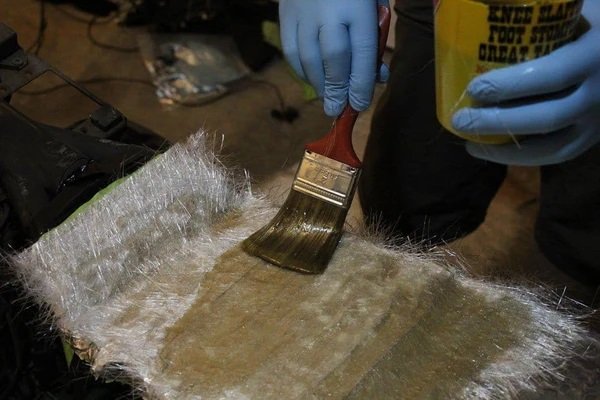
In addition, we also need to pay attention to the construction process of the pool—the laying method of the chopped strand mat, the coating thickness of the resin, the curing time, etc., will all affect its corrosion resistance. The chopped strand mat of high-quality pools is laid evenly, usually 3-6 layers, and each layer is rolled and exhausted to ensure no bubbles and no delamination. The resin coating thickness is uniform and the curing is sufficient. Only in this way can the corrosion-proof effect of the chopped strand mat be maximized, and the pool be more durable.
Customer Perspective Summary: Choosing High-Quality Chopped Strand Mat Means Choosing "Worry-Free, Cost-Saving and Durable"
For us pool investors, operators, and private owners, the corrosion resistance of FRP swimming pools is directly related to the user experience, maintenance costs, and investment returns. Although glass fiber chopped strand mat is a “supporting role” in the production of swimming pools, it improves the anti-permeability, anti-chemical, and anti-aging abilities of the pool from the root through dense filling, structural enhancement, and resin bonding optimization, helping us solve the core pain points of the pool being easy to corrode, leak, and require frequent maintenance.
Choosing high-quality glass fiber chopped strand mat can not only extend the service life of the FRP swimming pool to 20-30 years, greatly reduce maintenance costs and replacement costs, but also keep the pool in good appearance and performance for a long time, reducing troubles such as water pollution and shutdown caused by corrosion—for public swimming pools, it can reduce the loss of operational interruption; for private swimming pools, it can save the trouble of frequent maintenance and allow family members to use it at ease.
Finally, a reminder to all customers: when purchasing an FRP swimming pool, do not only pay attention to the price and appearance, but also attach importance to the quality of the glass fiber chopped strand mat, take the initiative to ask about the specifications, materials, construction process and other details of the chopped strand mat, and choose products produced by regular manufacturers. After all, a durable and corrosion-resistant FRP swimming pool is the most cost-effective choice, and high-quality glass fiber chopped strand mat is the core guarantee of this “durability”.


