

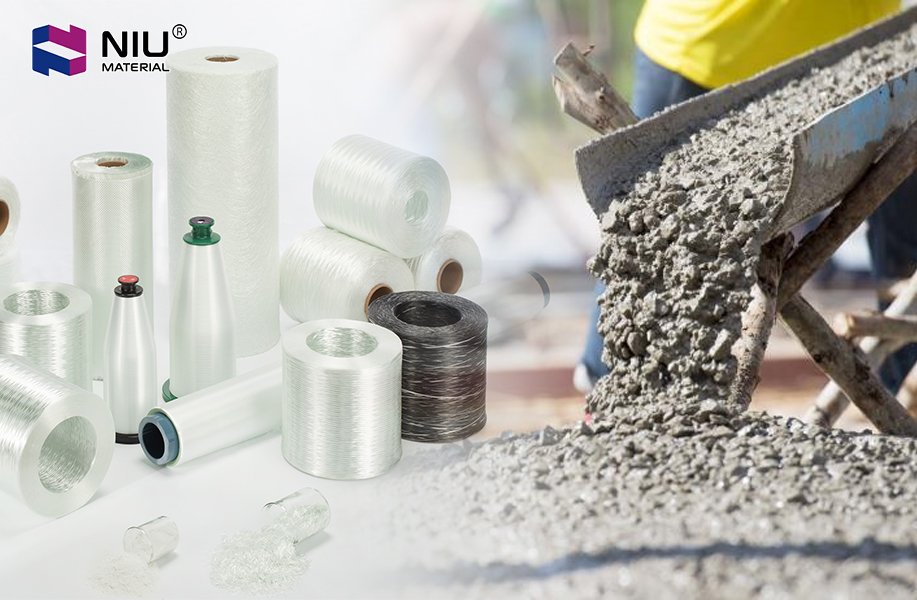
Before diving into the selection, it’s crucial for procurement engineers to clarify the core demands when purchasing glass fiber reinforcement materials for cement products: compatibility, cost-effectiveness, and stability. Choosing the right product not only enhances the strength and toughness of cement components, reduces long-term maintenance costs, but also avoids rework, material waste, and even potential project safety hazards caused by incorrect selection. The combination of glass fiber and cement essentially uses the former’s tensile and impact resistance to make up for the latter’s inherent shortcomings of high brittleness and easy cracking. However, different types of glass fiber products vary significantly in alkali resistance, dispersibility, and mechanical properties, and are suitable for different cement scenarios. From a procurement perspective, this article breaks down the types of glass fibers suitable for combining with cement, key selection indicators, scenario-based matching schemes, and pitfalls to avoid, helping procurement engineers select efficiently and reduce procurement risks.
During the hydration process of cement, a large amount of calcium hydroxide is produced, forming a strong alkaline environment (pH value up to 12-13). Ordinary glass fibers will be gradually corroded and degraded in this environment, eventually losing their reinforcing effect and leading to cracking and failure of cement components. Therefore, the primary prerequisite for glass fibers combined with cement is excellent alkali resistance, which is also the core threshold to distinguish between “compatible” and “incompatible”.
When purchasing, it is necessary to clarify: not all glass fibers can be used for cement reinforcement. Although ordinary E-fiberglass has excellent mechanical properties, its alkali resistance is poor. When immersed in the alkaline environment of cement for a long time, the strength retention rate will drop significantly, and it is only suitable for short-term, low-strength cement scenarios. The specially developed alkali-resistant (AR) glass fiber, by adjusting its composition (such as adding zirconia), can effectively resist alkaline corrosion, with a long-term strength retention rate of more than 75%, making it the first choice for cement reinforcement. In addition, the surface treatment process of glass fiber also affects its bonding effect with cement. Products treated with silane coupling agent can improve the bonding force with the cement matrix and avoid delamination and detachment.
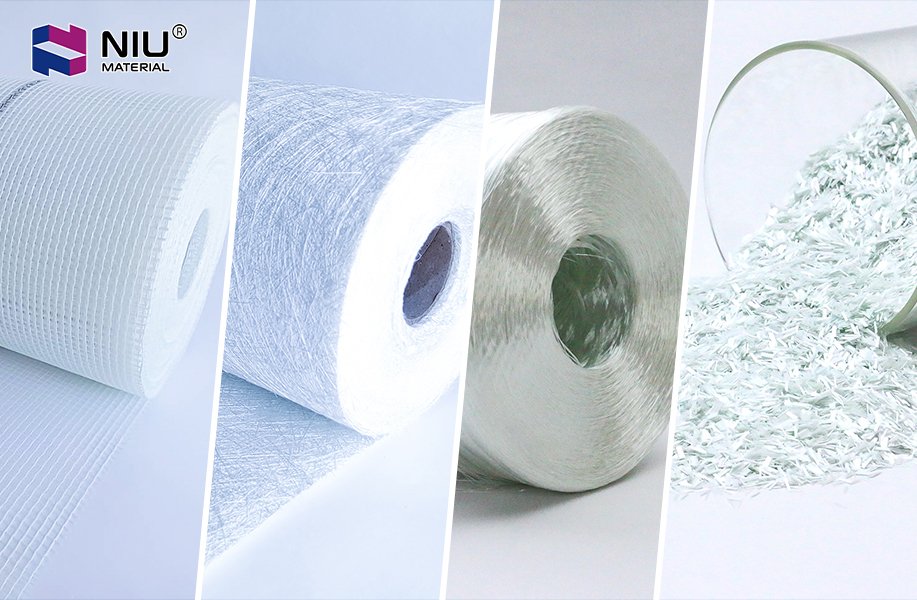
Based on the application scenarios of cement products (such as building components, wall materials, road engineering, dust removal equipment, etc.), the following 4 types of glass fiber products are the most compatible and widely used in the market. Procurement engineers can accurately match them according to project needs, budget, and performance requirements.
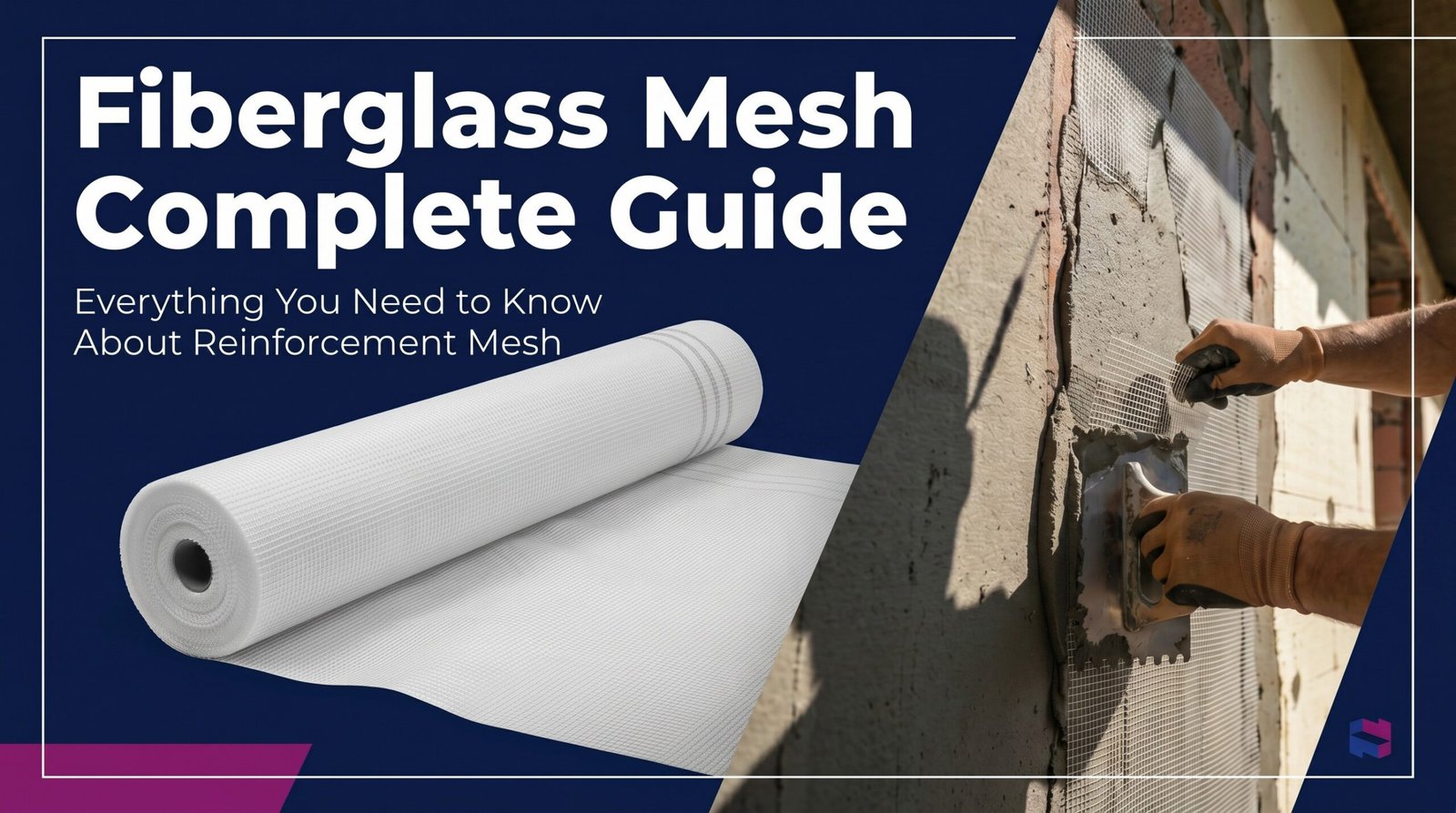
As the most commonly used cement reinforcement material, alkali-resistant glass fiber mesh is made of alkali-resistant glass fiber substrate and surface-coated (such as acrylic emulsion). It has the characteristics of light weight, easy laying, low cost, and excellent alkali resistance, making it the category with the largest purchase volume and widest application. Its core advantage is good dispersibility, which can be evenly embedded in the cement matrix, effectively inhibiting the shrinkage and cracking of cement components, and improving surface flatness and impact resistance.
Suitable scenarios: Civil building walls, thermal insulation layers, cement floors, road repair, ordinary GRC (Glassfibre Reinforced Cement) components, etc., especially suitable for batch procurement projects with moderate strength requirements and limited budget. When purchasing, two key indicators should be paid attention to: first, zirconia content (high-zirconium type ≥16.5%, low-zirconium type ≥14.5%); the higher the zirconia content, the stronger the alkali resistance. Second, mesh size (commonly 10×10mm, 12×12mm); too large mesh affects the reinforcement effect, while too small increases construction difficulty and cost.
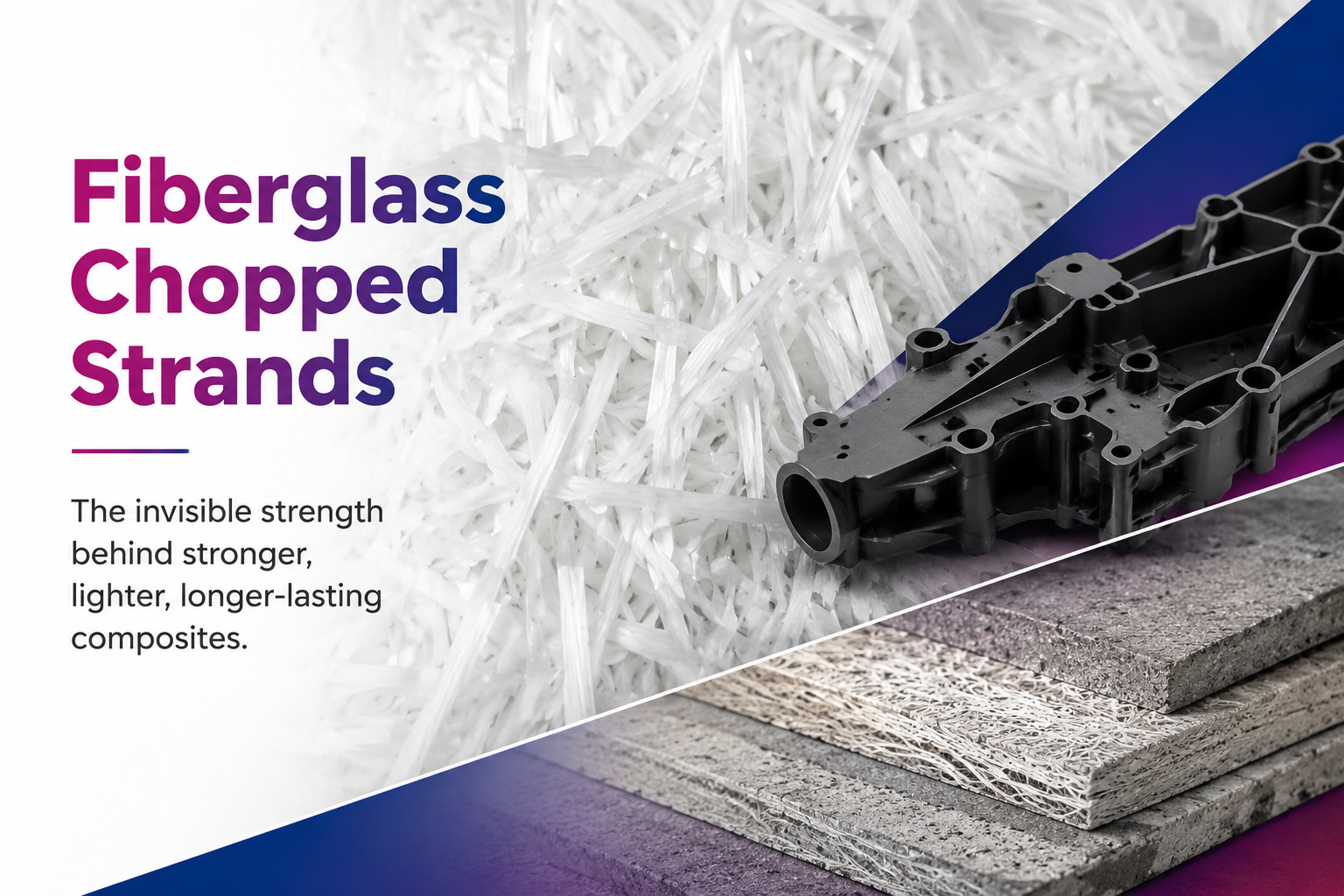
Suitable scenarios: Prefabricated cement components, bridge guardrails, cement pipes, large GRC curtain walls, port terminal cement components, etc., especially suitable for projects that need to bear loads and resist impact. When purchasing, attention should be paid to the matching of chopped length: 6mm is suitable for fine aggregate concrete and mortar reinforcement; 12-24mm is suitable for coarse aggregate cement components and load-bearing structures. At the same time, confirm the sizing agent content of chopped strands (0.8%-2.0%), which can improve compatibility with cement and avoid agglomeration.
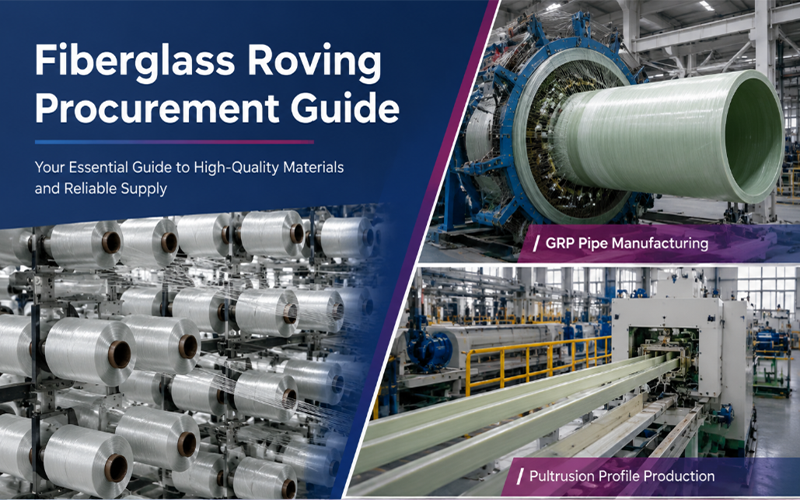
Alkali-resistant glass fiber roving is made of multiple strands of alkali-resistant glass fiber filaments arranged in parallel without twisting. It has the characteristics of high strength, high temperature resistance, and corrosion resistance, and can withstand harsh working conditions such as high temperature, high humidity, and corrosive gases, suitable for the reinforcement needs of industrial-grade cement products. Its temperature resistance can reach 260-280℃, and instantaneous temperature resistance can reach 300-350℃, especially suitable for dust removal equipment in cement production, cement components around high-temperature kilns and other scenarios.
Suitable scenarios: Substrate of dust removal filter bags for cement kilns, industrial floors, cement components in high-temperature environments, cement equipment in chemical fields, etc. When purchasing, focus on temperature resistance and breaking strength. E-glass roving can withstand 280℃ for a long time, and C-glass roving can withstand 260℃ for a long time, which can be selected according to the working temperature. At the same time, the breaking strength should not be less than 0.25N/tex to ensure meeting industrial-grade strength requirements.
Glass fiber needle-punched felt is made of alkali-resistant glass fiber through needle-punching process, with good air permeability, high filtration efficiency, and strong alkali resistance. It is mainly used for flue gas dust removal in cement production, and is the core filter material of cement industrial dust removal equipment. Its fabric structure is divided into twill, satin, weft double layer, etc., among which the bulk yarn needle-punched felt has the highest air permeability and the best dust removal effect.
Suitable scenarios: Dust removal equipment for dust emission points such as cement rotary kilns, shaft kilns, dryers, and coal mills. It can effectively filter flue gas with high temperature and high dust concentration, and the dust removal rate can reach more than 99%. When purchasing, select according to the working conditions of the dust emission point: for high-temperature scenarios such as rotary kilns and grate coolers, select E-glass or C-glass bulk yarn needle-punched felt treated with acid-resistant surface; for scenarios such as shaft kilns and dryers, select needle-punched felt treated with anti-condensation formula to extend service life.
For procurement engineers, selection should not only focus on product performance, but also take into account cost and supplier reliability, avoid falling into the “low-price trap”, and ensure that the purchased glass fiber products can truly adapt to cement scenarios and maximize cost-effectiveness.
To reduce costs, some manufacturers on the market will produce “fake alkali-resistant” glass fibers with low zirconia content (less than 14.5%). Although such products seem normal in short-term use, they will degrade quickly when immersed in the alkaline environment of cement for a long time, leading to cracking and failure of cement components, and increasing long-term maintenance costs. When purchasing, if the quotation is more than 20% lower than the market average, it is necessary to focus on verifying key indicators such as zirconia content and strength retention rate, and require suppliers to provide third-party test reports to avoid purchasing inferior products.
Different cement scenarios have different performance requirements for glass fibers. When purchasing, there is no need to blindly pursue high indicators, but to select reasonably according to scenario needs: for ordinary civil walls, alkali-resistant mesh cloth is sufficient, and there is no need to purchase high-priced chopped strands or roving; for industrial high-temperature and load-bearing scenarios, select high-strength, high-temperature-resistant roving or chopped strands to avoid cost waste caused by “performance surplus”. At the same time, select according to the type of cement: for Portland cement scenarios, give priority to high-zirconium alkali-resistant glass fiber; for low-alkalinity sulfoaluminate cement scenarios, low-zirconium alkali-resistant glass fiber can be selected.
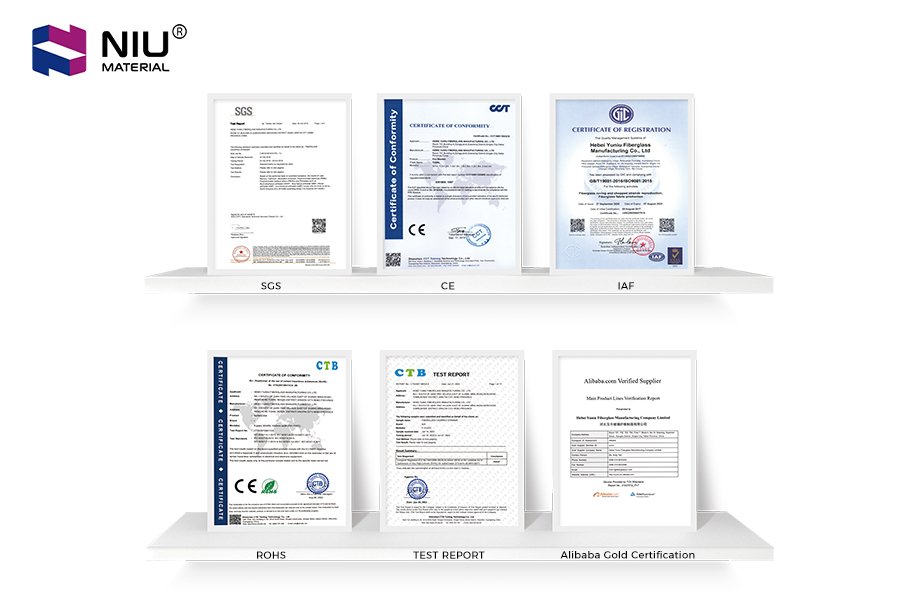
When purchasing, give priority to suppliers with ISO9001 quality management system certification and participation in industry standard formulation. Such suppliers have more guaranteed product quality and can provide full-process services (such as technical consultation, sample testing, and installation guidance). At the same time, require suppliers to provide similar project cases in the past 3 years, conduct on-site inspections of project usage, and understand the actual service life and performance of products; clarify the supply cycle and after-sales guarantee (such as return and exchange for quality problems, and later technical support) to avoid affecting project progress due to delayed supply and lack of after-sales service.
Conclusion: Core selection logic – adapt to scenarios, balance costs, and adhere to quality. For procurement engineers, the core logic of selecting glass fiber products combined with cement is not “the more expensive the better”, but “adaptation is king”. Choose alkali-resistant mesh cloth for ordinary scenarios to pursue cost-effectiveness; choose alkali-resistant chopped strands for high-strength load-bearing scenarios to balance strength and adhesion; choose roving or needle-punched felt for industrial high-temperature and dust removal scenarios to adapt to harsh working conditions. At the same time, adhere to alkali resistance as the core indicator, reject low-price and low-quality products, and verify supplier qualifications, so as to control procurement costs while ensuring the quality and service life of cement components and escort the smooth progress of the project.

If you have any questions
Please contact us for free consultation and product quotation
You can leave your needs and contact information~and We can provide you with usage suggestions + product suitability analysis + free sample delivery!
Leave us your interest and contact information, and we’ll send you detailed information for your reference!
You can leave the specifications and contact information you need~ Our technicians will immediately organize the exclusive information for you and send it to your email!
You can leave your contact information here, and we will send you detailed specifications and application cases to make your purchase clearer~