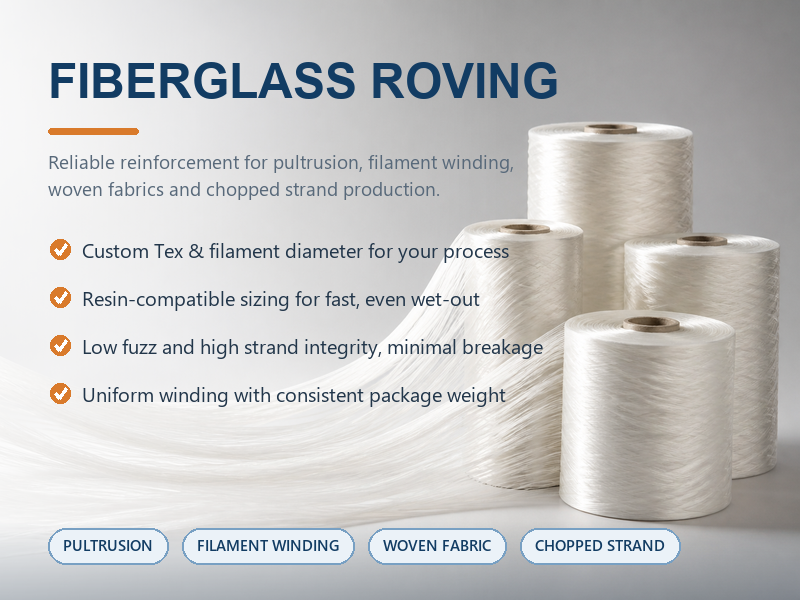
Glass Fiber Yarn: The Reinforcement Behind Better Fiberglass Products
Table of Contents
添加一个标题以开始生成目录
Introduce
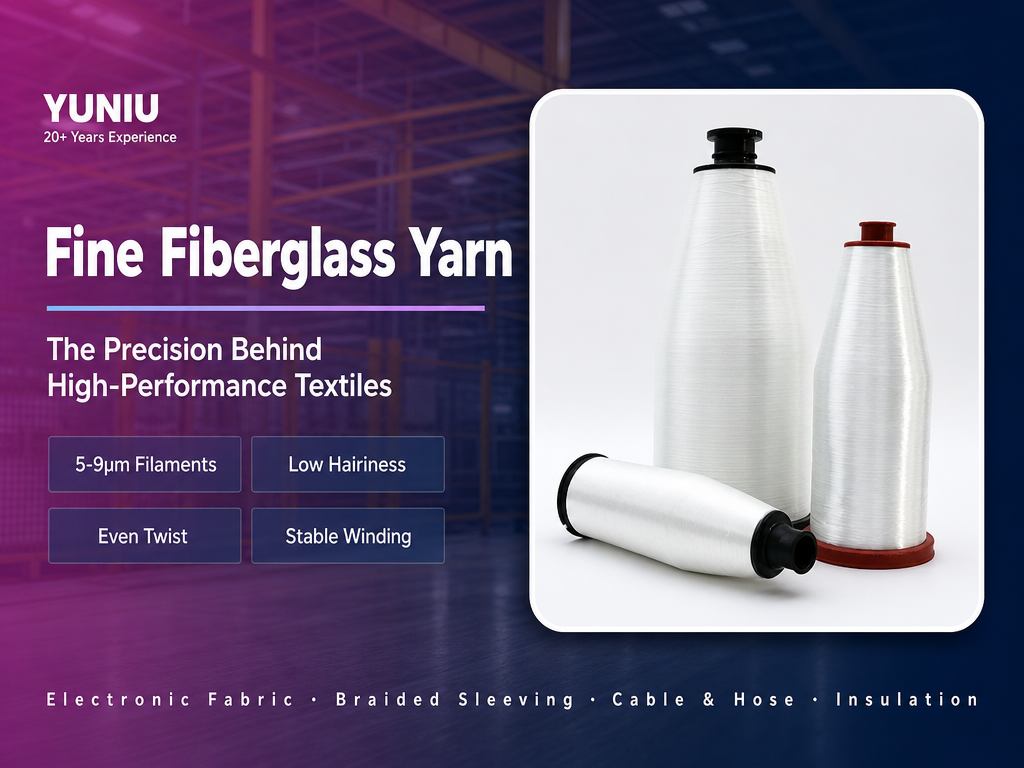
Fine fiberglass yarn is the starting material for some of the thinnest and most precise fiberglass products on the market. Made from ultra-fine filaments—often just 5 to 9 micrometers in diameter—it is twisted and wound into low-tex yarns that later become electronic-grade fabric, braided sleeving, cable wrap, and lightweight industrial textiles. Choosing fine yarn is different from choosing ordinary fiberglass yarn. The thinner the yarn, the less room there is for error: a slight variation in diameter, tension, or surface condition shows up immediately in the finished product. For manufacturers of electronic fabrics, sleeving, and fine textiles, the goal is not just a yarn that meets the spec sheet. It is a yarn that unwinds smoothly, twists evenly, and stays consistent from roll to roll—so your production line can keep running at full speed.
When Fine Yarn Quality Directly Affects Production
Because fine yarns are made of extremely thin filaments, they are more sensitive to every stage of processing. A single rough spot, a burst of fuzz, or a section of uneven tension can cause a filament to break—and on a high-speed warping, weaving, or braiding line, one break means a machine stop. Fuzz is a particular concern with fine yarn. Loose filaments not only cause breaks, they also deposit on machine guides and tensioners, slowly degrading running conditions across the whole shift. Poor winding creates another hidden cost: if the package is soft or uneven, tension changes during unwinding, which shows up as defects in the fabric or braid downstream. A well-made fine yarn should do one thing above all: disappear into your process. It should unwind cleanly, take twist evenly, and never force your operators to stop and adjust. That is the difference between buying fine yarn and buying fine yarn that truly fits your production
The Right Yarn Creates Better Fabric
Fine yarn does not stay a yarn for long—it becomes fabric, sleeving, tape, and reinforcement. In electronic-grade fabric, yarn evenness directly translates into uniform fabric weight and consistent electrical performance in the finished laminate. In braided sleeving, consistent yarn fineness means tighter, more even braid coverage with no thin spots or gaps. In tapes and lightweight textiles, a clean, low-fuzz yarn gives a smoother surface and cleaner edges—fewer defects, less waste, better appearance. For manufacturers, this means fewer adjustments, higher yield, and the confidence to commit to large-volume orders. Good fiberglass products start with good yarn—and good fine products start with even better yarn.
More Than Strength: What Makes a Good Fine Fiberglass Yarn?
For fine yarn, strength is a baseline—what really matters is precision.
Precise Linear Density
Fine yarn is sold by its tex value, and that value must hold true across the entire package. Small deviations in linear density become visible differences in fabric weight.
Low Hairiness
With filaments this thin, even a little fuzz affects running performance and surface quality. Low hairiness keeps machines clean and products smooth.
Even Twist
Twist holds fine filaments together and gives the yarn strength for processing. Even twist means fewer weak points and more stable behavior during weaving and braiding.
Uniform Filament Diameter
Consistent filament diameter is the foundation of a uniform yarn. It supports even fabric weight, smooth surfaces, and dependable performance in electronic applications.
Stable Winding
A well-wound package unwinds at steady tension from the first meter to the last—no soft spots, no sudden tension jumps.
Compatible Sizing
The right sizing protects fine filaments during processing and ensures compatibility with your downstream steps, from weaving to coating.
These details separate a fine yarn that merely meets a specification from one that delivers stable, repeatable production performance.
One Yarn, Multiple Industrial Possibilities
Finefiberglass yarn is one of the most versatile raw materials in the industry—the same yarn family can end up in products as different as circuit boards and fire-resistant sleeving. Electronic-Grade Fabric: The base cloth for copper-clad laminates and PCB production. Uniform, low-fuzz fine yarn is essential for consistent laminate thickness and electrical properties. Braided Sleeving : Fine yarn is braided into protective and insulating sleeving for wires, cables, and hoses—flexible protection that still resists heat and abrasion. Cable & Hose Reinforcement: Fine yarn adds stable strength and dimensional stability to cables, hoses, and rubber products without adding unnecessary bulk. Insulation Textiles: Used in fabrics for thermal and electrical insulation, where fine, even yarn improves coverage and consistency. Fine Industrial Textiles: From filtration to protective textiles, fine yarn delivers the combination of thinness, strength, and heat resistance that demanding applications require. This versatility makes fine fiberglass yarn a valuable raw material for manufacturers serving many different markets.
Why Choose YUNIU Fiberglass Yarn?
With more than 20 years of fiberglass manufacturing experience, YUNIU produces fine fiberglass yarn for manufacturers, distributors, and industrial customers worldwide. We know that fine yarn customers are not buying a number on a spec sheet—they are buying smooth production and consistent product quality, shipment after shipment. YUNIU focuses on the details that matter for fine yarn: stable quality, consistent production, clean winding, flexible specifications, and long-term supply capability. Our fine fiberglass yarn supports applications including electronic-grade fabric, braided sleeving, cable and hose reinforcement, insulation textiles, and other fine fiberglass products. Whether you are a fabric manufacturer, sleeving producer, distributor, or industrial buyer, we can work with you to find the fine yarn solution that fits your production.
In Conclusion
The quality of a fine fiberglass product is decided long before the finished textile leaves the factory. It is decided at the yarn. A stable, precise fine yarn helps manufacturers run smoother production, hold consistent quality, reduce avoidable problems, and build products that perform reliably in demanding applications. For manufacturers, the right fine yarn is not just a raw material—it is the foundation of the entire process.
Please leave a message regarding the fiberglass and other composite materials you’re interested in or looking for.
We will send you a definitive quote (including product price and shipping costs) within 12 hours.
Product Inquiry/Quote
You can leave a message about the fiberglass materials you are interested in/looking for.
We will send you a clear quotation (including product price + shipping cost) within 12 hours.
Are you considering fiberglass for your application?
You can leave your needs and contact information~and We can provide you with usage suggestions + product suitability analysis + free sample delivery!
Leave us your interest and contact information, and we’ll send you detailed information for your reference!
Do you want to know the technical parameters and TDS of products?
You can leave the specifications and contact information you need~ Our technicians will immediately organize the exclusive information for you and send it to your email!
Interested in this specification?
You can leave your contact information here, and we will send you detailed specifications and application cases to make your purchase clearer~
How can we help you?
You can leave a message about the fiberglass materials you are interested in/looking for.
We will send you a clear quotation (including product price + shipping cost) within 12 hours.