Australia's Building Market Has Pushed GRC onto Facades and into Landscape
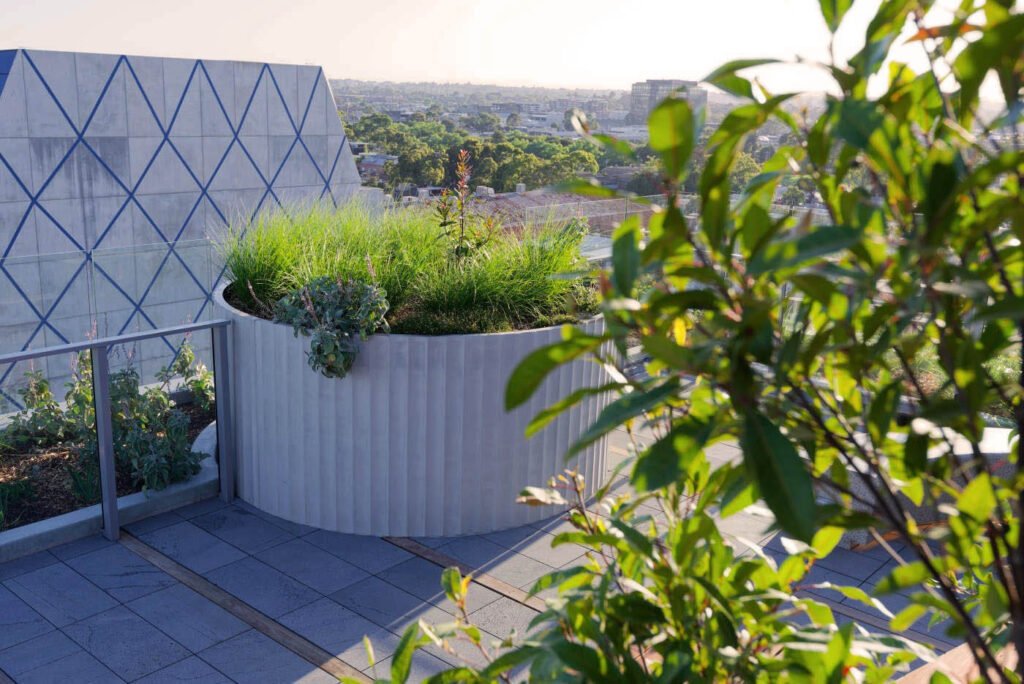
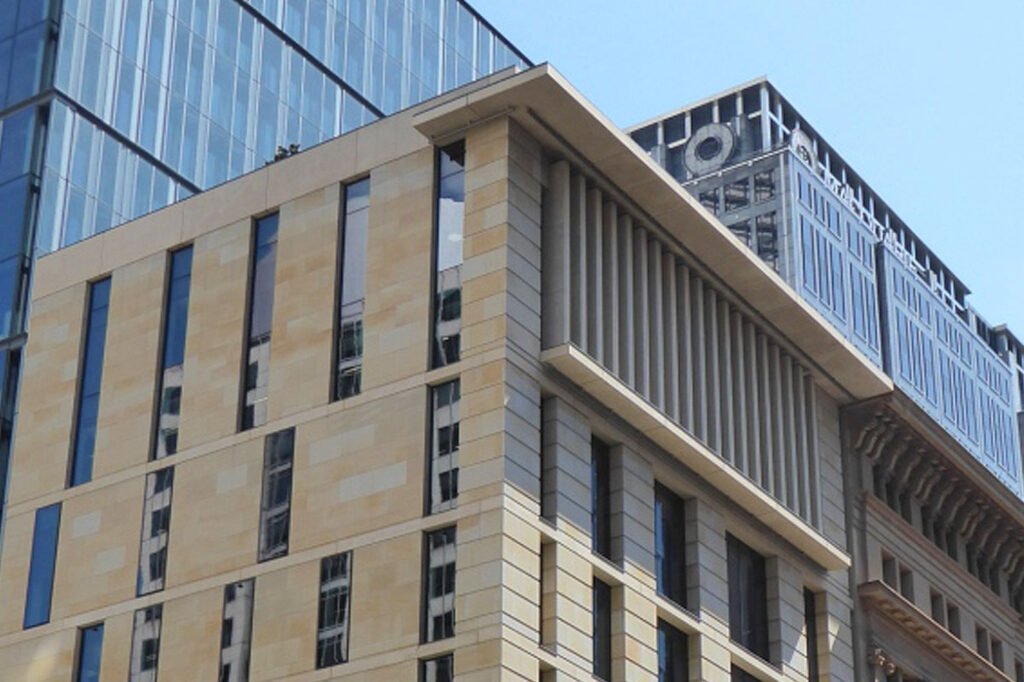
Demand for lightweight external cladding in Australia has risen steadily over the past decade. Urban renewal and high-rise projects call for facades with lower dead load and greater formal freedom, and GRC (glass fibre reinforced concrete) has moved from decorative elements to the building skin: façade panels, sunshades, balustrades, sculptural seating, planters — all produced from the same moulds and mix designs.
These elements share two characteristics. They are thin, typically 10–15 mm, and they stay outdoors — Australian UV is intense, coastal projects face salt spray, and diurnal temperature and wet-dry cycling are pronounced. At the same time, building codes set clear requirements on non-combustibility, which the inorganic GRC system meets.
Whether an element holds up over time depends on the fibre inside the concrete matrix. The fibre’s job is to hold a crack closed once the matrix cracks, and whether it can depends on three things: whether the glass resists alkali, whether the chopped length suits the panel thickness, and whether the strands separate in the mix.
Three Problems That Recur on GRC Panels
Thin Sections and Large Areas Crack First in Plastic Shrinkage
In the first hours after casting, moisture evaporates from a large surface, the matrix shrinks before it has gained strength, and cracks form at that stage. The thinner the panel and the larger the area, the more concentrated the shrinkage. The fibre’s job is to intercept a crack as it starts; if the fibre spacing is too wide, the crack runs straight between two fibres.
Such cracks are not always visible at demoulding. They appear after installation, once the panel has been through a few temperature cycles.
The Alkaline Environment of Portland Cement Gradually Weakens Ordinary Glass Fibre
In the first hours after casting, moisture evaporates from a large surface, the matrix shrinks before it has gained strength, and cracks form at that stage. The thinner the panel and the larger the area, the more concentrated the shrinkage. The fibre’s job is to intercept a crack as it starts; if the fibre spacing is too wide, the crack runs straight between two fibres.
Such cracks are not always visible at demoulding. They appear after installation, once the panel has been through a few temperature cycles.
On Fair-Faced Panels, A Fibre Ball Is a Reject
Most Australian GRC elements are fair-faced: the finish comes straight off the mould with no coating to hide it. If the strands do not separate and form balls, the surface shows raised patches, colour variation and local fibre-rich spots; fibre protruding at the face leaves whiskers. These defects cannot be repaired, only scrapped.
Balling also disrupts flow in premix and blocks the gun in spray-up. Whether strands separate depends on the bundle integrity, the sizing and the quality of the cutting.
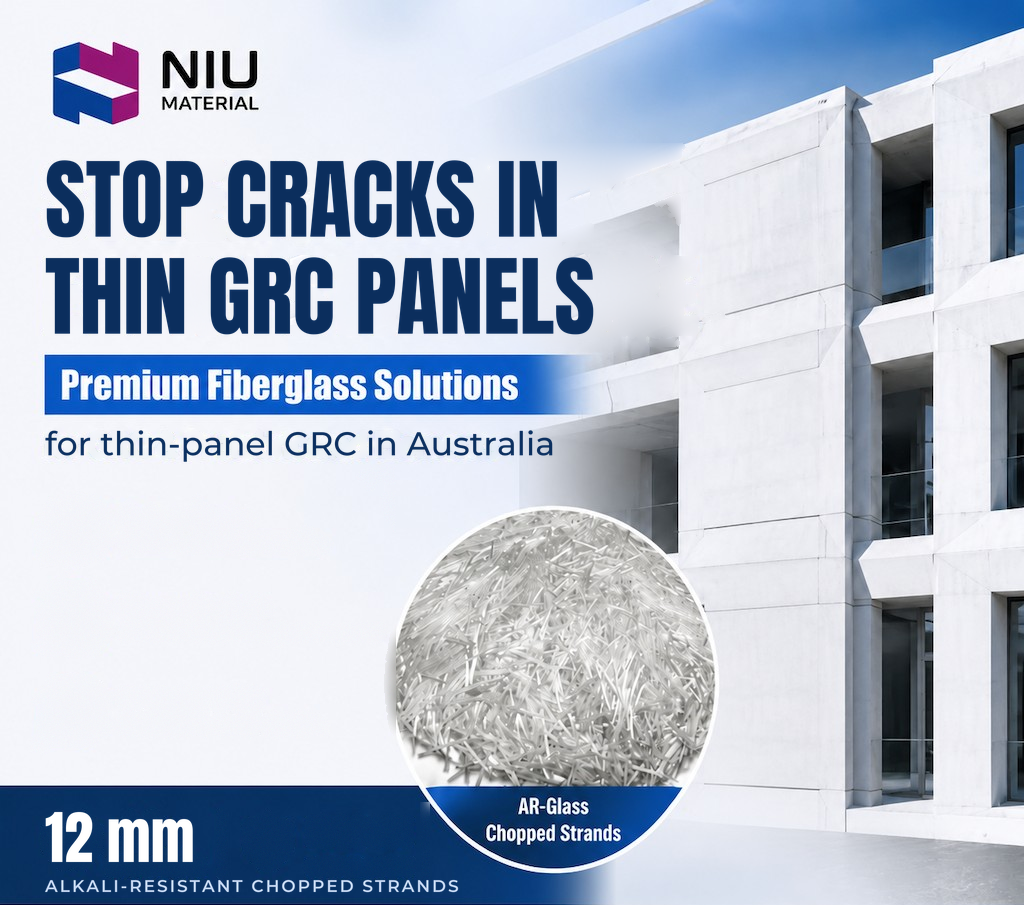
12 mm Alkali-Resistant Chopped Strands: Alkali Resistance, Dispersion, Thin-Section Fit
Our alkali-resistant chopped strands use zirconia as the alkali-resistant component, controlled at the 16.5% grade, and are cut to 12 mm. The two parameters correspond to service life under alkali and to thin-section production respectively; the third factor is batch consistency.


Zirconia Holds the Alkaline Environment, So Strength Is Retained
Zirconia is not readily leached out of the glass network by alkaline solution, so after long immersion in cement pore solution the fibre retains markedly more of its strength than ordinary glass fibre. Alkali resistance is not a surface treatment — it comes from the bulk glass formulation and therefore does not decay with time in service.
This bears directly on the design life of the element. GRC design strengths are already taken on long-term performance; if the alkali resistance grade of the fibre falls short, no amount of mix precision will compensate.
12 mm Length Fits Both Thin Sections and Premix
12 mm is the common length for thin-section GRC and premix processing. At a panel thickness of 10–15 mm, 12 mm strands can interlock in all three directions: long enough not to bridge and ball in the paste, short enough to keep the ability to cross a crack.
In premix, 12 mm strands disperse more evenly in a forced-action mixer; with sufficient fibre count per unit volume, crack spacing comes down and the panel does not develop long continuous cracks.
Stable Moisture and Cut Length Keep Both Mix and Face Under Control
Moisture content is held below 0.2%, with sizing content and breaking strength tested batch by batch. High moisture makes the strands clump in storage and transport, so they do not open up in the mix; insufficient breaking strength means the shear of mixing breaks the strands, and the length actually doing the crack control falls short of design.
Consistent cut length matters just as much — the few strands that run long are the first to tangle in the paste. When length is consistent batch to batch, mix design and mixing time do not have to be adjusted repeatedly.
Both Reinforcement Types for GRC Can Be Supplied Together
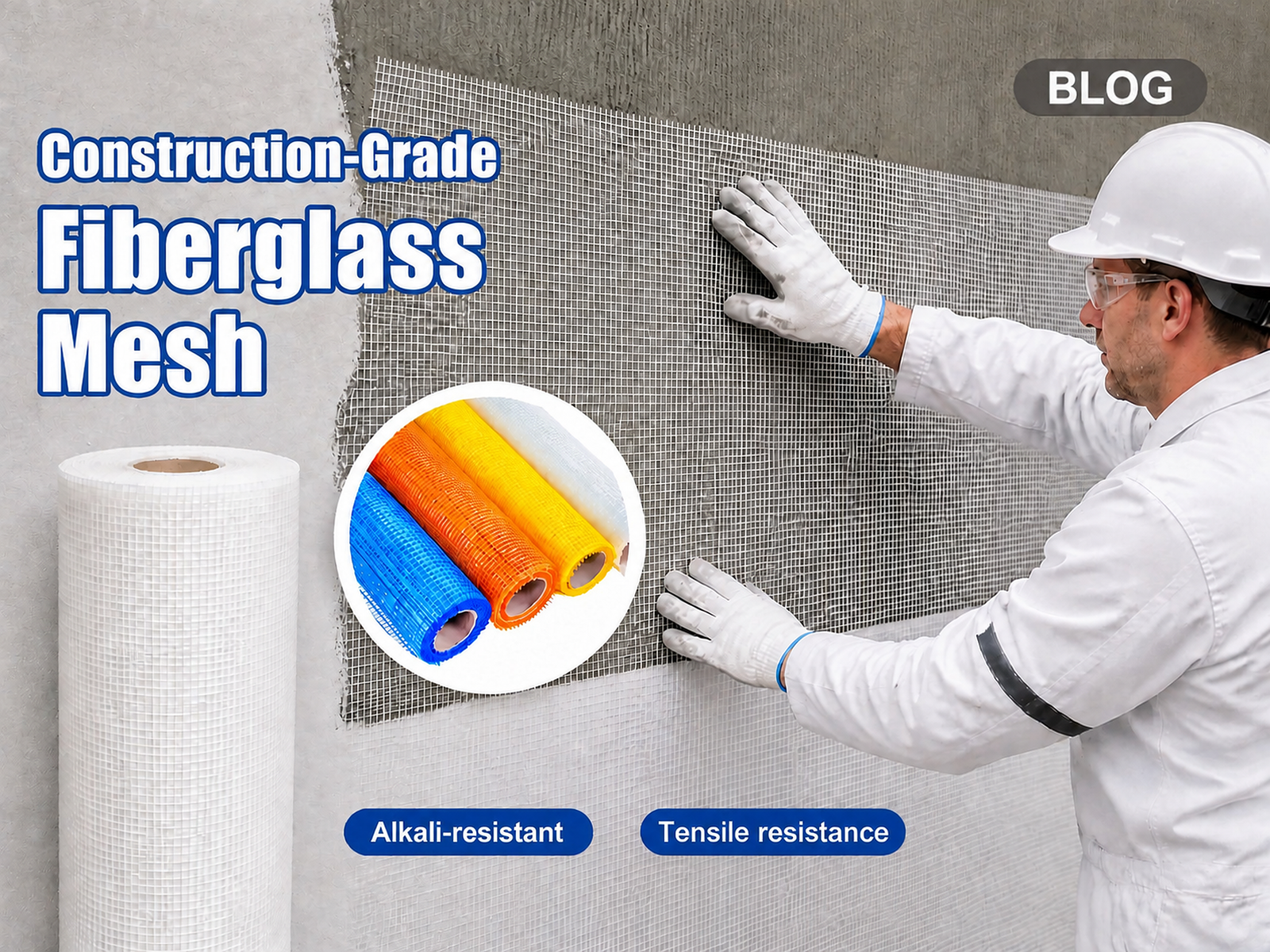
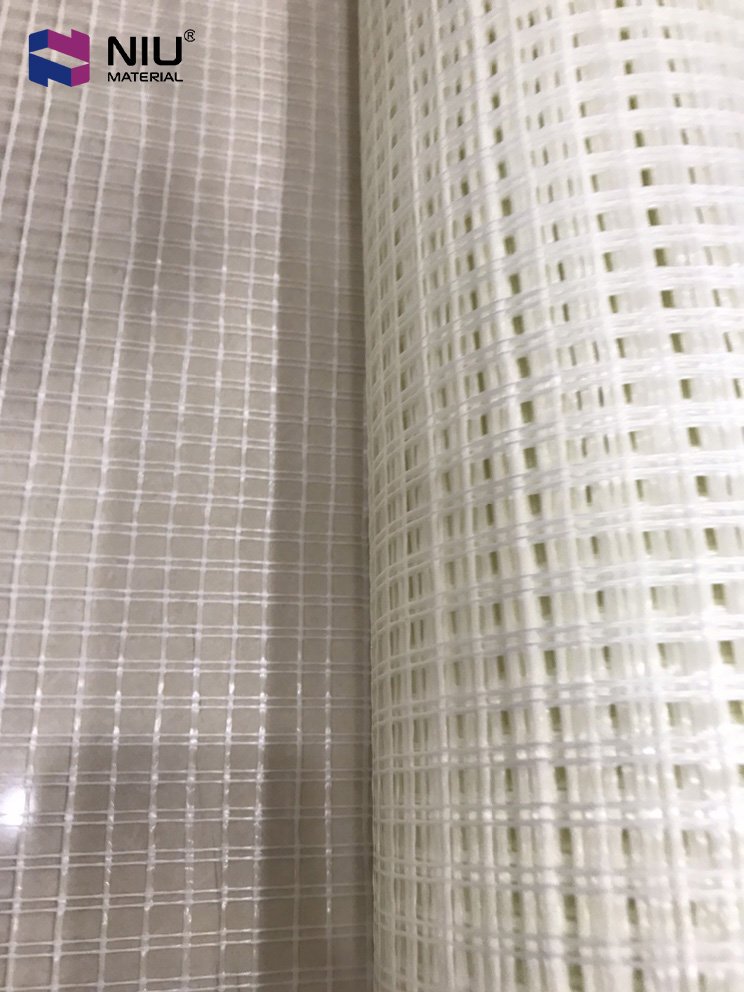
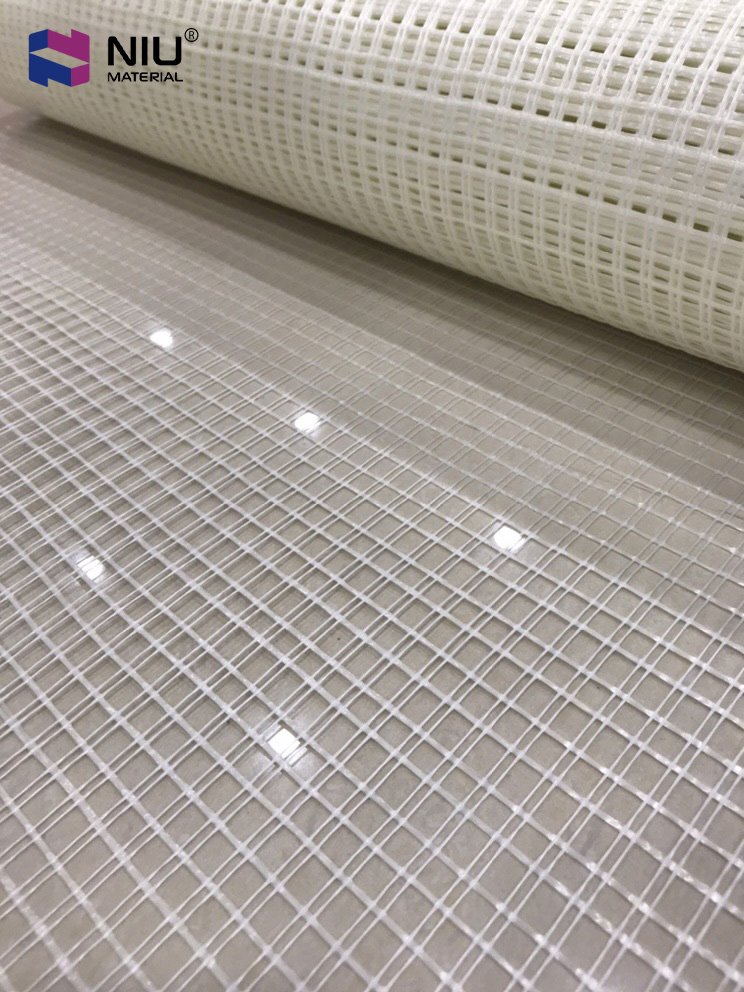
A GRC reinforcement system normally has two parts: chopped strands mixed into the paste for overall crack control, and alkali-resistant mesh laid at corners, openings and thin sections for local strengthening. If the two come from different plants, the glass formulations differ, the alkali resistance grades do not match, and a single element ends up with two service lives — the actual life being set by the weaker one.
We produce chopped strands and alkali-resistant mesh on the same alkali-resistant glass formulation line: strands cut to 12 mm with controlled moisture and bundle integrity, mesh cut to the detail and providing directional reinforcement. Used together, the alkali resistance grade is the same, and so is long-term performance across the element.
About Us
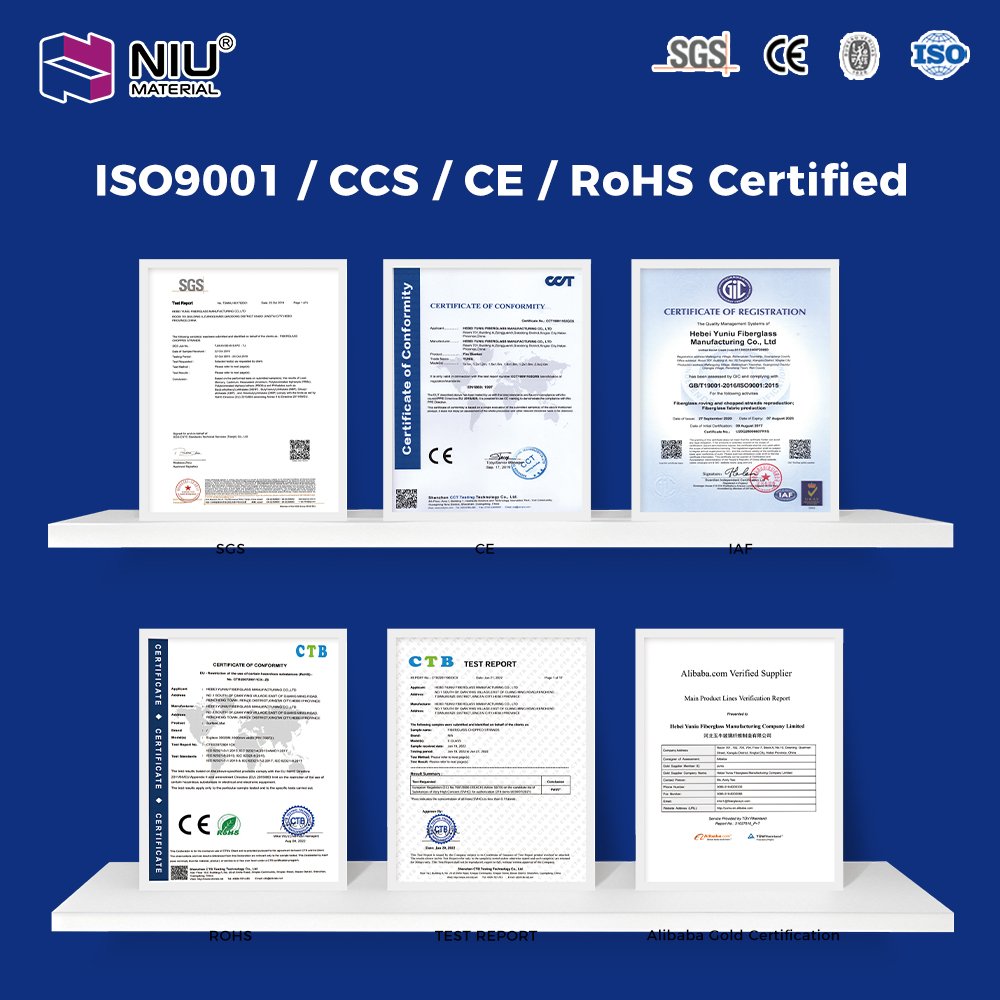
Hebei Yuniu Glass Fibre Manufacturing Co., Ltd. — brand Niumaterial / NIU® MATERIAL — was founded in 2012 in Hebei, China, and is a specialist glass fibre manufacturer in northern China with three R&D and production lines. The team brings more than twenty years of experience in the industry, products are exported to 128 countries and regions, and the company holds SGS, CE and ISO9001 certification.
Niumaterial’s quality control runs through the entire process from fibre drawing to finished packing, with zirconia content, moisture, cut length and sizing content tested batch by batch and reported. Differences in alkali-resistant chopped strands often only show months later, so formulation and process parameters are locked by batch rather than adjusted order by order.
Niumaterial’s alkali-resistant chopped strands can be customised to your process: cut length, bundle integrity and packing format are all adjustable, with different specifications for premix and spray-up. On the export side, shipping plans are laid out by week, documents are issued consistently from the same entity, and long-cycle projects are followed up by email.
In Conclusion
GRC elements in Australia are moving from decoration to building skin: panels are getting thinner and larger, and the demands on the fibre rise with them. The life of an element depends on how long the fibre can still hold a crack after the matrix has cracked — and that starts with the glass formulation.
Our 12 mm alkali-resistant chopped strands, with zirconia controlled at the 16.5% grade, correspond to the three most common failures in thin-section GRC: plastic shrinkage cracking, strength loss in an alkaline environment, and fibre balling on fair-faced panels.
If you are a GRC element manufacturer, precast concrete plant or building materials distributor in Australia, contact us for samples and technical datasheets, or to discuss a custom cut length and dosage against your panel thickness, process and mix design.