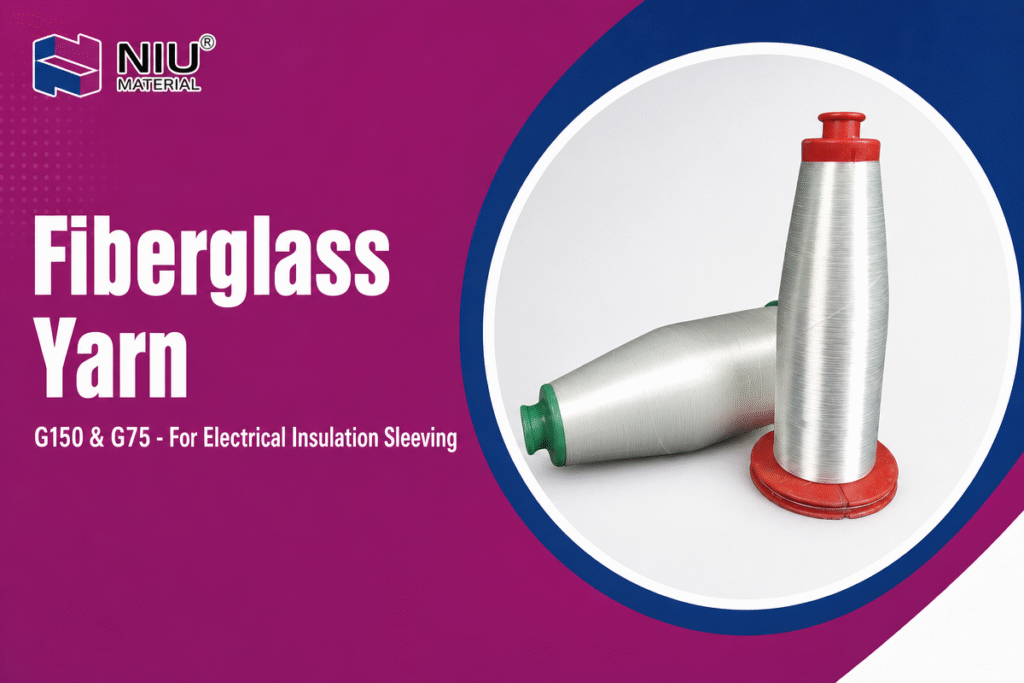
A Practical Yarn for Braided Electrical Insulation Sleeving
Braided insulation sleeving projects require yarn that provides reliable coverage, good coating wet-out, and consistent performance during production. For sleeving manufacturers in Brazil, fiberglass yarn is widely used to braid sleeves for motors, transformers, wiring harnesses, and other electrical insulation components.
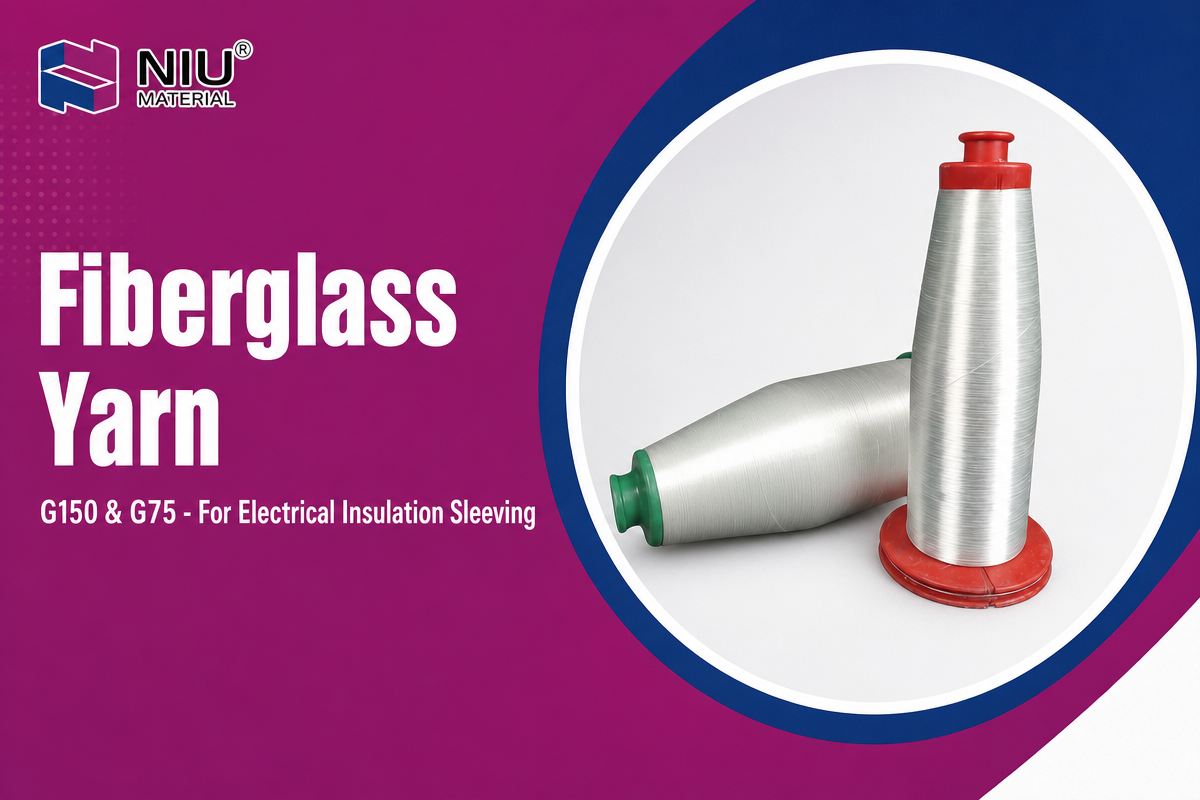
For an insulation sleeving project in Brazil, G150 and G75 silane-coated fiberglass yarn with starch coating was selected. This specification was chosen to support stable braiding and uniform insulation wall thickness.
Customer Requirement: Stable Yarn for Sleeving Production
The customer needed a fiberglass yarn suitable for braided insulation sleeving. The main requirements included a fine count for small diameter sleeves, a stable twist for continuous braiding, and a coating system that works with the coating process.
After confirming the project requirements, the customer selected YUNIU’s fiberglass yarn with the following configuration:
- Product type: Silane-coated fiberglass yarn (starch coating)
- Specification 1: G150 1/2 3.8S Silane Coating, starch coating (TEX66, oil content 0.85, twist 146.6, strength 67.3, moisture 0.04)
- Specification 2: G75 1/2 3.8S Silane Coating, starch coating (TEX138, oil content 0.97, twist 147.7, strength 67.4, moisture 0.05)
- Application: Braided electrical insulation sleeving
- Brand: YUNIU
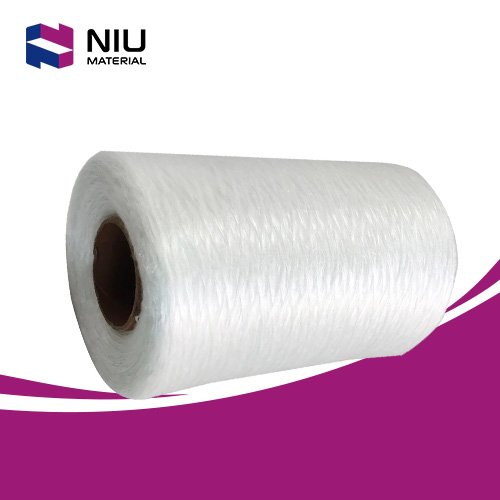
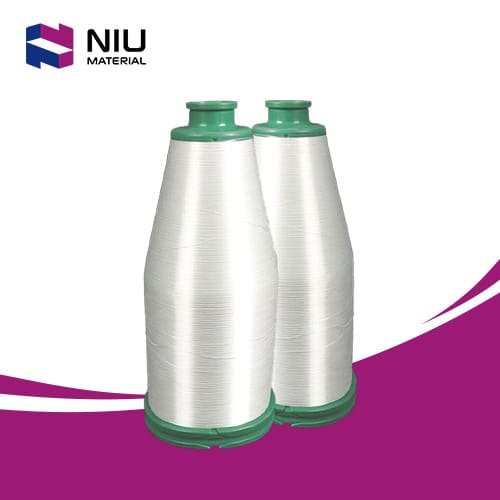
Why Choose G150 and G75 Fiberglass Yarn?
The two yarn counts provide a suitable balance between fineness and coverage. G150 (TEX66) is the finer count, and it suits thin-wall sleeves for fine wire and instrument wiring. G75 (TEX138) lays more glass into each braided pass, and it suits heavier sleeves for motors and wiring harnesses.
During sleeve manufacturing, the yarn is braided into a tubular structure and later combined with a coating resin. Evenly distributed filaments help provide a regular interlace pattern and a uniform wall thickness, making the yarn suitable for sleeves that must insulate evenly along their length.
This type of fiberglass yarn is commonly considered for motor leads, transformer windings, appliance wiring, high-temperature harnesses, and other electrical insulation parts. The actual number of yarn ends and braided layers should be determined according to the sleeve diameter, wall weight, design requirements, and the production process of the finished product.
The Advantage of a Stable 3.8S Twist
G150 and G75 are supplied as 1/2, 3.8S yarn. A stable twist keeps the filaments together as the yarn runs through the guides and carriers of the braider.
Uniform twist helps reduce broken filaments and fuzz build-up during long production runs. It also helps keep the braided pattern regular, which supports a consistent sleeve wall weight. For sleeving manufacturers, twist is an important factor because it affects braiding speed, machine stops, and material utilization.
The measured twist of the two yarn counts is 146.6 and 147.7, which is especially suitable for manufacturers who braid small and medium diameter sleeves in continuous production.
Silane Coating and Starch Coating for Efficient Processing
Silane-coated fiberglass yarn is produced by applying a silane coupling agent together with starch coating to the glass surface. This structure helps the yarn maintain its shape during braiding, cutting, and handling.
In sleeve production, the silane component supports adhesion between the glass and the coating resin, while the starch coating protects the filaments as they pass through the braiding guides. A well-coated yarn can help support a cleaner braiding process and more even coating penetration.
Before bulk purchasing, customers should confirm the yarn’s compatibility with their coating system, curing conditions, braiding equipment, and sleeve design.
Application in Brazil's Electrical Insulation Sector
Brazil has a strong demand for electrical insulation products, including motors, transformers, pumps, appliances, and wiring components. These applications require materials that can be processed efficiently and be supplied in stable specifications.
For this insulation sleeving application, YUNIU’s G150 and G75 silane-coated fiberglass yarn provided a practical solution for braided sleeve production. The combination of two yarn counts and a stable twist helped match the requirements for both thin-wall and heavy-wall sleeves.
Why Source Fiberglass Yarn from YUNIU?
YUNIU supplies fiberglass yarn for customers involved in electrical insulation sleeving, motors, transformers, wiring harnesses, and other insulation applications.
- Stable G150 and G75 fiberglass yarn production
- Silane coating with starch coating for braiding and coating processes
- Yarn specifications tailored to different braiding machines and sleeve designs
- Trial volumes with flexible minimum order quantities
- Packaging and delivery solutions for international customers
- Technical communication before bulk production
For customers with different requirements, product details such as yarn count, ply, twist, coating type, and packaging can be discussed according to the application and production process.
Conclusion
For insulation sleeving manufacturers in Brazil, G150 and G75 silane-coated fiberglass yarn is a practical material for braided electrical insulation sleeving.
The two yarn counts support thin-wall and heavy-wall sleeve production, while the silane coating with starch coating helps improve braiding efficiency and coating wet-out. With stable product specifications and professional supply support, YUNIU provides fiberglass yarn for customers seeking reliable materials for motor leads, transformer windings, harnesses, and other electrical insulation components.