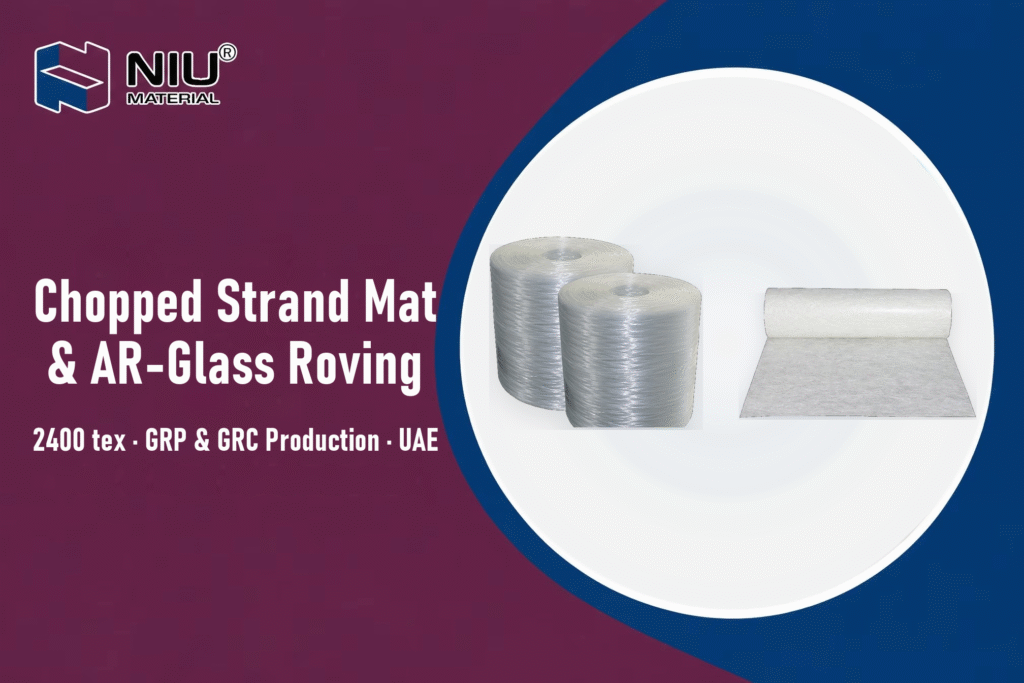
A Practical Reinforcement Combination for GRP and GRC Production
In the UAE, where construction, water infrastructure, and marine projects continue to expand, the availability and consistency of fiberglass reinforcement material has become a primary concern for GRP and GRC producers. Laminating shops and GRC lines that run on material not matched to the process commonly deal with incomplete wet-out, white patches left in the laminate, delamination between layers, and strength that fades in the alkaline environment of cement. To address these issues, producers are increasingly turning to properly specified chopped strand mat and AR-glass roving to secure layer quality, long-term strength retention, and delivery that fits the project schedule.
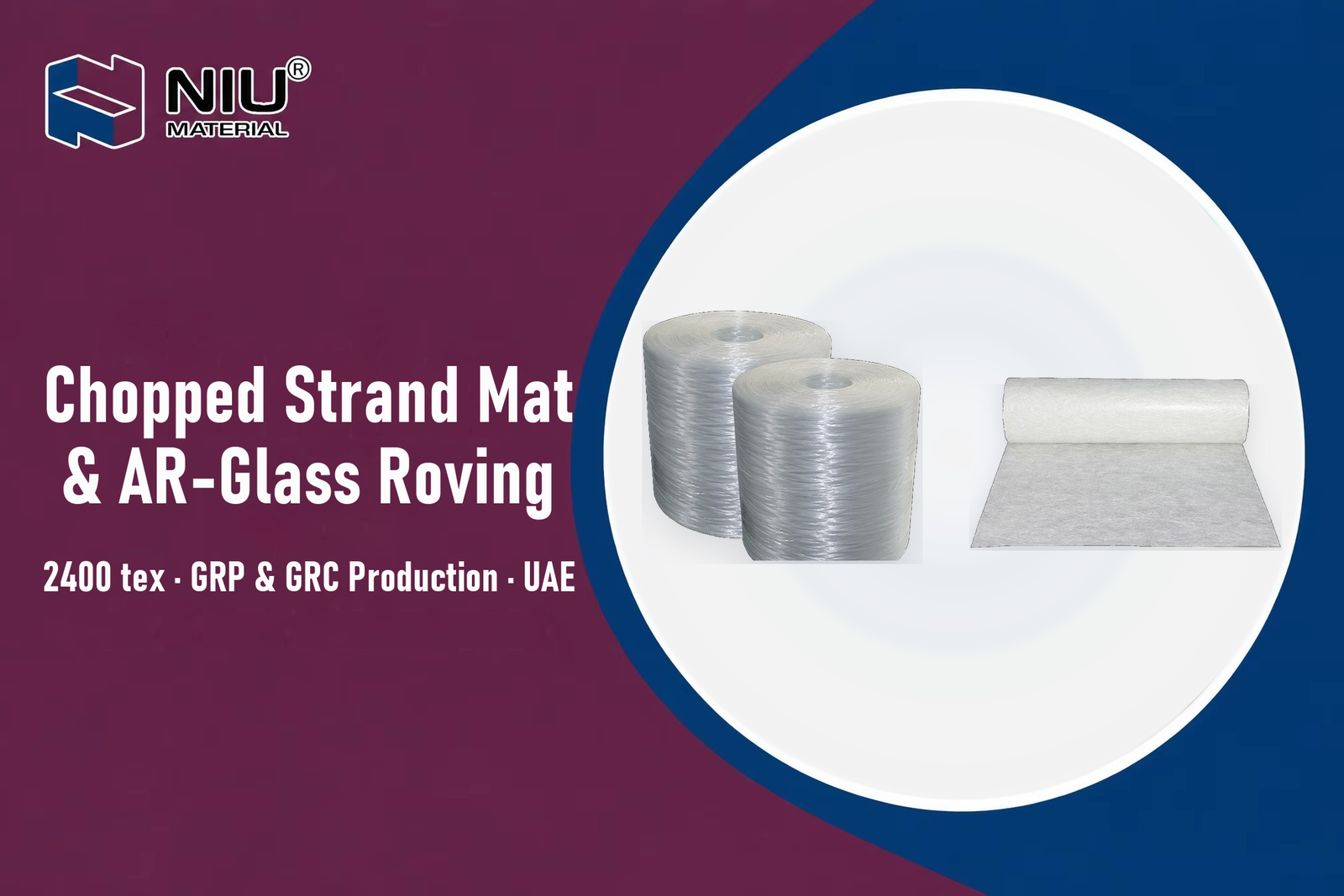
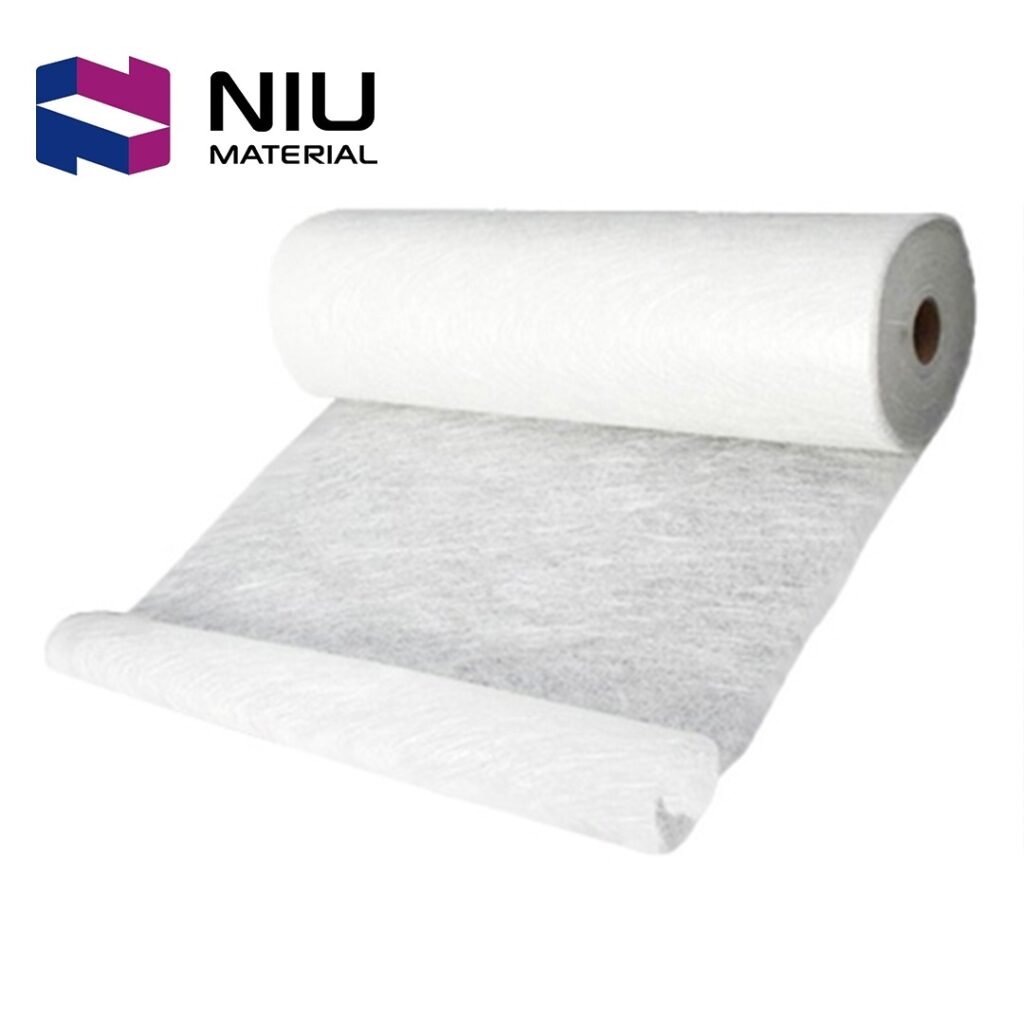
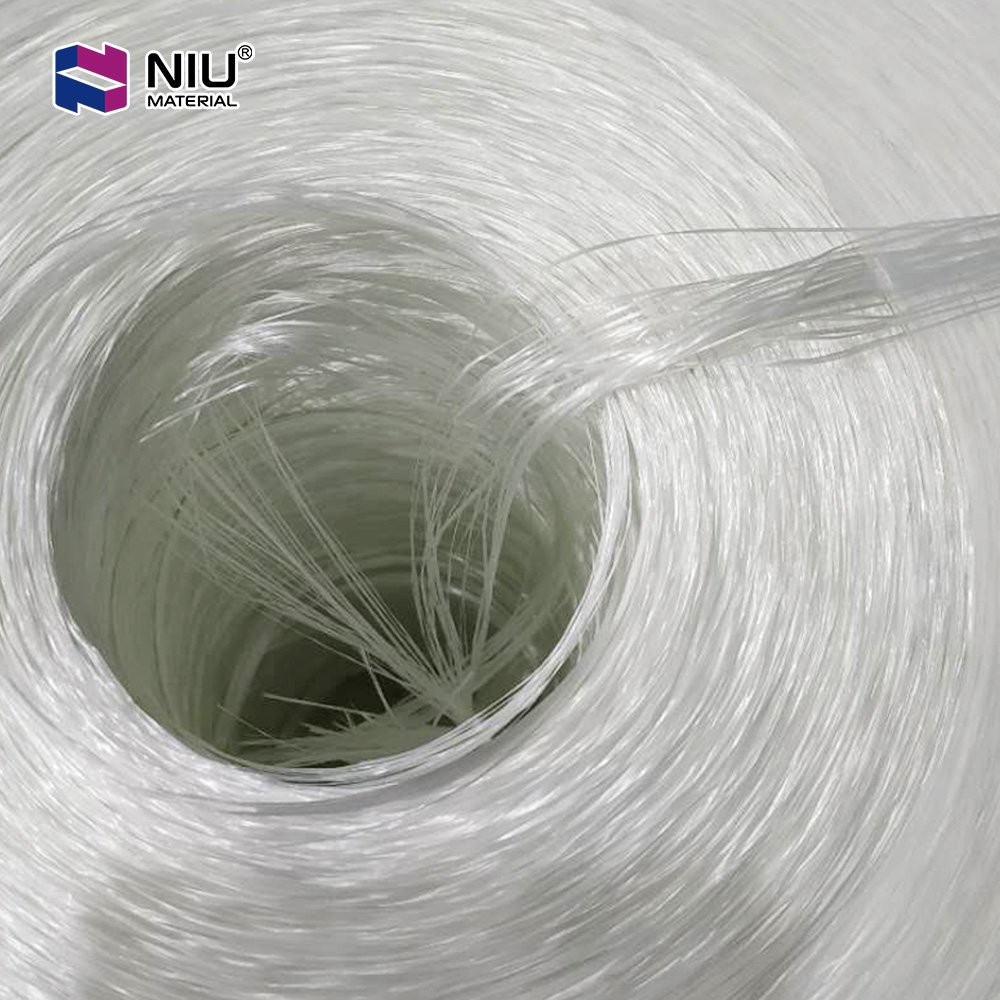
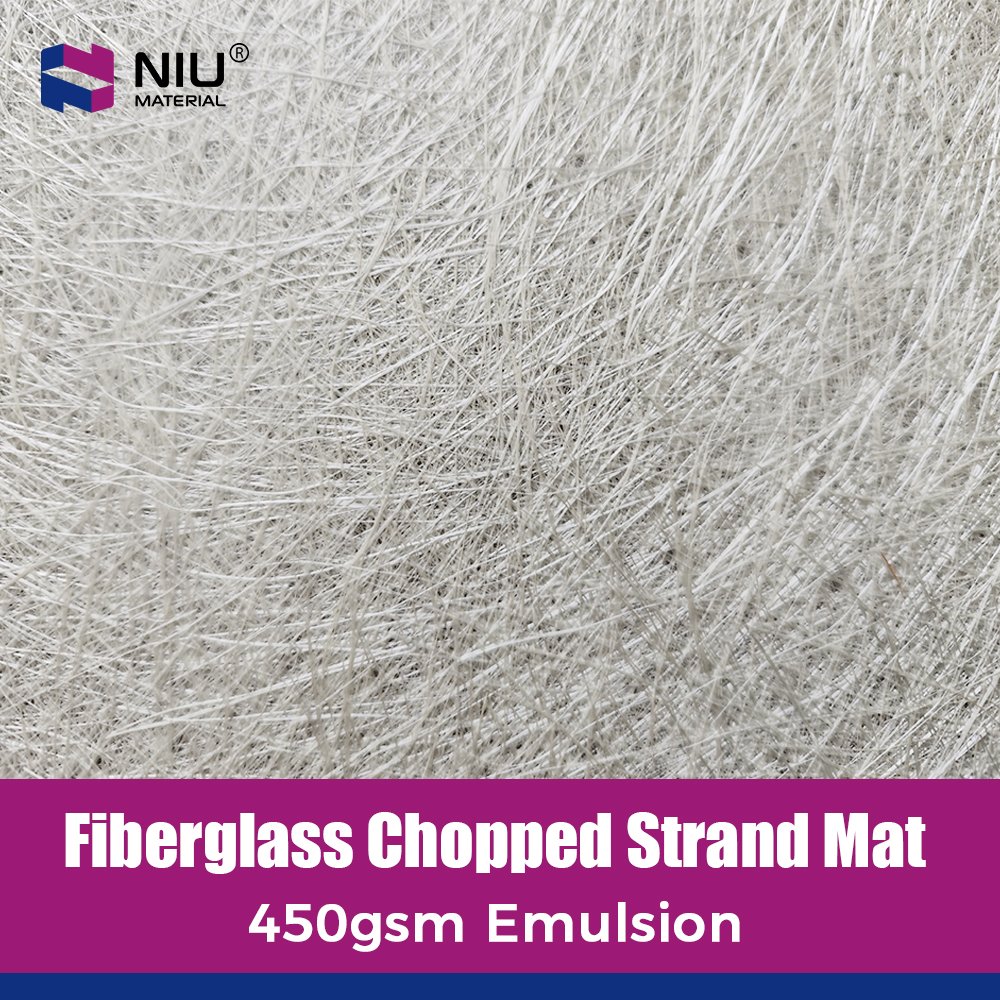
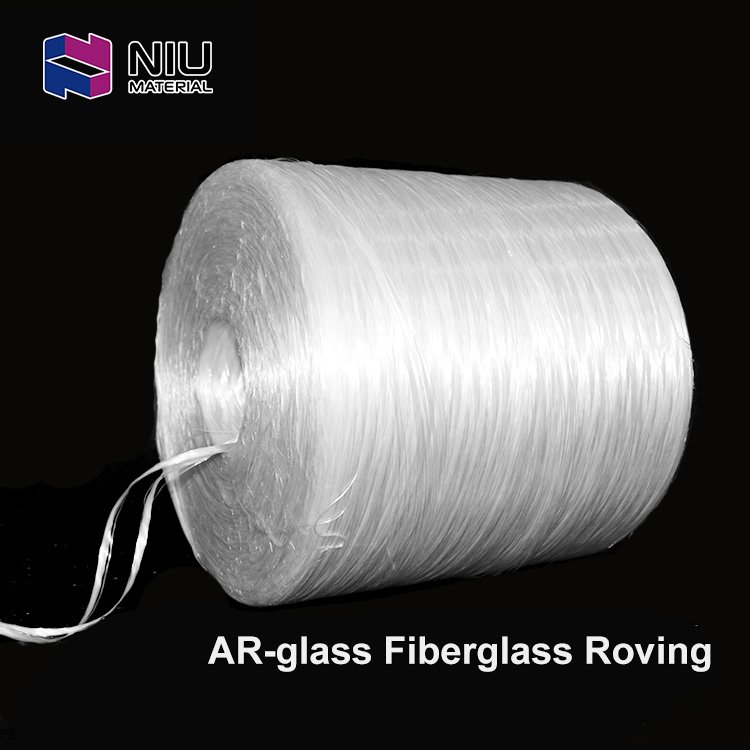
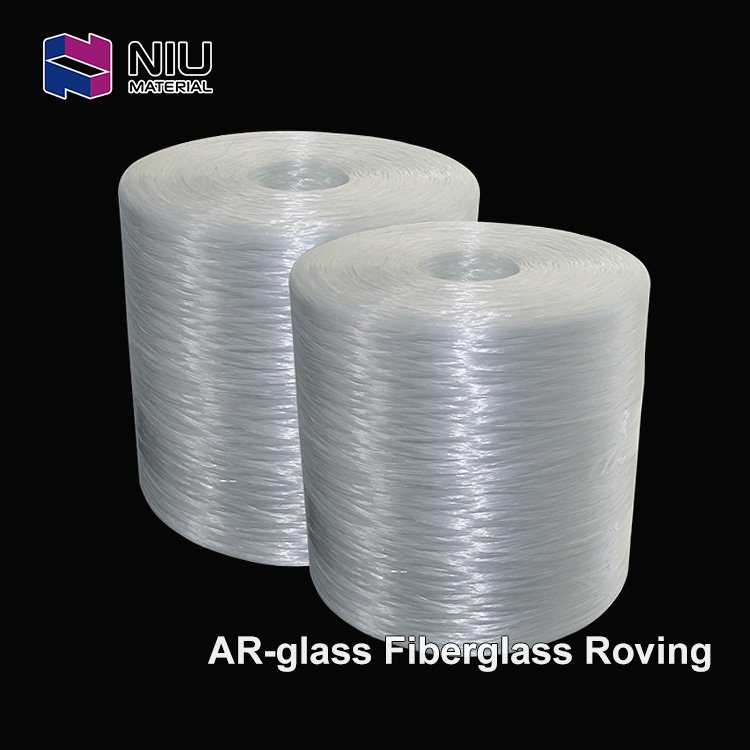
For a GRP and GRC producer in the UAE, we supplied 300gsm and 450gsm fiberglass chopped strand mat in both emulsion and powder bonding at 1250mm width, together with 2400 tex AR-glass roving with a ZrO₂ content above 16.7%, and prepared the export documents and logistics information the buyer needed for shipment planning.
Customer Requirement: Mat and AR-Glass Roving That Match the Process
The requirement came from a producer running both GRP fabrication and GRC lines, where the two sides of the business need two different kinds of reinforcement from the same supply source. The points that had to be solved were practical ones:
- Chopped strand mat in both unit weights and both bonding types, so the same shop floor can run thin laminates and heavier build-ups without re-qualifying material
- AR-glass roving with a zirconia content above 16.7% and mechanical values, including elastic modulus, that match the customer’s own mix design and process
- A mat width that fits existing cutting and lay-up practice, so no re-tooling is needed
- Material available for an urgent restocking window, with an arrival date that can be planned around
- Delivery arranged through to the customer’s site rather than stopping at the port
The materials supplied for this project were configured as follows:
Product type: Fiberglass chopped strand mat / AR-glass roving
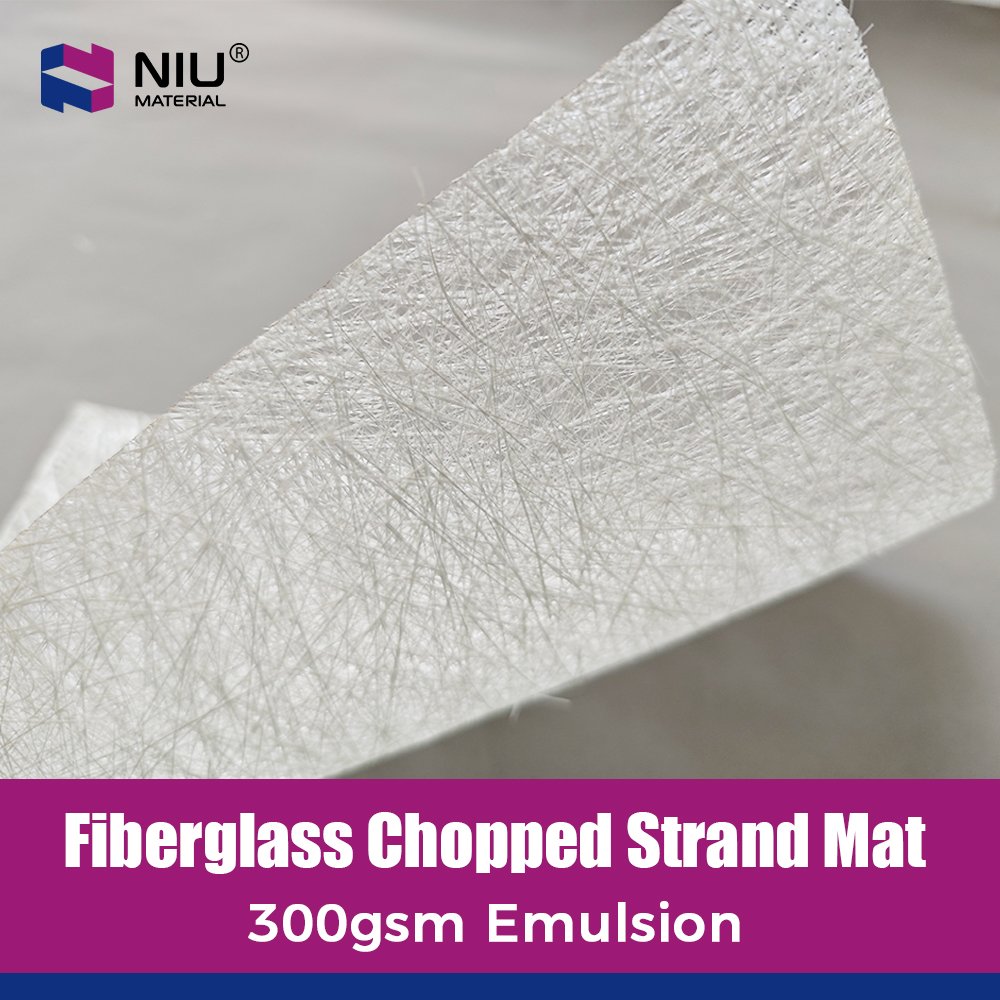
Chopped strand mat: 300gsm emulsion, 300gsm powder, 450gsm emulsion, 450gsm powder — all 1250mm width
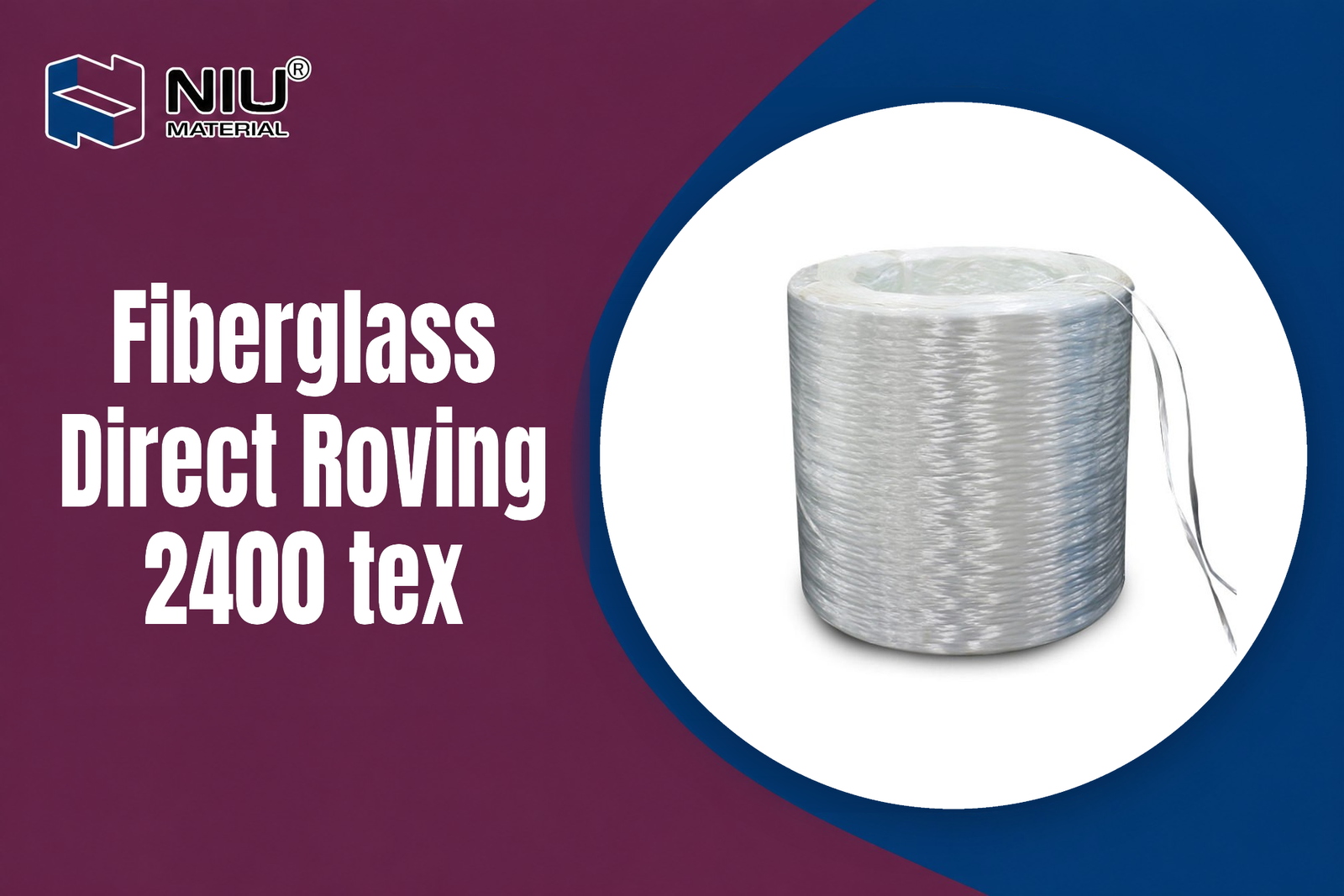
AR-glass roving: 2400 tex, ZrO₂ > 16.7%
Application: GRP/FRP hand lay-up and spray-up, boat building, swimming pools, storage tanks, water tanks, GRP lining; GRC, cement reinforcement, cement products, cement board, and GRC projects
Brand: YUNIU
Why Choose 300 and 450gsm Chopped Strand Mat?
Two unit weights, one laminating workflow. 300gsm and 450gsm cover most shop-floor needs between them: 300gsm for thinner laminates, surface layers, and quick wet-out, and 450gsm where more glass per layer is needed to reach the target thickness with fewer laminating steps. Carrying both weights in one supply line means the shop does not have to re-qualify material every time the build-up changes.
Emulsion and powder bonding, matched to the shape. Emulsion-bonded mat is soft and drapes well, which matters when the laminate has to follow the curves and corners of a pool shell, a boat hull, or a tank bottom. Powder-bonded mat holds its form and wets out quickly, which suits flatter panels and larger lay-ups. Both are supplied at 1250mm width, so cutting and positioning match common hand lay-up and spray-up practice instead of forcing the shop to adapt.
The problems this removes from the shop floor. White strands left by incomplete wet-out, air trapped between layers, and mat that springs back on a curved mould all come from a material that does not match the process. Specifying both weights and both bonding types at a consistent width takes those variables off the shop floor.
Why Choose 2400 tex AR-Glass Roving with ZrO₂ Above 16.7%?
Why roving rather than chopped strands. Alkali-resistant chopped strands are mainly used in premix, where short fibres are mixed into the slurry. For GRC produced by spray-up and precast, the reinforcement needs to be continuous, which is where 2400 tex AR-glass roving is used: the roving is cut and deposited by the spray gun or laid as continuous reinforcement, so fibre distribution and strength retention stay under control. For a production line built around spray and precast work, the roving is the correct form of reinforcement.
Zirconia content and strength retention. GRC is a cement-based product, and the pore water inside it is alkaline. Standard glass fibre loses strength in that environment, while alkali-resistant glass holds it because the zirconia in the fibre resists alkaline attack. A ZrO₂ content above 16.7% is the level that supports long-term strength retention in GRC, which is why it is specified for cement boards, precast elements, and spray-applied GRC work.
Process fit, backed by test documentation. Linear density and mechanical values, including elastic modulus, have to match the customer’s own mix design and process rather than a catalogue figure. We confirm those values against the production parameters and supply the complete test documentation with the material, so the specification can be verified instead of taken on trust.
Supply and Delivery: Matching Availability to Production Timing
Material that is there when the project cannot wait. GRC and GRP projects run on fixed site schedules, and running out of reinforcement material mid-project is not an option. This project needed material inside an urgent restocking window, and the required grades were not available from stock at that moment. Production and container scheduling were arranged so the two incoming containers were allocated to this shipment, and the arrival dates were passed on in advance so the site programme could be planned around them.
Full-container shipment with delivery through to site. Ocean space in the region has been tight, so the consignment was consolidated into full-container loads. That keeps the arrival schedule more predictable and removes the handling steps that come with mixed loads. Final delivery to the customer’s site was built into the delivery plan, so the material arrives where the project needs it instead of stopping at a port the buyer then has to clear and forward themselves.
Why Source Chopped Strand Mat and AR-Glass Roving from YUNIU?
YUNIU supplies fiberglass chopped strand mat, AR-glass roving, and other reinforcement materials for customers producing GRP laminates, GRC elements, and other composite products.
We can support customers with:
300gsm and 450gsm chopped strand mat produced in both emulsion and powder bonding at 1250mm width
2400 tex AR-glass roving with a ZrO₂ content above 16.7%
Complete test documentation, including zirconia content and elastic modulus, supplied with the material
Technical communication on bonding type, resin system, and spray, premix, or precast process before bulk production
Container scheduling and stock planning for projects with fixed site dates
Full-container shipment arrangements with delivery through to the customer’s site
HS code, packing list, and export documents prepared for the buyer’s shipment planning
Short video meetings and live walkthroughs of the production line
Proactive document follow-up during the enquiry and restocking stages
For customers with different requirements, product details such as unit weight, bonding type, roll width, roll length, packaging, and container type can be discussed according to the application and the production process.
In Conclusion
Hebei Yuniu Fiberglass Manufacturing Co., Ltd. (NIU® MATERIAL) was founded in 2012, and our team brings more than twenty years of fiberglass production experience. Our products hold SGS, CE, and ISO 9001 certifications and are exported to markets across Europe, the Middle East, Southeast Asia, Africa, and Latin America. A significant share of the customers we serve are GRP product manufacturers and GRC fabricators — which is why we are used to requirements such as unit weight set by the part being made, bonding type set by the production process, and roll width and packaging set by the way the material is handled and stored. From chopped strand mat and AR-glass roving to mesh cloth and alkali-resistant chopped strands, what we provide is a supply line you can rely on long term, not just one shipment.
If you are selecting reinforcement material for a GRP or GRC project, tell us your unit weight, bonding type, and roll width requirements — we will start from whether the specification actually matches your process, and prepare the test documentation and export documents along with it.