
As a purchaser of glass fiber yarns, a manufacturer of composite materials, or a person in charge of construction projects, you must have had such a entanglement when selecting products: medium-alkali yarn has a lower unit price, saving initial procurement costs; E-CR alkali-resistant yarn has a slightly higher unit price, but claims to be “more durable and cost-effective”. Which one should you choose? Can the so-called cost advantages and service life advantages of replacing medium-alkali yarn with E-CR alkali-resistant yarn really be realized? Could it be just a publicity gimmick by manufacturers?
In fields with high requirements for material weather resistance and durability, such as building anti-corrosion, chemical pipelines, wind power blades, electronic equipment, and marine engineering, the performance of glass fiber yarns directly determines the quality, service life and comprehensive cost of the final products. Medium-alkali yarn was once regarded as a “cost-effective choice” by many customers due to its low price, but in long-term use, its shortcomings of poor alkali resistance, easy aging and easy breakage often lead to frequent product rework, maintenance and replacement, with high hidden costs.
As an upgraded alternative to medium-alkali yarn, E-CR alkali-resistant yarn (E-Glass of Chemical Resistance) has gradually become the mainstream selection in the market due to its superior alkali resistance, acid resistance, weather resistance and cost advantages in long-term use. From the perspective of customers, this article will deeply analyze the core advantages of replacing medium-alkali yarn with E-CR alkali-resistant yarn from four core dimensions: initial procurement cost, long-term comprehensive cost, service life and application adaptation. Combined with industry data and practical cases, it will help you calculate the “cost-performance account”, completely solve the selection confusion, and ensure that every penny of procurement budget is spent wisely.
To judge the advantages of replacing medium-alkali yarn with E-CR alkali-resistant yarn, we must first clarify the core differences between the two – essentially, the two have completely different formulas and performance positioning, which also determines the gap in their cost and service life. As a customer, you don’t need to go deep into complex production processes. You can quickly distinguish the advantages and disadvantages of the two by focusing on three core points: composition, alkali resistance and applicable scenarios.
Medium-Alkali Yarn: Its core component is glass fiber with an alkali content of about 12% (sodium oxide content of about 12%). The formula is simple, the production process is relatively extensive, and no complex alkali-resistant coating treatment is required, so the production cost is low and the unit price is more advantageous. However, the high alkali content leads to poor chemical stability. Especially in an alkaline environment, alkali metal ions are easy to precipitate and migrate, leading to yarn aging, pulverization and fracture, which is also the core reason for the short service life of medium-alkali yarn.
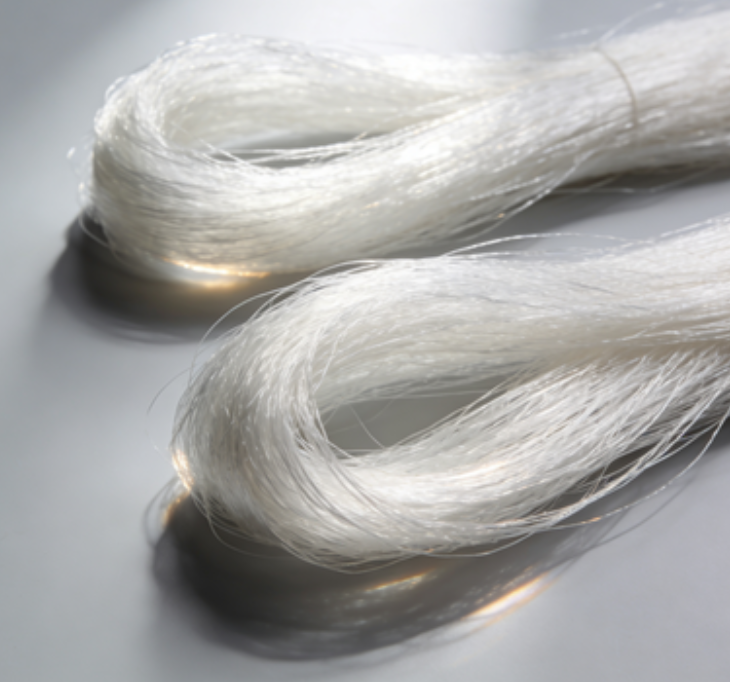
E-CR Alkali-Resistant Yarn: It is an alkali-free glass yarn resistant to chemical erosion, with extremely low alkali content (sodium oxide content less than 0.5%). The formula adds special alkali-resistant components, and is treated with professional silane coupling agent and modified with alkali-resistant coating, which fundamentally improves the chemical stability. It can not only resist the erosion of alkaline environment, but also has excellent acid resistance, water resistance and stress corrosion resistance, especially in the case of stress, the corrosion resistance advantage is more obvious. Its production process is more refined, and it has higher requirements on raw material purity, wire drawing temperature and coating process, which is the main reason why its initial unit price is higher than that of medium-alkali yarn.

According to the data from the National Building Materials Testing Center, under common working conditions such as simulated building cement mortar and chemical alkaline medium, the difference in alkali resistance between the two is very significant:
This difference directly determines the service life of the two – medium-alkali yarn is more suitable for short-term, low-requirement scenarios, while E-CR alkali-resistant yarn can adapt to long-term, harsh alkaline and corrosive environments, fundamentally reducing the frequency of product damage and replacement.
Medium-Alkali Yarn: It is mainly applicable to scenarios with low requirements for alkali resistance, short service life requirements and cost sensitivity, such as temporary building protection, low-grade mesh cloth, disposable composite products, etc. In such scenarios, the long-term stability of the product is not high, and the initial procurement cost is the primary consideration factor.
E-CR Alkali-Resistant Yarn: It is applicable to scenarios with high requirements for alkali resistance, weather resistance and corrosion resistance, such as building exterior wall insulation mesh cloth, chemical storage tanks, sewage pipes, flue gas desulfurization towers, wind power blades, marine engineering, electronic equipment insulation, etc. In such scenarios, the service life and stability of the product directly affect the comprehensive cost and safety of the project. The performance advantages of E-CR alkali-resistant yarn can be fully exerted, and it is more cost-effective in the long run.
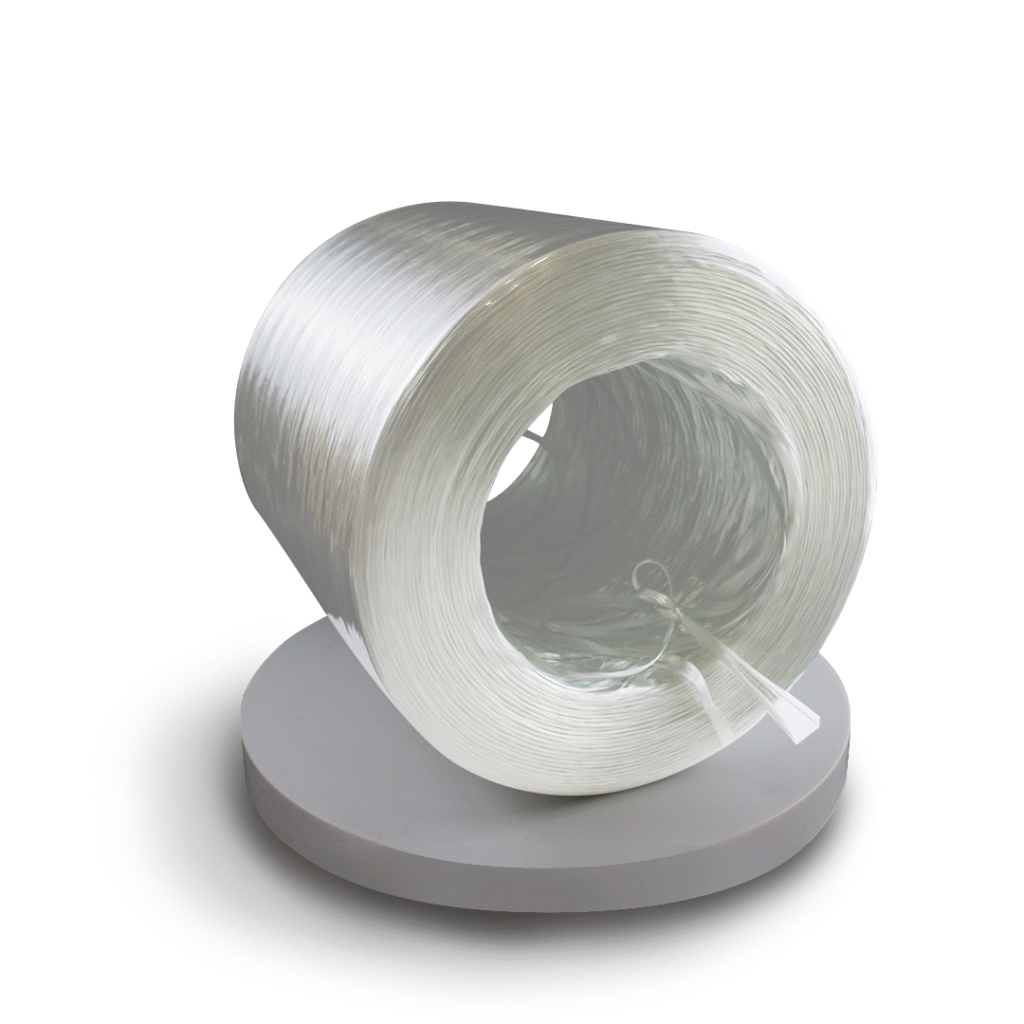
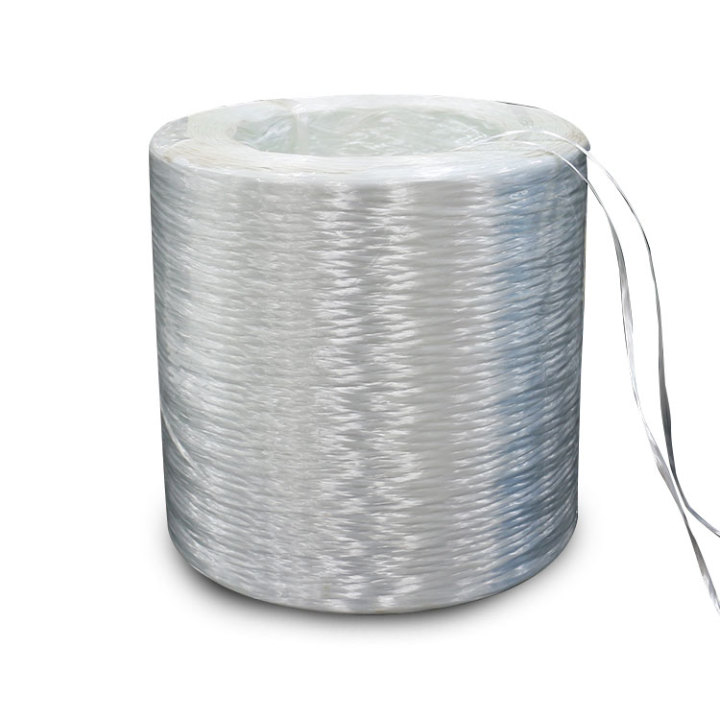
For customers, the service life of glass fiber yarns is directly related to the operation and maintenance cost and reputation of the final products. The “short-term cost saving” of medium-alkali yarn is often accompanied by the trouble of “frequent replacement and repeated maintenance”, while the core advantage of E-CR alkali-resistant yarn lies in its ultra-long service life, which can fundamentally solve the operation and maintenance pain points of customers and realize “one-time investment, long-term benefit”.
Combined with the actual use data of different application scenarios, we have sorted out the service life comparison between E-CR alkali-resistant yarn and medium-alkali yarn, intuitively presenting the gap between the two:
It can be seen from the data that the service life of E-CR alkali-resistant yarn is 3-5 times that of medium-alkali yarn, or even higher. For customers, a longer service life means fewer replacements, lower maintenance costs and more stable product performance. Especially in large-scale projects and long-term service products, this advantage is more prominent.
ses. In pipeline manufacturing, this product can enhance the hoop strength of the pipe and ensure its stability under high pressure; in tank manufacturing, the reinforcement layer formed by the fiber winding process can effectively improve the impact resistance and fatigue resistance of the tank.
Many customers only pay attention to the initial procurement cost, but ignore the hidden benefits brought by the service life advantage. For engineering and production customers, the ultra-long service life of E-CR alkali-resistant yarn can bring three core hidden benefits:
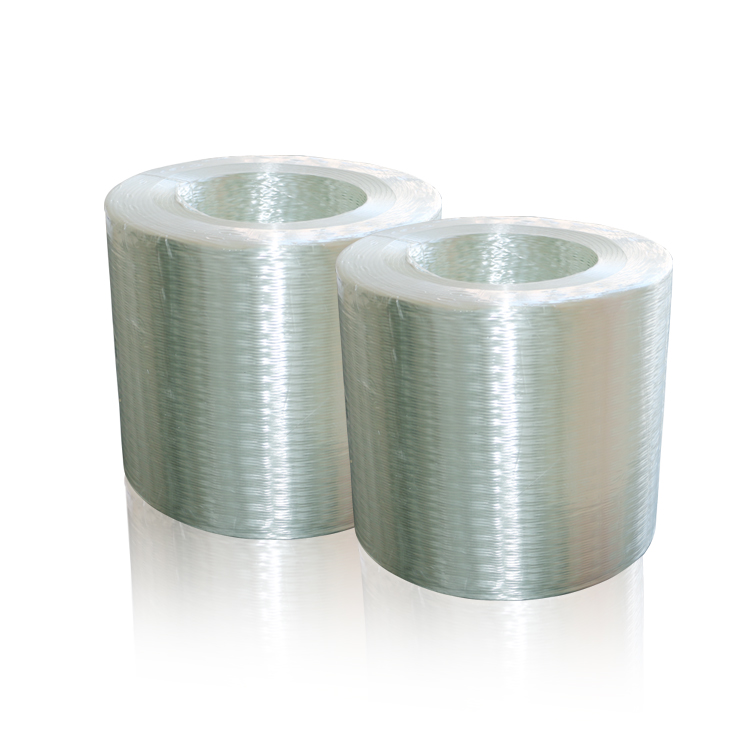

A chemical enterprise undertook an urban sewage pipeline renovation project. Initially, it chose medium-alkali yarn reinforced FRP pipelines. After 2 years of use, the pipelines had leakage and damage, requiring large-scale maintenance and replacement. It not only invested a lot of material and labor costs, but also affected sewage discharge and faced environmental protection penalties. Later, the enterprise switched to E-CR alkali-resistant yarn reinforced FRP pipelines. Up to now, the pipelines have been operating stably for 8 years without any leakage or damage, which not only saved a lot of maintenance costs, but also avoided environmental protection risks and won high recognition from the Party A.
Another case is a wind power enterprise. Initially, medium-alkali yarn was used for blade reinforcement. After 3 years of outdoor operation, the blades had problems such as delamination and cracking, with high maintenance costs and affecting power generation efficiency. After switching to E-CR alkali-resistant yarn, the blades have maintained good performance for 10 years, the maintenance frequency has been greatly reduced, the power generation efficiency is stable, and a lot of operation and maintenance costs have been saved for the enterprise.
This is the core question that customers are most concerned about: the unit price of E-CR alkali-resistant yarn is higher than that of medium-alkali yarn, how can it be said to have a cost advantage? In fact, to judge the cost of a material, we can not only look at the initial procurement unit price, but also calculate the “long-term comprehensive cost” – including procurement cost, use cost, maintenance cost, replacement cost, labor cost, etc. For customers, the “expensiveness” of E-CR alkali-resistant yarn is a one-time initial investment, but in the long run, its comprehensive cost is much lower than that of medium-alkali yarn, making it a real “cost-effective choice”.
First, we clarify the initial procurement unit price gap between the two (taking conventional market specifications as examples):
From the perspective of unit price, E-CR alkali-resistant yarn is about 50% higher than medium-alkali yarn, and the initial procurement cost is indeed higher. But combined with the service life, this gap will be greatly diluted – taking building mesh cloth as an example, medium-alkali yarn needs to be replaced every 3 years, and E-CR alkali-resistant yarn needs to be replaced every 15 years. Within 15 years, medium-alkali yarn needs to be purchased 5 times, while E-CR alkali-resistant yarn only needs to be purchased once. The gap in initial procurement cost will be amortized by long-term use.
To allow customers to intuitively see the gap in comprehensive costs, we take a 100,000 ㎡ building exterior wall mesh cloth project as an example, and calculate the 15-year comprehensive costs of using medium-alkali yarn and E-CR alkali-resistant yarn respectively (including all costs such as procurement, labor, maintenance, replacement, etc.):
① Procurement Cost: 100,000 ㎡ × 0.14 USD/㎡ = 14,000 USD (purchased once every 3 years, 5 times in 15 years), cumulative procurement cost 70,000 USD ;
② Labor Cost: Pasted once every 3 years, labor cost per time is about 1.10 USD/㎡ , cumulative labor cost in 15 years: 100,000 ㎡ × 1.10 USD/㎡ × 5 times = 550,000 USD;
③ Maintenance Cost: Annual maintenance cost is about 10% of the procurement cost, cumulative maintenance cost in 15 years: 70,000 USD × 10% × 15 = 105,000 USD ;
④ Total Comprehensive Cost: 70,000 + 550,000 + 105,000 = 725,000 USD .
② Labor Cost: Pasted once in 15 years, labor cost is about 1.10 USD/㎡ , cumulative labor cost: 100,000 ㎡ × 1.10 USD/㎡ × 1 time = 110,000 USD;
③ Maintenance Cost: Annual maintenance cost is about 5% of the procurement cost, cumulative maintenance cost in 15 years: 21,000 USD × 5% × 15 = 15,800 USD ;
④ Total Comprehensive Cost: 21,000 + 110,000 + 15,800 = 146,800 USD .
It can be seen from the calculation results that within 15 years, the comprehensive cost of using E-CR alkali-resistant yarn is only 146,800 USD, while the comprehensive cost of using medium-alkali yarn is as high as 725,000 USD. E-CR alkali-resistant yarn can save 578,200 USD , and the comprehensive cost is reduced by more than 80%. This is the core cost advantage of E-CR alkali-resistant yarn – it seems expensive initially, but in the long run, it can save a lot of real money for customers.
The cost advantage of E-CR alkali-resistant yarn is different in different scenarios. The harsher the scenario and the longer the service life requirement, the more obvious its cost advantage:
In addition to the long-term comprehensive cost advantage, E-CR alkali-resistant yarn can also bring additional cost savings to customers, mainly reflected in two aspects:
Combined with the previous analysis, we give clear selection suggestions from the perspective of customers – not all scenarios need to choose E-CR alkali-resistant yarn, but in the following scenarios, the cost and service life advantages of E-CR alkali-resistant yarn are the most prominent. Priority selection can bring the greatest benefits to customers:
Many customers are prone to the misunderstanding of “only looking at the unit price” when selecting products, leading to a lot of maintenance and replacement costs later, which is not worth the loss. Here, we give customers three suggestions to avoid pitfalls in selection:
With the rapid development of industries such as green building, chemical corrosion protection, and new energy, the requirements for the weather resistance, durability, and stability of glass fiber yarn are becoming increasingly stringent. Replacing medium alkali yarn with E-CR alkali-resistant yarn has become an inevitable trend in the industry. From the customer’s perspective, this replacement is not a “forced upgrade” but rather a “proactive cost-saving” approach—although the initial procurement cost is slightly higher, in the long run, its extended service life, stable performance, and lower overall cost make it a worthwhile investment.

If you have any questions
Please contact us for free consultation and product quotation
You can leave your needs and contact information~and We can provide you with usage suggestions + product suitability analysis + free sample delivery!
Leave us your interest and contact information, and we’ll send you detailed information for your reference!
You can leave the specifications and contact information you need~ Our technicians will immediately organize the exclusive information for you and send it to your email!
You can leave your contact information here, and we will send you detailed specifications and application cases to make your purchase clearer~