Fiberglass Roving: How to Choose the Right Reinforcement for Better FRP Production
Table of Contents
添加一个标题以开始生成目录
Introduce
In composite manufacturing, fiberglass rovingaffects more than product strength. It also influences resin wet-out, fiber distribution, production efficiency, and finished-product consistency.
For FRP profiles, pipes, tanks, boats, panels, and other composite products, choosing the right roving can make production smoother and more reliable.
Why Fiberglass Roving Matters in FRP Production
Strength Is Only the Starting Point
Fiberglass is one of the main reinforcement materials in FRP. A suitable roving provides stable tensile performance and helps form a strong fiber-resin structure.
But strength alone is not enough. If roving breaks easily, has excessive fuzz, or wets out slowly, production efficiency can quickly decline.
Stable Processing Means Better Production
For manufacturers, consistent tension, smooth unwinding, and good resin compatibility are critical.
A roving that performs consistently can help reduce production interruptions and improve finished-product consistency.
Fiberglass Roving for Different Applications
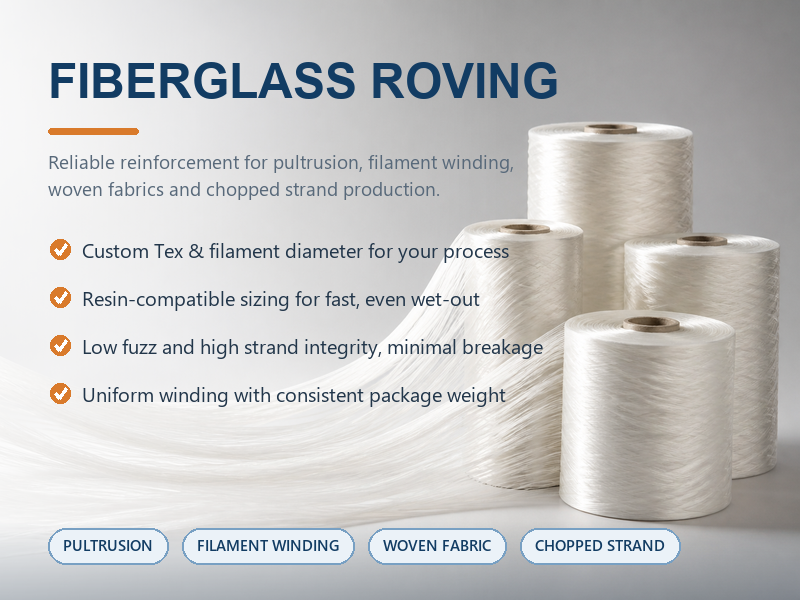
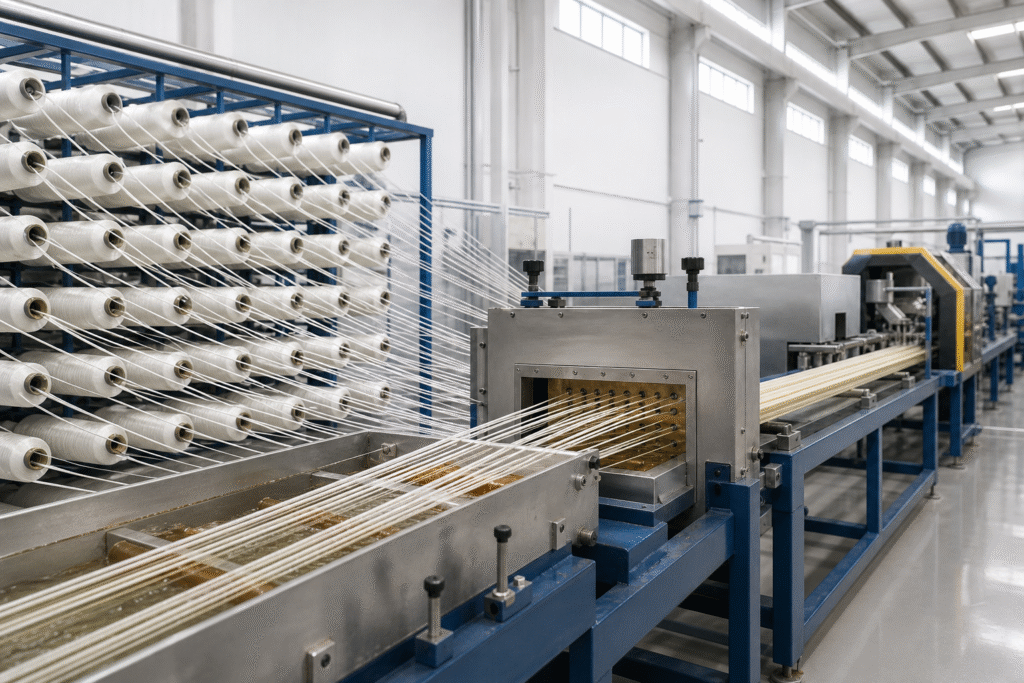
Pultrusion and FRP Profiles
Pultrusion requires continuous and stable reinforcement. Roving with consistent tension and good resin wet-out helps maintain profile strength and production efficiency.
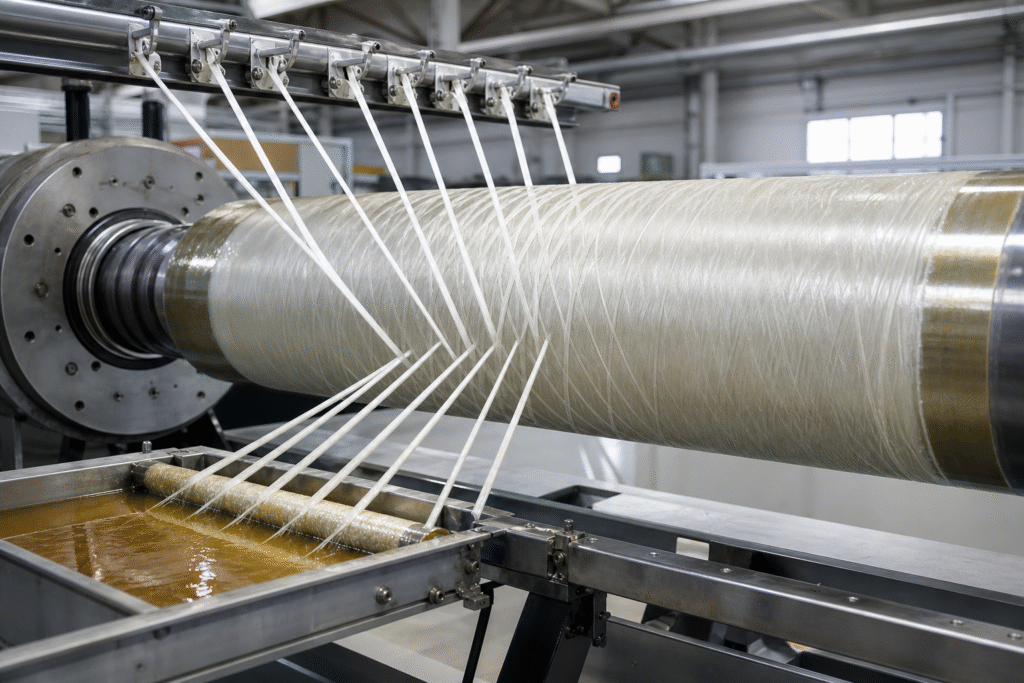
Filament Winding for Pipes and Tanks
For filament winding, stable feeding and tension control are especially important.
The right roving helps create a more uniform reinforcement structure and reduces fiber breakage during winding.
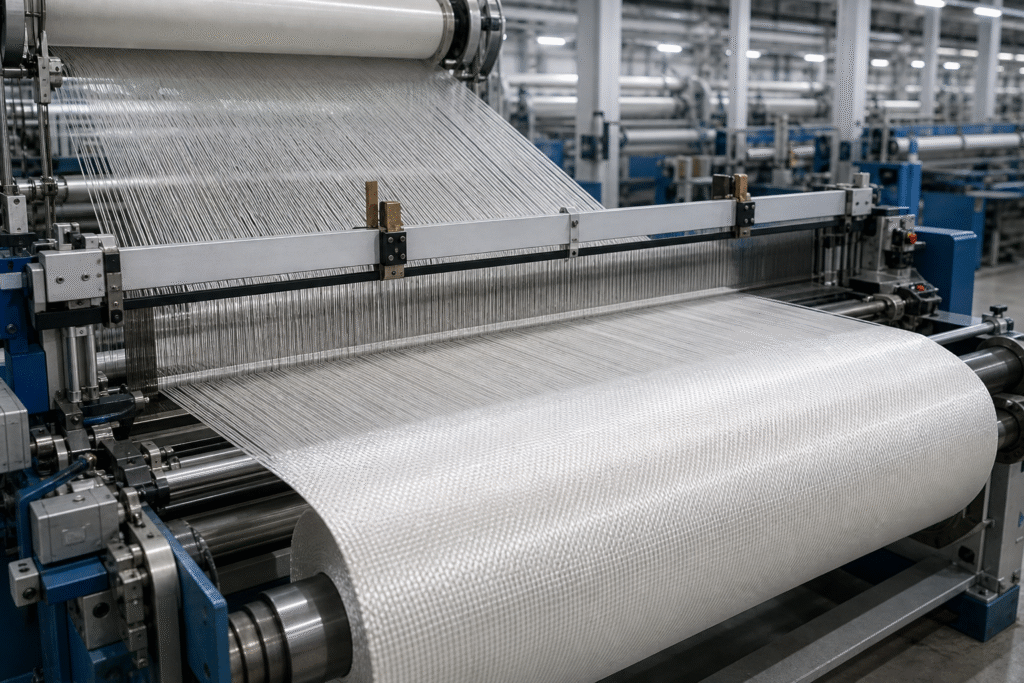
Fiberglass Fabric Production
For woven fiberglass fabrics, low fuzz, good strand integrity, and smooth unwinding can improve weaving performance and fabric quality.
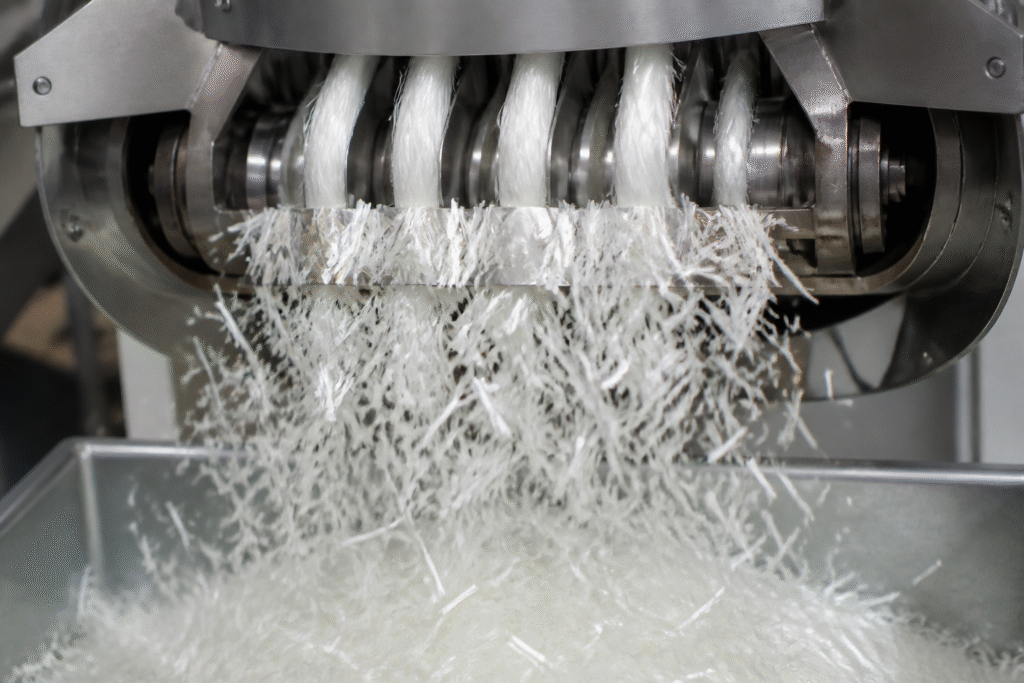
Chopped Strand Production
For chopped strand applications, cutting performance and dispersion are key factors.
The roving should match the required fiber length and production equipment.
What to Check Before Buying Fiberglass Roving
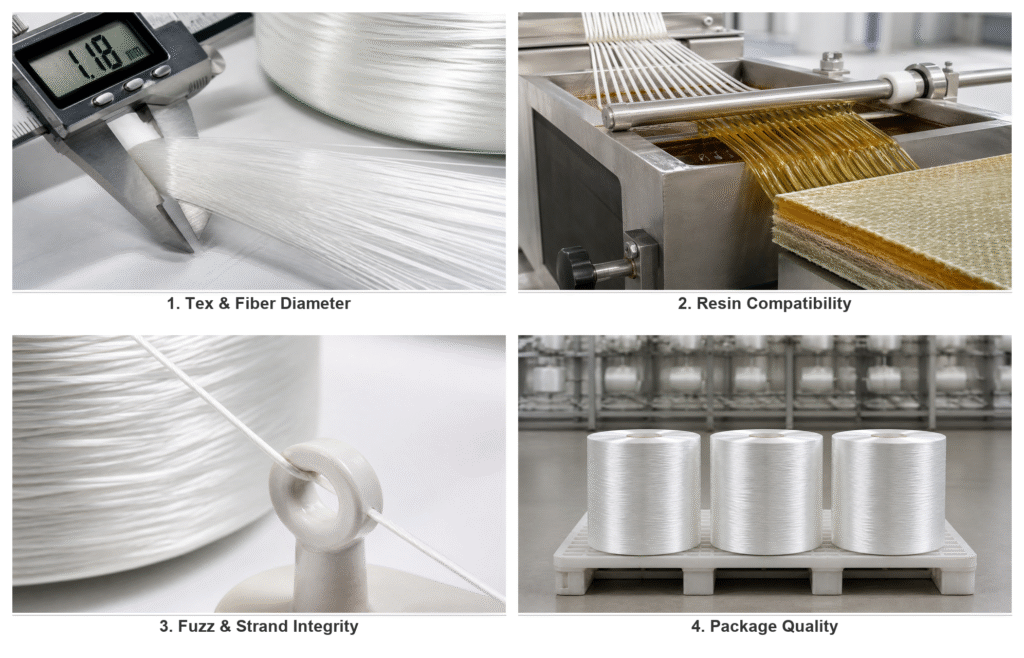
1. Tex and Fiber Diameter
The correct Tex and filament diameter depend on the application, equipment, resin system, and required fiber content.
2. Resin Compatibility
The sizing system should match the resin being used, such as polyester, vinyl ester, or epoxy.
Good compatibility improves wet-out and helps create a more uniform composite structure.
3. Fuzz and Strand Integrity
Excessive fuzz and weak strands can cause problems during weaving, winding, and pultrusion.
Stable roving should unwind smoothly with minimal breakage.
4. Package Quality
Uniform winding and consistent package weight help maintain stable feeding during production.
Quality Control for Bulk Buyers
For industrial buyers, batch-to-batch consistency is essential.
A reliable supplier should provide not only a good sample, but also stable performance throughout continuous production.
Why Factory Direct Supply Matters
Fiberglass roving is a continuous-use material for most FRP manufacturers.
Therefore, stable supply, consistent quality, suitable packaging, delivery time, and communication are all important.
For regular buyers, the lowest unit price is not always the best choice. A stable material can help reduce waste, downtime, and quality-related costs.
In Conclusion
The right fiberglass roving can improve more than composite strength. It can also support smoother processing, better resin wet-out, stable fiber distribution, and consistent production.
Before choosing a roving, consider your production process, resin system, equipment, and required performance—not just the specification sheet.
The right roving does not just reinforce your product. It improves the way you produce it.
You can leave a message about the fiberglass materials you are interested in/looking for.
We will send you a clear quotation (including product price + shipping cost) within 12 hours.
Contact us via email
Please leave a message regarding the fiberglass and other composite materials you’re interested in or looking for.
We will send you a definitive quote (including product price and shipping costs) within 12 hours.
Are you considering fiberglass for your application?
You can leave your needs and contact information~and We can provide you with usage suggestions + product suitability analysis + free sample delivery!
Leave us your interest and contact information, and we’ll send you detailed information for your reference!
Do you want to know the technical parameters and TDS of products?
You can leave the specifications and contact information you need~ Our technicians will immediately organize the exclusive information for you and send it to your email!
Interested in this specification?
You can leave your contact information here, and we will send you detailed specifications and application cases to make your purchase clearer~
How can we help you?
You can leave a message about the fiberglass materials you are interested in/looking for.
We will send you a clear quotation (including product price + shipping cost) within 12 hours.