
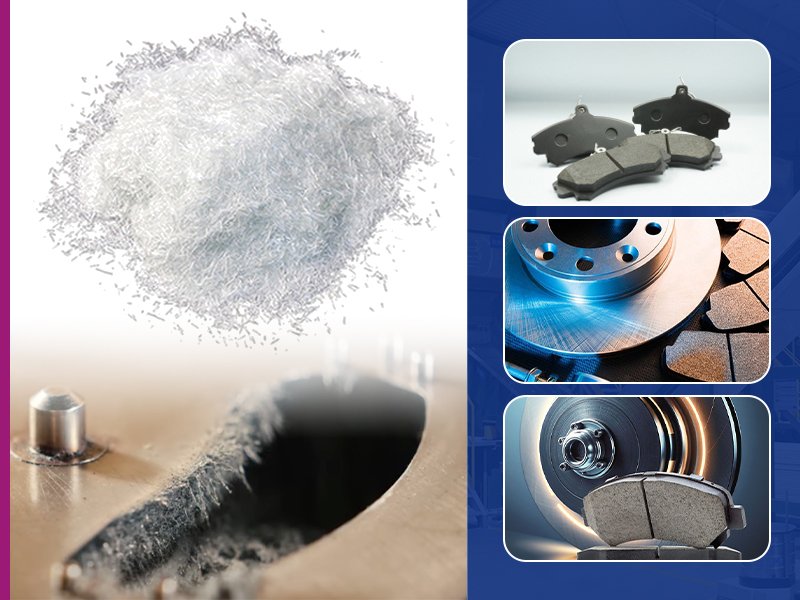

As a composite product manufacturer, procurement manager or technical engineer, you have probably encountered these confusions when selecting chopped glass fiber: glass fiber chopped strands of the same material and addition ratio produce products with vastly different strength, toughness and impact resistance; thin-walled injection molded parts have floating fibers and poor fluidity, and structural parts fail to meet bending and compressive strength requirements; obviously high-strength glass fiber is selected, but finished products are prone to cracking and deformation. wrong length selectionIn most cases, the root cause is not the purity of glass fiber or the quality of coupling agent, but the .
Chopped glass fiber is the most commonly used reinforcing filler in the composite materials field. It forms a three-dimensional network structure in plastics, rubber, cement, resin and other matrices to transfer stress, inhibit crack propagation and comprehensively improve the mechanical properties of products. Fiber length is the core variable that determines reinforcement efficiency, processability and finished product quality. Too long or too short length will directly lead to reduced reinforcement effect, increased production costs and lower yield rate. Starting from customers’ actual production, cost control and performance needs, this article deeply analyzes the influence of chopped glass fiber length on the reinforcement effect, helping you accurately match the length specification and achieve the optimal balance between performance and cost.
The reinforcement principle of chopped glass fiber is essentially “stress transfer efficiency between fiber and matrix”. When a composite material is subjected to external force, the matrix transfers stress to the glass fiber, and the glass fiber shares the load by virtue of its own high strength to prevent the matrix crack from extending; the length directly determines the contact area between glass fiber and matrix, compactness of network structure and stress transfer path, which jointly determine the final reinforcement effect.
• Too short fibers (≤3mm): Large specific surface area, excellent dispersibility and full infiltration with the matrix, but short stress transfer path, difficult to form effective network support. They can only improve the rigidity and wear resistance of products, with limited improvement on impact strength and bending strength, acting more like “filler” rather than “reinforcer”.
• Moderate length (3-12mm): Balances dispersibility and reinforcement effect, can be evenly distributed in the matrix without agglomeration, form a continuous stress transfer network, and comprehensively improve tensile, bending, impact and creep resistance. It is the golden length range for the industry.
• Too long fibers (≥12mm): High reinforcement efficiency, can greatly improve structural strength and fatigue resistance, but difficult to disperse, easy to entangle and agglomerate, resulting in insufficient matrix infiltration and stress concentration points, which reduces product performance; it also greatly increases processing resistance and affects production efficiency.
In short: Short fibers are easy to process but weak in reinforcement; long fibers are strong in reinforcement but difficult to process; moderate length is the most cost-effective solution. Chopped glass fibers of different lengths are completely suitable for different products, processes and performance requirements. Blind selection of long or short fibers will lead to the dilemma of “unqualified performance” or “unsmooth production”.
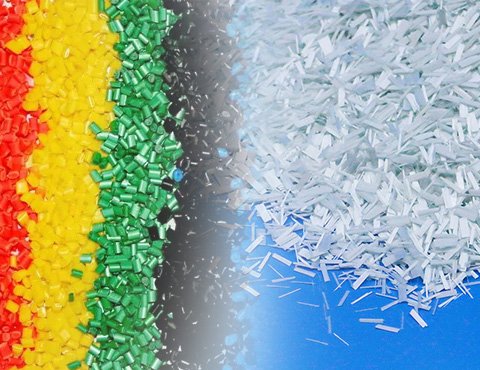
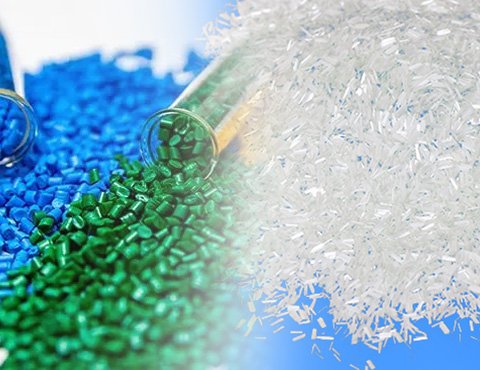
Combined with mainstream industry application scenarios, we divide chopped glass fibers into three categories according to length, and analyze the reinforcement effect, advantages, disadvantages and applicable scenarios one by one to help you quickly benchmark your own needs.
Core Reinforcement Effect: Improve surface finish, dimensional stability and wear resistance of products, slightly increase tensile modulus, with weak improvement on impact strength and bending strength.
Advantages: Maximum dispersibility, no entanglement or floating fibers, excellent melt fluidity, suitable for high-speed injection molding, thin-walled molding and precision casting processes; fast infiltration with the matrix, which can shorten production cycle and reduce processing energy consumption.
Disadvantages: Low reinforcement efficiency, unable to meet the high-strength requirements of structural parts; excessive addition will lead to increased brittleness and poor crack resistance of products.
Customer Application Scenarios: Thin-walled electronic component shells, precision instrument parts, small injection molded parts, decorative products with high surface requirements, general-purpose plastic products with low strength.
Core Reinforcement Effect: Comprehensively improve tensile strength, bending strength, impact toughness, creep resistance and fatigue resistance of products, with the highest stress transfer efficiency, and the reinforcement effect can reach 1.5-2 times that of short fibers; meanwhile, it maintains good processability without obvious agglomeration problems.
Advantages: Perfect balance between reinforcement effect and processability, suitable for most composite material processes; under the same performance requirements, it can reduce the addition amount of glass fiber and raw material cost; high yield rate of finished products, greatly reducing defects such as cracking, deformation and floating fibers.
Disadvantages: Fluidity is slightly inferior to short fibers when processing extremely thin-walled parts (wall thickness <1mm); mixing and injection parameters need to be controlled to avoid excessive fiber breakage.
Customer Application Scenarios: Mainstream products balancing strength and processability such as auto parts, home appliance structural parts, fiberglass products, engineering plastic profiles, cement-based composite materials and pipeline accessories. Among them, 3.5-4.5mm is the optimal length for thermoplastic composites with the most stable comprehensive performance.
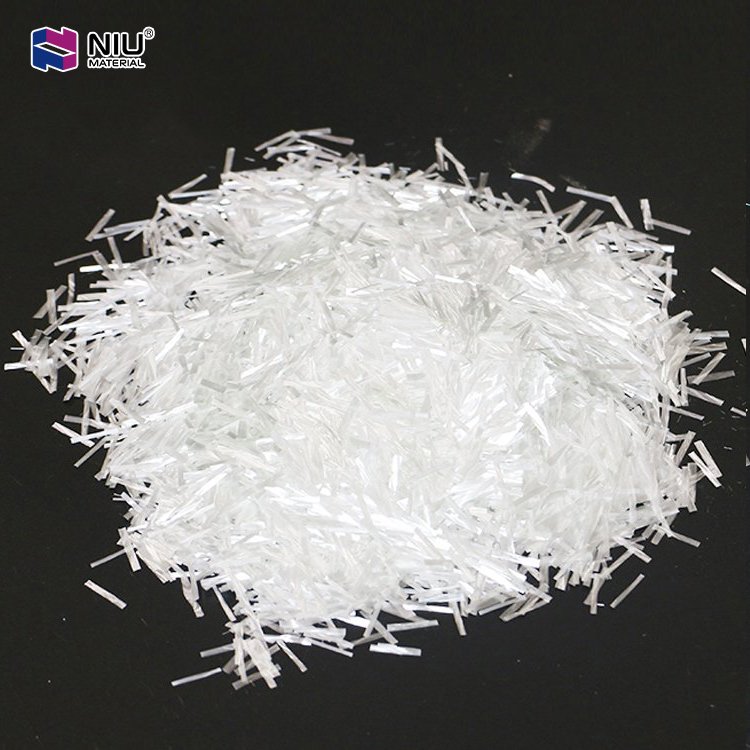
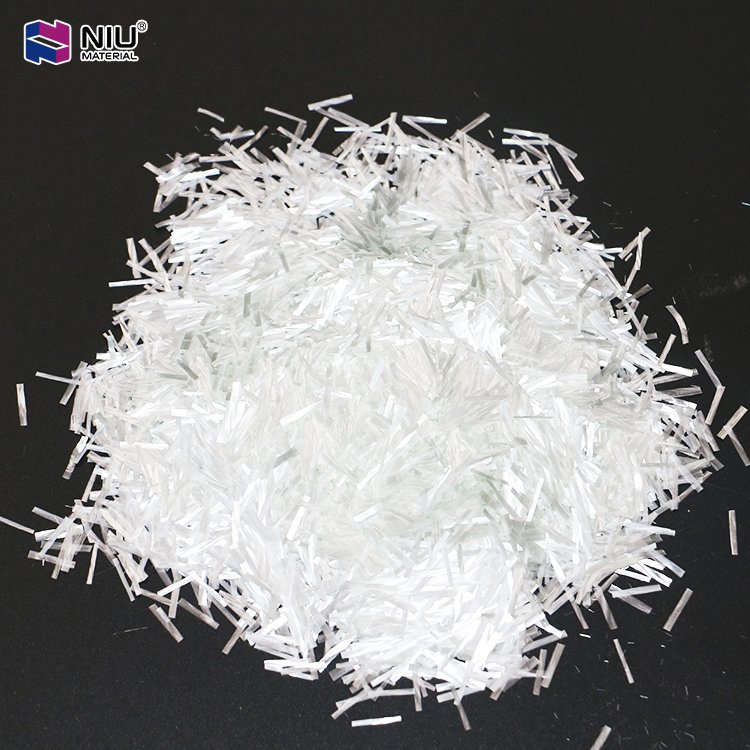
Core Reinforcement Effect: Extremely improve the structural strength, impact resistance, creep resistance and service life of products, suitable for components bearing heavy loads and high-frequency stresses, with reinforcement effect far exceeding medium and short fibers.
Advantages: Large fiber overlapping area, dense network structure, can effectively disperse high-strength external forces and greatly reduce product breakage rate; suitable for high-end products with heavy load and long service life.
Disadvantages: Extremely difficult to disperse, easy to entangle and agglomerate, resulting in uneven matrix infiltration and stress concentration; high processing resistance, easy to wear equipment and reduce production efficiency; extremely high requirements for mixing, injection molding and compression molding processes, requiring professional equipment matching.
Customer Application Scenarios: Ultra-high strength structural parts such as automobile chassis parts, engineering machinery parts, wind turbine blade components, high-strength anti-corrosion pipelines, heavy-duty molds and high-end building structural materials.
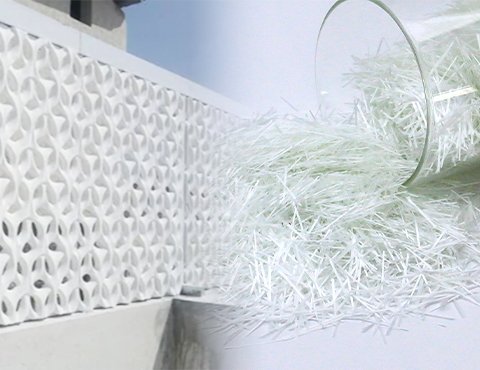
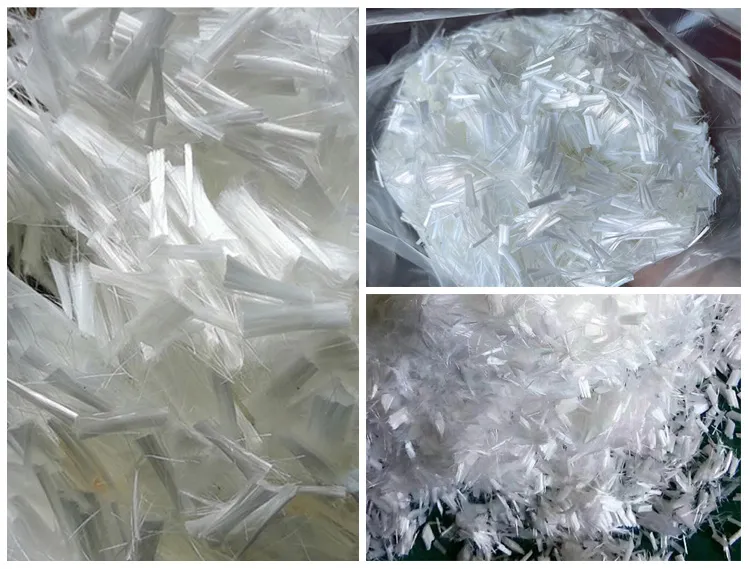
In actual procurement and production, many customers fall into length selection misconceptions, leading to greatly reduced reinforcement effect, resulting in waste of raw materials and increased rework costs. Be sure to avoid the following 3 points:
This is the most common misconception. If excessively long fibers cannot be uniformly dispersed, they will form agglomeration points, which instead become product defects and lead to reduced strength; at the same time, it increases processing difficulty, energy consumption and equipment loss, and the total cost is much higher than the performance gain. Only uniformly dispersed long fibers can exert their reinforcement advantages, and it is not recommended to blindly select long chopped glass fiber for ordinary processes.
Different processes have a great impact on fiber retention length. Fibers will break to varying degrees during injection molding, extrusion, compression molding and mixing. For example, in injection molding process, the final retention length of glass fiber is usually lower than the initial length, and margin for breakage should be reserved during selection; if purchasing directly according to the target length, the fiber in the finished product is too short, and the reinforcement effect is completely unqualified.
Thermoplastic, thermosetting resin and cement matrix have different viscosity and infiltration properties, and the suitable glass fiber length is also different. For example, cement-based materials are suitable for 6-12mm glass fiber with optimal crack resistance; thermoplastic plastics are suitable for 3-6mm glass fiber, balancing fluidity and strength. Mismatch between matrix and length will make even high-quality glass fiber useless.
Combined with your own product needs, select according to the following 3 steps, which can not only ensure the reinforcement effect, but also control costs and improve production efficiency:
1. Step 1: Clarify Product Performance Priority: Pursue surface accuracy and processing fluency → select short chopped glass fiber ≤3mm; pursue comprehensive mechanical properties and high cost performance → select medium-long chopped glass fiber 3-12mm; pursue ultra-high structural strength and heavy-load durability → select long chopped glass fiber ≥12mm.
2. Step 2: Match Production Process: High-speed injection molding and thin-walled molding → prioritize 3-4mm glass fiber; compression molding and extrusion molding → optional 6-12mm glass fiber; special process for high-end heavy-duty parts → optional glass fiber above 12mm.
3. Step 3: Small-Batch Trial Verification: Purchase 2-3 kinds of glass fibers with similar lengths, conduct small-batch trial production, test product strength, toughness, appearance and production smoothness, and select the optimal specification.
The length of chopped glass fiber is not an irrelevant specification parameter, but a core element that determines reinforcement effect, production cost and finished product quality. Too short leads to insufficient reinforcement, too long hinders processing. Only a moderate length that fits product performance, production process and matrix material can achieve the goal of “full reinforcement effect, smooth and efficient production, and controllable cost”.
As a supplier, we always stand from the customer’s perspective, provide full-length specifications of chopped glass fiber, with professional selection guidance and trial support, helping you avoid selection pitfalls and make high-quality composite products with optimal raw materials. If you are not sure about the suitable glass fiber length for your products, please feel free to contact our technical team for free customized selection solutions.

If you have any questions
Please contact us for free consultation and product quotation
You can leave your needs and contact information~and We can provide you with usage suggestions + product suitability analysis + free sample delivery!
Leave us your interest and contact information, and we’ll send you detailed information for your reference!
You can leave the specifications and contact information you need~ Our technicians will immediately organize the exclusive information for you and send it to your email!
You can leave your contact information here, and we will send you detailed specifications and application cases to make your purchase clearer~