


First of all, as a purchaser, production manager or front-line construction worker of glass fiber chopped strand mat, you are likely to be troubled by a question: why are some chopped strand mats smooth and not easy to shed fibers, while others are prone to powdering and slow wetting speed? The core answer lies in the binder—emulsion and powder. These two most common types of binders not only determine the feel and construction experience of the chopped strand mat, but also directly affect the strength, appearance and service life of the finished product. Many customers choose the wrong binder, leading to problems such as delamination, fiber shedding and rough surface of the finished product, which not only wastes materials and working hours, but also affects product competitiveness. Today, from the perspective of customers, we will thoroughly explain the differences between emulsion and powder binders, selection skills, and their specific impact on the quality of finished products, helping you avoid material selection mistakes and reduce production costs.
The answer is: Absolutely yes, and the impact is far beyond your expectation. Many customers mistakenly believe that “the binder only sticks the glass fibers together, and it doesn’t matter which one you choose as long as the chopped strand mat can be formed”. However, in actual production, numerous cases have proved that the choice of binder directly determines the qualification rate and quality grade of the finished product.
The core function of glass fiber chopped strand mat is to enhance the mechanical properties ofthe finished product, and the binder is equivalent to a “bridge”. It not only fixes the loose short glass fibers into a regular mat for easy cutting, handling and construction, but also dissolves quickly when combined with resin, allowing the resin to penetrate evenly into each fiber to form a firm whole. If the wrong binder is chosen, the “bridge” will break. The specific impacts are mainly reflected in the following 4 aspects, each of which is related to the success or failure of the finished product:
The main component of the emulsion binder is acrylate, which has strong adhesion. It can firmly wrap each glass fiber, making the mat structure compact. When combined with resin, it can form a uniform reinforcement system, and the tensile strength, bending strength and impact resistance of the finished product are more stable, with the strength difference between batches controlled within 3%. The main component of the powder binder is polyvinyl formal, which has relatively weak adhesion. The mat is fluffy, and it is prone to slight fiber shedding during cutting or handling. When combined with resin, if the wetting is uneven, it will lead to gaps inside the finished product, reduced strength, and even delamination and cracking. Especially in fields with high strength requirements such as wind power and automobiles, this impact will be infinitely amplified.
For finished products that require a smooth surface (such as high-end bathroom products, automotive exterior parts, and yacht hulls), the choice of binder directly determines the subsequent processing cost. The emulsion mat has a smooth and delicate surface without obvious powder feeling. When combined with resin, the cured finished product has no powder marks or white stains on the surface, and can directly enter the next process without additional polishing, which greatly saves working hours and labor costs. The surface of the powder mat has fine white powder, which is easy to shed during construction. If not properly handled during curing, the surface of the finished product will have residual powder marks, which need subsequent processing such as grinding and polishing, which not only increases the processing cost, but also may damage the fibers due to grinding, affecting the strength of the finished product.
The level of construction efficiency is not only related to the production progress, but also indirectly affects the quality of the finished product. The powder binder dissolves quickly when it comes into contact with the resin, and the wetting speed is extremely fast. It is especially suitable for unsaturated polyester resin and fast forming processes such as hand lay-up and spraying, which can shorten the glue dipping and curing time and improve the construction efficiency. However, the conformability of the powder mat is relatively poor. In complex molds or corner positions, it is prone to poor fit. If the operation is improper, it will lead to bubbles and hollowing in the finished product. The wetting speed of the emulsion mat is slightly slower, but the mat is soft and has good conformability, which can perfectly fit the contours and sharp corners of complex molds, and is not prone to bridging. It is not easy to shed fibers or fuzz during construction, which can reduce mistakes in the construction process and indirectly improve the qualification rate of finished products.
Different application scenarios have different requirements on the environmental resistance of the finished product, and the type of binder directly affects the chemical resistance, high temperature resistance and water resistance of the finished product. The protective film formed after the emulsion binder is cured has better acid and alkali resistance and solvent resistance, and can adapt to harsh chemical environments such as chemical anti-corrosion and ships. The chemical resistance of the powder binder is relatively general, but its high temperature resistance is slightly better than that of the emulsion mat, and it is more stable when used under medium and low temperature conditions (such as ordinary heat preservation and indoor decorative parts). If the powder mat is mistakenly used in chemical anti-corrosion pipelines, the finished product will have binder layer failure and fiber shedding after long-term contact with corrosive media, which will greatly shorten the service life; on the contrary, if the emulsion mat is mistakenly used in high temperature environments, it may appear softening, deformation and other problems.
Many customers cannot distinguish between emulsion and powder binders. In fact, as long as you grasp the four core dimensions of “composition, feel, performance and applicable scenarios”, you can quickly distinguish them and avoid wrong choices. Below, we use popular language to make a detailed comparison combined with the actual use scenarios of customers, refusing to pile up professional terms, so that both purchasers and construction personnel can easily understand:
Emulsion binder: mainly water-based emulsion binder, the core component is acrylate, which is milky white emulsion in appearance. After being applied to glass fibers, the dried mat has a smooth and warm surface without obvious powder feeling. It is not easy to stick powder when touched by hand, and there will be no flying fibers.
Powder binder: mainly powder binder, the core component is polyvinyl formal, which is white powder in appearance, evenly attached to the surface of glass fibers. The surface of the mat has fine powder particles, which feel dry and powdery when touched by hand, and may have slight powder shedding and flying fibers when rubbed hard.
Combined with the above performance differences, we clarify the applicable scope of the two binders from the perspective of customers’ actual application scenarios, helping you quickly lock in the choice and avoid pitfalls:

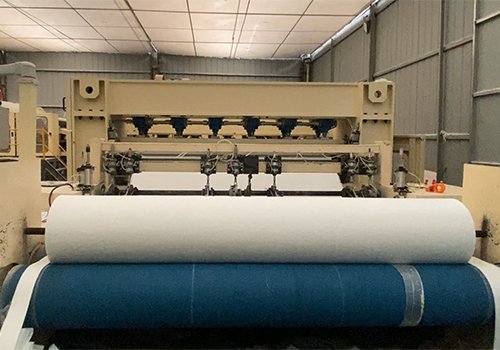
If your finished product has high requirements on appearance, strength and environmental resistance, and the budget is relatively sufficient, you should prefer the emulsion mat. The specific applicable scenarios include:
High-end products: automotive exterior parts, high-speed rail interior panels, yacht hulls, high-end bathroom fixtures (shower room chassis, acrylic bathtubs), artificial stone models, etc., which require smooth surface, no defects and stable strength;
Special processes: vacuum infusion process, RTM process, and compression molding process. The conformability of the emulsion mat and its compatibility with resin can ensure the molding effect;
Harsh environments: chemical anti-corrosion pipelines, storage tanks, cooling towers, ships, etc., which require acid and alkali resistant and solvent resistant finished products;
High-end reinforcement needs: fields with strict requirements on material performance such as aerospace and medical devices, the stability of the emulsion mat can meet the core needs.
If your finished product is a conventional FRP product, has no high requirements on appearance, and pays more attention to cost control and construction efficiency, you should prefer the powder mat. The specific applicable scenarios include:
Conventional FRP products: ordinary FRP water tanks, FRP molds, FRP gratings, automotive interior parts, etc., which have no high requirements on appearance and focus on practicality;
Conventional processes: hand lay-up process and spraying process. The fast wetting characteristics of the powder mat can greatly improve the construction efficiency and reduce the working hour cost;
Priming use: in the production of complex finished products, it can be used as the inner priming material, and the emulsion mat can be used as the surface layer to ensure the appearance, which not only controls the cost, but also takes into account the quality;
Medium and low temperature environments: ordinary thermal insulation materials, indoor decorative parts, etc., which do not need to withstand high temperature or corrosive media, and the performance of the powder mat can fully meet the needs.
Combined with years of experience in serving customers, we have summarized 3 simple and easy-to-remember selection principles. Whether you are a new purchaser or a senior practitioner, you can quickly make the correct choice, avoid finished product quality problems caused by wrong binder selection, and reduce losses:
For hand lay-up and spraying processes, if you pursue construction efficiency, choose the powder mat; for vacuum infusion, RTM and compression molding processes, if you pursue molding effect and quality, choose the emulsion mat . This is the most intuitive selection method, because the process directly determines the requirements for the wetting speed and conformability of the binder. Choosing the wrong binder suitable for the process is difficult to make up for quality defects even if adjusted later.
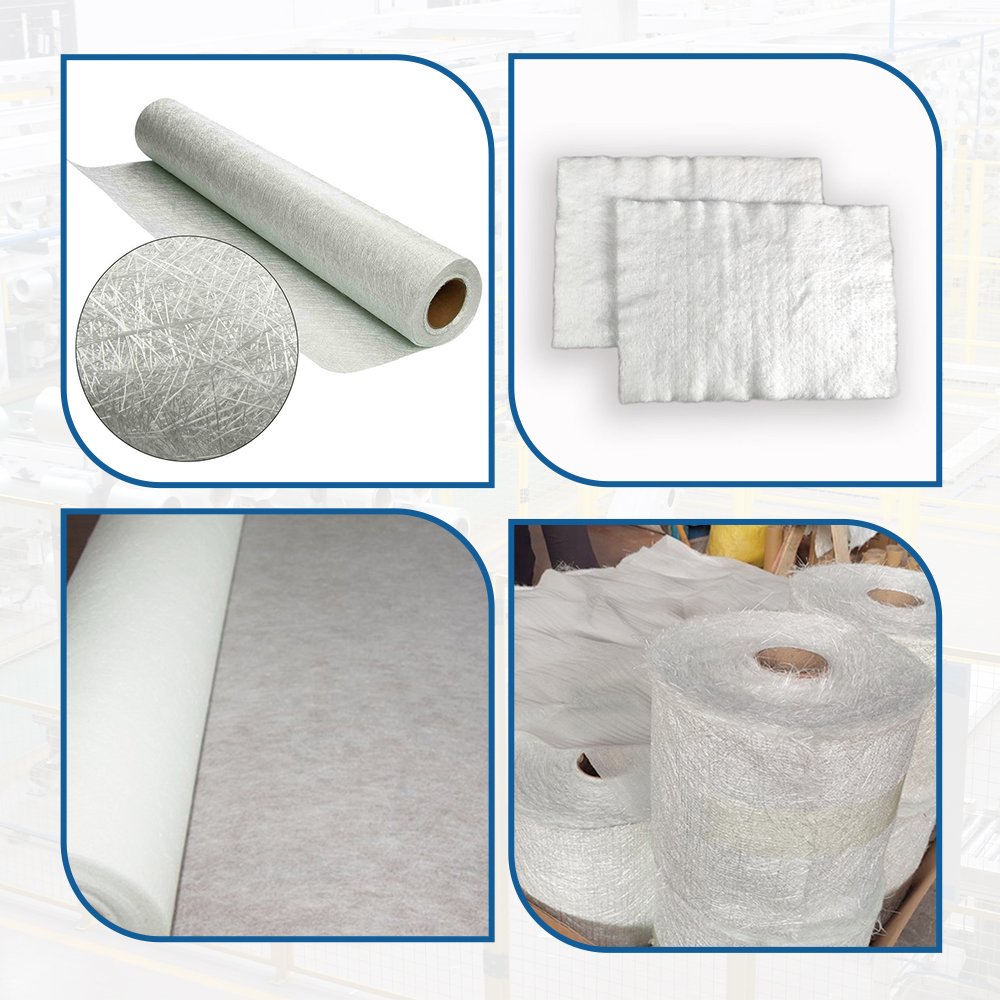
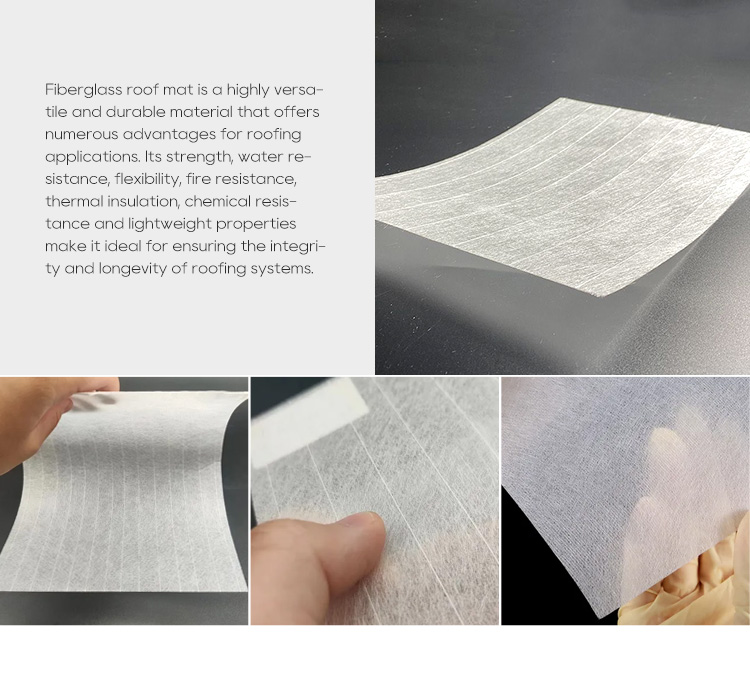
If the finished product needs a smooth surface without polishing, or is used in high-end fields and harsh environments, choose the emulsion mat; if the finished product is a conventional product with no high requirements on appearance and focuses on cost control, choose the powder mat [1] [8]. Remember: it is better to spend a little more cost for quality than to cause the finished product to be scrapped due to wrong binder selection, which will increase greater losses. Many customers choose powder mats to produce high-end products to save a few yuan per square meter, but finally fail to deliver due to rough surface and insufficient strength, and the loss is far more than the saved cost.
The price of the emulsion mat is slightly higher than that of the powder mat (the price difference per square meter is about 1-3 yuan), but it can reduce the subsequent polishing and rework costs and improve the qualification rate of finished products; the price of the powder mat is relatively low, but it may need to add polishing procedures later, and the qualification rate of finished products is relatively low. It is recommended that customers do not only look at the unit price, but also calculate the “comprehensive cost” – including material cost, construction cost, rework cost and scrap cost. On the whole, the one suitable for their own products is the most cost-effective. For example, when producing high-end bathroom products, choosing the emulsion mat may have a slightly higher material cost, but no polishing is needed, and the qualification rate of finished products is high, so the comprehensive cost is actually lower; when producing ordinary FRP water tanks, choosing the powder mat can greatly reduce the material cost and meet the use needs.
In the actual selection process, we found that many customers will fall into some misunderstandings, leading to wrong selection of binders and affecting the quality of finished products. The following lists the 3 most common misunderstandings to help you avoid them:
This is the most common misunderstanding. Many purchasers only pay attention to the unit price, ignoring the impact of the binder on the quality of the finished product, and choose the cheapest powder mat. As a result, the finished product has fiber shedding, delamination and rough surface, with a high rework rate, which increases the cost instead. Remember: the quality of the binder directly determines the quality of the chopped strand mat. You get what you pay for. Don’t sacrifice long-term product competitiveness to save short-term costs.

The quality of the emulsion mat is indeed better, but it is not suitable for all scenarios. If your product is a conventional FRP product with hand lay-up process and no high requirements on appearance, choosing the emulsion mat will increase unnecessary costs and have lower cost performance instead. There is no absolute advantage or disadvantage between emulsion and powder, only whether it is suitable for your needs. The one that suits you is the best .
The compatibility between the binder and the resin directly affects the strength and stability of the finished product. The powder mat is more suitable for unsaturated polyester resin. If it is used for epoxy resin, it will have problems such as poor wetting and infirm bonding; the emulsion mat has good compatibility with unsaturated polyester resin, vinyl ester resin and epoxy resin, and has a wider application range. Before selection, you must clarify the type of resin you use to avoid compatibility problems.
Back to the original question: how to choose the emulsion/powder binder of glass fiber chopped strand mat? Will it affect the quality of the finished product? I believe that through the explanation in this article, you have a clear answer – it will affect, and it is a decisive impact, and the core of selection is “matching needs”:
If you pursue high-end quality, smooth appearance and stable strength, adapt to vacuum infusion, RTM and compression molding processes, or use in harsh environments, choose emulsion binder; if you pursue high cost performance, fast construction, adapt to hand lay-up and spraying processes, and produce conventional FRP products, choose powder binder.
As a customer, our ultimate goal of purchasing chopped strand mat is to produce qualified and high-quality finished products, reduce costs and enhance competitiveness. Choosing the right binder can not only reduce rework and scrap, but also improve production efficiency, making the product more competitive in the market. We hope this article can help you avoid material selection mistakes, choose the most suitable glass fiber chopped strand mat, and make every investment get the corresponding return.

If you have any questions
Please contact us for free consultation and product quotation
You can leave your needs and contact information~and We can provide you with usage suggestions + product suitability analysis + free sample delivery!
Leave us your interest and contact information, and we’ll send you detailed information for your reference!
You can leave the specifications and contact information you need~ Our technicians will immediately organize the exclusive information for you and send it to your email!
You can leave your contact information here, and we will send you detailed specifications and application cases to make your purchase clearer~